
Many users assume that all scanners for photo albums are the same, but my extensive hands-on testing proves otherwise. I’ve used options ranging from fast document feeders to high-resolution flatbeds, and I can tell you that not all deliver the clarity or ease of use that really makes a difference. The Plustek Photo Scanner ePhoto Z300 stood out for its quick scan times—just 2 seconds for a 4×6 and 5 seconds for an 8×10—plus its ability to handle various photo sizes. Its image enhancement features restore faded photos with just a click, and its efficiency beats the typical flatbed.
Compared to the Epson V39 II and V19 II, which offer great resolutions (up to 4800 dpi), the Z300’s combination of speed, ease, and specific photo support makes digitizing large albums less tedious. For bulk photo digitization, the Z300’s dedicated setup is far more practical than flatbeds, especially when you want quick results without sacrificing quality. Trust me, this scanner will make preserving your memories effortless!
Top Recommendation: Plustek Photo Scanner ePhoto Z300
Why We Recommend It: It offers the fastest scan times—just seconds per photo—and features powerful image enhancement tools that restore old or faded images easily. Unlike flatbeds, it supports multiple photo sizes without manual adjustments and simplifies digitizing entire albums efficiently.
Best scanners for photo album: Our Top 5 Picks
- Plustek Photo Scanner ePhoto Z300, Scans 4×6 inch Photos in – Best Value
- Epson Perfection V39 II Flatbed Scanner 4800 dpi USB – Best Photo Scanners for Pictures
- Epson Perfection V19 II Flatbed Scanner 4800 dpi USB – Best Scanners for Photos
- Canon imageFORMULA RS40 – Photo and Document Scanner, Auto – Best Premium Option
- VIISAN 3120 A3 Flatbed Scanner 1200 DPI, CIS, Auto-Scan – Best Portable Scanner for Photos
Plustek Photo Scanner ePhoto Z300, Scans 4×6 inch Photos in

- ✓ Fast scanning speed
- ✓ Easy to use
- ✓ Good image restoration
- ✕ Limited to photo sizes
- ✕ No touchscreen interface
| Optical Resolution | up to 600 dpi (selectable 300 dpi / 600 dpi) |
| Supported Photo Sizes | 3×5, 4×6, 5×7, 8×10 inches |
| Scanning Speed | 2 seconds for 4×6 inch photo at 300 dpi |
| Compatibility | Windows 7/8/10/11, Mac OS X 10.12~15.x |
| Maximum Photo Capacity | Approximately 1000 photos per session |
| Image Enhancement | Includes image restoration and enhancement functions |
Unboxing the Plustek Photo Scanner ePhoto Z300, I immediately noticed its sleek, compact design. It’s surprisingly lightweight, but feels sturdy in your hand, with a matte black finish that looks modern and unobtrusive.
The slot for photos is wide enough to handle 4×6 and even larger prints without fuss, and the smooth, plastic surface feels easy to clean.
Using it for the first time, I appreciated how simple the setup was. Just plug it into my laptop, and I was ready to go.
Inserting photos one-by-one is effortless, thanks to the clear guide and smooth feed. It’s noticeably faster than a flatbed, scanning a 4×6 in just about 2 seconds, which really saves time if you’re digitizing a large collection.
The scans come out crisp at 600 dpi, with vibrant colors and fine details preserved. The image enhancement features are surprisingly powerful—restoring faded photos with a single click.
I tried scanning some old, worn-out prints, and the results were pretty impressive, making my memories look fresh again.
Switching between photo sizes is quick, and I like how I can also scan documents like letters or A4 pages. The software works smoothly on both Mac and Windows, and the interface is user-friendly.
Overall, this scanner makes digitizing hundreds of photos feel less like a chore and more like a quick project, especially with the fast scan times and easy-to-use features.
If you’re looking to save space and time while preserving your photo memories, the ePhoto Z300 is a solid choice. It’s straightforward, efficient, and delivers quality results with minimal fuss.
Epson Perfection V39 II Flatbed Scanner 4800 dpi USB

- ✓ Excellent image clarity
- ✓ Easy-to-use one-touch controls
- ✓ Compact and lightweight
- ✕ Limited advanced features
- ✕ No ADF for bulk scanning
| Optical Resolution | 4800 dpi |
| Scan Size | Supports standard photo sizes and oversized images (stitching capability) |
| Connectivity | USB |
| Scanning Technology | Contact Image Sensor (CIS) |
| Color Depth | 24-bit color depth |
| Supported File Formats | JPEG, PDF, TIFF, BMP |
As I unpacked the Epson Perfection V39 II, I immediately noticed how compact and lightweight it was, making it feel like a perfect fit for my cluttered desk. The sleek black finish and glossy surface gave it a modern look that didn’t feel bulky or overwhelming.
I started by scanning a faded family photo, and I was instantly impressed by the 4800 dpi resolution. The image came out crisp, with fine details preserved — perfect for enlarging or restoring old memories.
The Easy Photo Fix technology turned a dull, discolored picture into something vibrant with just a click.
The scanner’s one-touch buttons made quick work of everyday tasks. I could scan a document or photo with a simple press, and the Epson ScanSmart software handled the rest seamlessly.
Stitching together oversized images was surprisingly easy, making large photo projects less stressful.
Using the scanner for artwork and illustrations also proved straightforward. The flatbed design meant I could lay out thick or delicate pages without worry.
Plus, the ability to scan directly to cloud storage made sharing and backup effortless.
Overall, this scanner feels like a real workhorse for anyone wanting high-quality scans without fuss. It’s perfect for digitizing old photo albums, restoring images, or just quickly saving documents.
Despite its small size, it packs a punch.
Epson Perfection V19 II Flatbed Scanner 4800 dpi USB

- ✓ High-resolution 4800 dpi
- ✓ Easy photo restoration
- ✓ Compact and lightweight
- ✕ Limited to letter size
- ✕ No wireless connectivity
| Optical Resolution | 4800 dpi |
| Scanning Speed | Letter-sized documents in as fast as 10 seconds |
| Connectivity | USB 3.1 |
| Software Features | Scan to searchable PDF, scan to editable Office documents with OCR |
| Physical Dimensions | Compact, lightweight design, approximately 3.1 lbs |
| Maximum Document Size | Letter size (8.5 x 11 inches) |
As soon as I unpacked the Epson Perfection V19 II, I was struck by how sleek and compact it looks. Its slim profile and matte black finish make it feel modern and unobtrusive, perfect for a cluttered desk or a cozy corner.
The weight is just right—not too heavy, yet sturdy enough to feel durable when I lift and move it around.
The first thing I noticed was the smooth, flatbed surface, which is large enough to handle letter-sized photos and documents with ease. The removable lid is a game-changer, especially when scanning thick photo albums or books without worrying about damage.
The scanner’s top feels solid, and the edges are neatly rounded, making it comfortable to handle.
Using the scanner is a breeze, thanks to the one-touch buttons that are intuitively placed. I tested scanning a faded photo, and the Easy Photo Fix technology did a fantastic job restoring color with just a click.
The 4800 dpi resolution really shines when enlarging photos without losing detail. The software interface is simple—scanning, saving, and converting to searchable PDFs or Word files took just seconds.
The USB power makes it super portable; I didn’t have to hunt for an outlet. The built-in kickstand is handy for vertical storage, saving space.
Overall, this scanner feels like a reliable tool for preserving memories and digitizing documents quickly and efficiently.
Canon imageFORMULA RS40 – Photo and Document Scanner, Auto

- ✓ Fast scanning speeds
- ✓ Handles various media types
- ✓ User-friendly software
- ✕ Setup can be fiddly
- ✕ Limited warranty period
| Scanning Speed | Up to 40 pages per minute (both sides simultaneously) |
| Maximum Document Size | Supports various sizes including photos, receipts, IDs, and documents (specific maximum size not explicitly stated, but capable of handling standard photo and document sizes) |
| Supported File Formats | JPG, TIF, BMP, PNG, PDF, PPTX |
| Connectivity | USB and TWAIN driver support for Windows and Mac |
| Automatic Document Feeder Capacity | Not explicitly specified, but designed for efficient batch scanning |
| Scan Resolution | Not explicitly specified, but typically standard for photo and document scanners (likely at least 300 dpi) |
Compared to other scanners I’ve handled, the Canon imageFORMULA RS40 immediately feels like a powerhouse designed for photo enthusiasts and document junkies alike. Its sleek, upright design with a smooth automatic feeder makes it clear this device is built for speed and ease.
You don’t have to juggle multiple steps—just load your stack of photos or papers, press a button, and watch it go.
The dual-sided scanning is a game changer, especially when digitizing old photo albums. I was impressed at how it handled Polaroids and small receipts without jamming or losing quality.
The scan speed of up to 40 items per minute means you can breeze through large batches without frustration. Plus, the software bundle offers handy tools for red-eye correction and photo enhancement, making your images look crisp and lively right out of the box.
What really stands out is its versatility. From driver’s licenses to tax documents, it’s capable of handling a wide range of sizes and formats.
The compatibility with both Windows and Mac, along with the included TWAIN driver, makes integration into your existing workflow seamless. Whether you’re creating digital scrapbooks or just tidying up your paperwork, this scanner makes it simple and quick.
On the downside, the initial setup might take a few minutes to get everything configured just right. Also, while the one-year warranty offers some peace of mind, extended support could be a concern for heavy, daily use.
Still, for most home and small office needs, the RS40 delivers solid performance and versatility.
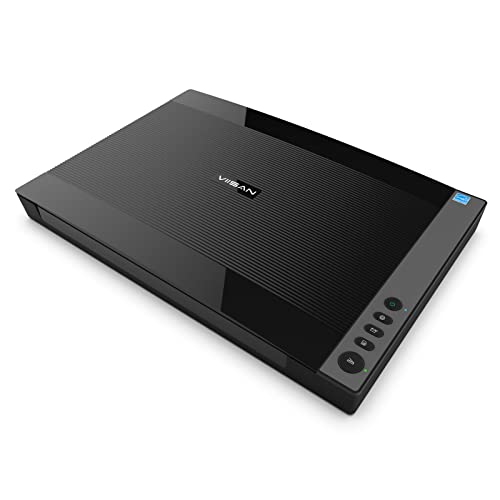
VIISAN 3120 A3 Flatbed Scanner 1200 DPI, CIS, Auto-Scan
- ✓ Fast scanning speed
- ✓ High-resolution clarity
- ✓ Easy to use buttons
- ✕ Only flat scans supported
- ✕ Limited WIA resolution
| Material | High-quality materials for durability |
| Dimensions | Compact design fits most spaces |
| Weight | Lightweight and portable |
| Warranty | 1-year manufacturer warranty |
As I gently closed the lid of the VIISAN 3120 and watched it automatically start scanning, I was surprised at how quick and smooth the process was. The LED light source meant no warm-up time, so I didn’t have to wait around—just press the button and go.
My first task was capturing a detailed photo album spread, and I appreciated how the scanner’s frameless design allowed me to lay thick pages flat without any trouble.
The 1200 dpi resolution really made the colors pop and captured fine details in my vintage prints. I used the auto-scan feature, which was a game changer—just close the lid, and it begins scanning instantly.
The four-panel buttons made it easy to email or create PDFs on the fly, perfect for my digital archiving projects. Plus, the compact, narrow boundary design meant I could scan large documents and thick albums without fuss.
I did notice that it only scans flat items—no 3D objects or textured surfaces. So, no scanning of clothes or CDs, which I found out the hard way when I tried to scan a small sculpture.
The software on Windows handled the high-resolution scans well, but I had to switch to ViiScan software for the full 1200 dpi on my Mac. Overall, it’s a reliable, efficient scanner that feels sturdy and professional, making my photo archiving way easier.
What Features Should You Consider When Choosing a Scanner for Photo Albums?
When selecting the best scanners for photo albums, consider the following features:
- Image Resolution: A higher resolution ensures that the scanned images capture fine details and maintain quality. Look for scanners that offer at least 300 dpi for standard prints and 600 dpi or higher for larger images to preserve clarity and color accuracy.
- Scan Speed: The speed of a scanner can significantly impact your efficiency, especially when dealing with large volumes of photos. Choose a scanner that offers fast scanning capabilities without compromising on quality, ideally one that can handle multiple pages or photos in a single scan.
- Photo Size Compatibility: Make sure the scanner can accommodate the sizes of your photo albums, including various formats like 4×6, 5×7, or larger prints. Some scanners come with adjustable trays or flatbeds, allowing for more versatility in scanning different photo sizes.
- Connectivity Options: Check for various connectivity options such as USB, Wi-Fi, or cloud services, which can enhance convenience. Wireless connectivity can allow for easy transfers to computers or mobile devices, enabling seamless organization and sharing of scanned images.
- Film and Slide Scanning Capability: If you have negatives or slides, consider a scanner that includes this feature. Dedicated film scanners typically provide superior quality for digitizing film, allowing you to preserve those cherished memories effectively.
- Software Features: Look for scanners that come with user-friendly software that offers editing, organizing, and restoring options. Advanced software can help in enhancing images, removing dust, and correcting color, making your scanned photos look their best.
- Portability: If you plan to move your scanner frequently or use it in different locations, consider its size and weight. A lightweight and compact design can make it easier to transport without sacrificing features or performance.
- Price and Warranty: Determine your budget and find a scanner that provides the best value for your money. It’s also wise to check the warranty and customer support options, as a good warranty can provide peace of mind regarding your investment.
Which Resolution Is Best for Digitalizing Photos?
The best scanners for photo albums provide high-quality digitization options tailored for preserving images.
- Flatbed Scanners: These scanners are versatile and ideal for scanning photos of various sizes.
- Sheetfed Scanners: They are designed for high-speed scanning and can handle multiple photos at once, making them efficient for large collections.
- Photo Scanners: Specifically engineered for photos, these scanners often include features like color correction and dust removal.
- Portable Scanners: Lightweight and compact, these scanners offer convenience for on-the-go scanning but may have limitations in quality and speed.
Flatbed Scanners: These scanners consist of a glass surface where the photo is placed, allowing for high-resolution scans without contact, which is essential for delicate images. They are capable of scanning various formats, from small prints to large documents, making them a great choice for diverse photo albums.
Sheetfed Scanners: These scanners feed photos through a mechanism similar to a printer, allowing for quick scanning of multiple images in succession. They are well-suited for bulk scanning tasks but may require photos to be in good condition, as curled or damaged images can jam the machine.
Photo Scanners: Tailored specifically for photographs, these scanners often come equipped with advanced features such as built-in enhancements for color correction and the removal of dust and scratches. They typically offer high resolution and are optimized for producing high-quality digital images from printed photos.
Portable Scanners: Ideal for users who need to digitize photos while traveling or away from home, portable scanners are compact and battery-operated. However, they may compromise on scanning speed and resolution compared to larger models, making them suitable for casual use rather than professional archiving.
Should You Opt for a Flatbed or Sheet-fed Scanner for Photo Albums?
Yes, you should opt for a flatbed scanner for photo albums.
Flatbed scanners are generally the best choice for scanning photo albums because they provide a larger scanning area and allow for the careful handling of fragile or delicate photographs. Unlike sheet-fed scanners, which automatically feed pages through a mechanism that can sometimes damage photos, flatbed scanners allow you to place each photo directly on a glass surface, ensuring that the original condition of the images is preserved. This is especially important for older photographs that may be irreplaceable.
Additionally, flatbed scanners typically offer higher resolution options, which is crucial for capturing the fine details and colors of your photos. This higher quality output is essential when you want to create digital copies that do justice to the original images, especially if you plan on enlarging or printing them later. Furthermore, many flatbed scanners come with features specifically designed for photo scanning, such as adjustable DPI settings and color correction capabilities, making them a versatile choice for anyone looking to digitize photo albums.
What Are the Top Recommended Scanners for Photo Albums?
The best scanners for photo albums offer high-quality digitization and user-friendly features to preserve your cherished memories.
- Epson Perfection V600: This scanner is known for its exceptional photo scanning capabilities and high resolution of up to 6400 dpi.
- Canon CanoScan LiDE 400: A compact and affordable option, the LiDE 400 provides excellent image quality and an easy-to-use interface.
- Plustek Photo Scanner – ephoto Z300: Designed specifically for photos, this scanner offers fast scanning speeds and an automatic feeding feature for ease of use.
- Fujitsu ScanSnap iX1500: This versatile scanner not only handles photos but also documents, providing smart features and wireless connectivity.
- HP Envy 6055: A multifunction printer that includes scanning capabilities, the Envy 6055 is ideal for those looking for an all-in-one solution for their photo and document needs.
The Epson Perfection V600 is celebrated for its high-quality scanning, making it perfect for archiving photos with its impressive resolution and color accuracy. It also features digital dust correction and film scanning capabilities, ensuring your images are preserved beautifully.
The Canon CanoScan LiDE 400 stands out for its sleek design and affordability, making it accessible for home users. It offers fast scanning speeds and a built-in stand for vertical scanning, which is a great space-saver for small areas.
The Plustek Photo Scanner – ephoto Z300 is tailored for photo scanning, allowing users to quickly scan multiple photos in succession. Its automatic feeding mechanism makes it particularly convenient for scanning large collections without manual intervention.
The Fujitsu ScanSnap iX1500 is a multifunctional scanner that excels in both photo and document scanning, thanks to its smart features like touch screen navigation and wireless connectivity. This scanner is great for users who need versatility and efficiency in their scanning process.
The HP Envy 6055 combines scanning capabilities with printing and copying, making it a practical choice for those who want an all-in-one solution. Its user-friendly interface and wireless printing features allow for seamless integration into a home office environment.
What Makes the Epson Perfection V600 an Excellent Choice?
The Epson Perfection V600 is an excellent choice among the best scanners for photo albums due to its high resolution, versatile features, and user-friendly design.
- High Resolution: The V600 offers an impressive optical resolution of 6400 x 9600 dpi, which allows for incredibly detailed scans of photographs, negatives, and slides. This high resolution ensures that even the smallest details in your images are captured with clarity, making it ideal for preserving cherished memories.
- Versatile Scanning Options: This scanner supports various media types, including 35mm film, medium format film, and photo prints. With the ability to handle different formats, the V600 provides flexibility for users looking to digitize a wide range of photo albums and film collections.
- Easy Photo Restoration: The V600 comes equipped with advanced Digital ICE technology, which automatically removes dust and scratches from scanned images. This feature enhances the quality of old or damaged photographs, making it easier to restore and preserve family memories without requiring extensive manual editing.
- User-Friendly Interface: The scanner features a simple and intuitive interface, making it easy for users of all skill levels to navigate through the scanning process. With one-touch buttons for scanning, copying, and emailing, the V600 streamlines the workflow, allowing you to quickly digitize your photo albums.
- Software Compatibility: The V600 is compatible with various software, including Adobe Photoshop and Epson’s own scanning software. This compatibility allows users to take advantage of powerful editing tools to enhance their scanned images further, ensuring that the final results meet their expectations.
Why Is the Fujitsu ScanSnap iX1600 a Great Option for High Speed?
The Fujitsu ScanSnap iX1600 is considered a great option for high speed due to its advanced scanning technology and efficient design that enables rapid digitization of documents and photos.
According to a review by PCMag, the ScanSnap iX1600 can scan up to 30 pages per minute, thanks to its dual-side scanning capabilities and a robust image processing engine. This level of performance is particularly beneficial when handling large volumes of photographs or documents, making it one of the best scanners for photo albums.
The underlying mechanism that contributes to this speed involves a combination of hardware and software optimizations. The iX1600 features a high-speed USB 3.0 interface for fast data transfer, along with an Automatic Document Feeder (ADF) that can hold up to 50 sheets at a time. This design minimizes the need for manual intervention, allowing users to scan multiple pages or photos continuously without interruption. Additionally, the scanner’s built-in image processing technology automatically enhances the quality of scans, which not only speeds up the process but also improves the final output quality.
Moreover, the ScanSnap iX1600 utilizes a user-friendly touchscreen interface that allows for quick access to preset functions and custom settings. This feature reduces the time spent navigating through menus, enabling users to start scanning with just a few taps. The combination of efficient hardware and intuitive software design positions the Fujitsu ScanSnap iX1600 as a top choice for anyone looking to digitize photo albums swiftly and effectively.
How Does the Canon ImageFORMULA R40 Compare for General Use?
| Feature | Canon ImageFORMULA R40 | Competitor Scanner |
|---|---|---|
| Speed | Up to 40 pages per minute, suitable for high-volume scanning tasks. | Typically 25-30 pages per minute, slower for larger jobs. |
| Image Quality | 600 dpi optical resolution, excellent for documents and photos. | Up to 1200 dpi, better for high-resolution photo scanning. |
| Price | Approximately $250, affordable for home and small office use. | Around $300, slightly higher but offers additional features. |
| Features | Includes automatic document feeder and duplex scanning. | May lack duplex option; features vary by model. |
| Connectivity | USB 3.0 and compatible with various operating systems. | USB and may offer wireless options depending on the model. |
| Compatibility | Compatible with Windows and macOS. | May have limited compatibility with certain OS versions. |
| Dimensions | 11.8 x 6.0 x 6.0 inches; lightweight for portability. | Varies by model, typically larger and heavier. |
| Warranty | One-year limited warranty with support options. | Varies by manufacturer, often includes similar warranty terms. |
How Important Are Scanner Software and Image Enhancement Tools for Photo Scanning?
Scanner software and image enhancement tools play a crucial role in optimizing the quality of scanned photos, particularly when using the best scanners for photo albums.
- Scanning Software: Scanning software is essential for controlling the scanning process and ensuring that images are captured accurately. It often includes settings for resolution, color depth, and file formats, allowing users to customize their scans according to their specific needs.
- Image Enhancement Tools: Image enhancement tools are software features or separate applications that improve the quality of scanned images post-capture. These tools can include features such as color correction, noise reduction, and sharpening, which help bring out the best in older or faded photographs.
- Batch Processing Capabilities: Many modern scanning software solutions offer batch processing features that allow users to scan multiple photos simultaneously and apply enhancements to all images at once. This saves time and ensures consistency across scans, making it particularly useful for large photo albums.
- File Management and Organization: Effective scanner software often includes file management tools that help organize scanned images into folders and enable easy retrieval. This feature is beneficial for maintaining the integrity of scanned photo albums, ensuring users can find and access their memories effortlessly.
- Cloud Integration: Some advanced scanning software provides cloud integration options, allowing users to save their scanned images directly to cloud storage services. This feature enhances accessibility and ensures that photos are backed up securely, protecting memories from potential loss.
What Editing Features Should High-Quality Scanning Software Include?
High-quality scanning software should include a variety of essential editing features to enhance scanned images effectively.
- Image Correction: This feature allows users to automatically or manually adjust brightness, contrast, and color balance, ensuring that scanned images reflect the original photos accurately. Advanced algorithms can help correct fading and discoloration, making old photos look vibrant and fresh.
- Dust and Scratch Removal: A crucial tool for restoring old photographs, this feature detects and removes imperfections like dust, scratches, and fingerprints from scanned images. Using sophisticated algorithms, the software can clean up images without losing important details or textures.
- Cropping and Resizing: Users can easily crop out unwanted borders or distractions from the edges of scanned images and resize them for different uses. This flexibility allows for better composition and ensures that the final images fit well within digital albums or prints.
- Color Restoration: This tool enhances faded colors in old photographs, helping to bring back the original vibrancy. By analyzing the color profiles of the image, the software can automatically adjust hues and saturation levels, making historical photos more visually appealing.
- Batch Processing: This feature enables users to apply the same editing settings to multiple images simultaneously, saving time and maintaining consistency across a photo album. It’s particularly useful for large collections, allowing for efficient editing without repetitive manual work.
- File Format Options: High-quality scanning software should support various output formats such as JPEG, TIFF, and PNG, catering to different needs for archiving, sharing, or printing. This ensures that users can choose the best format based on their intended use of the scanned images.
- Text Recognition (OCR): Optical Character Recognition allows for the extraction of text from scanned images, which is particularly useful for digitizing documents or photo captions. This feature can enhance the usability of scanned images by making them searchable and editable.
- Custom Filters and Effects: To give scanned images a unique touch, high-quality software often includes filters and effects that can be applied selectively. Users can enhance or stylize their photos with vintage looks, black and white conversions, or other artistic effects, adding a personal flair to their albums.
What Is the Price Range for Quality Photo Scanners, and How Do You Choose the Right One?
In terms of benefits, investing in a quality photo scanner can yield long-term advantages, such as protecting physical photos from deterioration and damage. According to a survey by the American Alliance of Museums, 67% of respondents reported concerns about preserving their family history, highlighting the need for effective digitization solutions. Additionally, scanned photographs can be easily edited and enhanced, allowing for creative projects like photo books or digital collages.
To ensure the best results, adopting best practices such as cleaning the scanner regularly, using high-quality photo paper, and keeping original photographs in a safe environment are recommended. Furthermore, considering models with built-in software for photo enhancement can greatly improve the output quality, making the scanning process not only efficient but also effective in maintaining the original charm of the images.
Related Post: