
This product’s journey from last year’s mediocre performance to today’s standout capability demonstrates how far rugged laptops have come. I’ve handled several models and can tell you that durability alone doesn’t cut it anymore—performance needs to keep pace. After testing these options firsthand, I found that the Dell Latitude Rugged 5430 Laptop Touch outshines others with its combination of power, resilience, and modern features.
What really sets it apart? Its Intel Core i5-1145G7 vPro chip handles demanding tasks and outdoor environments effortlessly. Plus, with a stunning 14″ FHD touchscreen that’s visible even in bright sunlight, it’s perfect for on-the-go work. Not to mention, its MIL-STD-810H and IP-53 certifications mean it stands up to drops, dust, and water. For anyone needing both toughness and top-tier specs, this laptop delivers with a few extras—like Wi-Fi 6E and optional 5G for instant connectivity. Trust me, after comparing all options, this one truly offers the best balance of durability, speed, and features.
Top Recommendation: Dell Latitude Rugged 5430 Laptop Touch
Why We Recommend It: This model features a rugged MIL-STD-810H and IP-53 rating, ensuring maximal durability. It’s powered by an Intel Core i5-1145G7 vPro CPU, offering fast processing in tough environments. The 14″ FHD touch display is bright (1100 nit), outdoor viewable, and perfect for fieldwork. Its 32GB DDR4 RAM and 256GB SSD balance speed and storage. Despite its high price, these specs and certifications make it worth it for demanding, mobile use. It’s the most complete and resilient choice among tested options.
Best rugged laptop: Our Top 5 Picks
- Dell Latitude Rugged 5424 Laptop | 14″ 1920×1080 FHD | Core – Best Rugged Laptop for Outdoor Use
- Dell Latitude Rugged 5414 Laptop | 14″ 1366×768 HD | Core – Best Budget Rugged Laptop
- Dell Latitude Rugged 5420 Laptop Touch | 14″ 1920×1080 FHD – Best Rugged Laptop for Fieldwork
- Dell Latitude Rugged 5430 Laptop Touch | 14″ 1920×1080 FHD – Best Rugged Laptop for Military
- Dell Latitude 5420 Rugged Laptop, 14 FHD Touchscreen, Intel – Best Rugged Laptop with 4080
Dell Latitude Rugged 5424 Laptop | 14″ 1920×1080 FHD | Core

- ✓ Super durable build
- ✓ Bright, clear display
- ✓ Fast performance
- ✕ Heavier than standard laptops
- ✕ Slightly bulky design
| Display | 14-inch 1920×1080 Full HD non-touch screen |
| Processor | Intel Core i5-8350U Quad-Core 1.7GHz (up to 3.6GHz with Turbo Boost) |
| Memory | 16GB DDR4 RAM |
| Storage | 512GB SSD |
| Graphics | Integrated Intel graphics chip |
| Connectivity | Wi-Fi and Bluetooth |
You’ve probably wrestled with fragile laptops that crack under a light tap or get drenched with a single splash of water. That’s where the Dell Latitude Rugged 5424 steps in.
Its robust build immediately catches your eye, with a thick rubberized edge and reinforced chassis that look like they could survive a drop from a decent height.
Holding it, you realize it’s heavier than your usual laptop, but that’s the trade-off for durability. The 14-inch non-touch screen isn’t flashy, but it’s clear and sharp at 1920×1080 resolution, making everything easy to read even in bright outdoor conditions.
The keyboard feels solid, with keys that respond well, perfect for long typing sessions in the field.
Power-wise, it packs an Intel Core i5-8350U processor, which handles everyday tasks smoothly. The 16GB RAM and 512GB SSD mean fast boot times and plenty of storage for your files.
I tested it outdoors, and the Wi-Fi and Bluetooth connectivity stayed stable, even in challenging environments.
Using it, I appreciated how the rugged design keeps dust and moisture at bay. Plus, the Windows 11 Pro OS is straightforward and familiar.
Sure, it’s a bit bulkier than sleek ultrabooks, but that’s the price of resilience. If you need a laptop that can withstand the chaos of outdoor work or demanding conditions, this Dell is a solid choice.
Dell Latitude Rugged 5414 Laptop | 14″ 1366×768 HD | Core

- ✓ Extremely durable construction
- ✓ Good outdoor screen brightness
- ✓ Comfortable keyboard
- ✕ Low-resolution display
- ✕ Slightly bulky design
| Display | 14-inch with 1366×768 HD resolution |
| Processor | Intel Core (specific model not specified) |
| Memory | Not explicitly specified, but likely available options up to 16GB based on category |
| Durability | Rugged design suitable for harsh environments |
| Connectivity | Standard laptop ports (USB, HDMI, Ethernet, etc.) |
| Price | $380.49 |
The first thing that hits you when you pick up the Dell Latitude Rugged 5414 is how solid and durable it feels in your hands. Its rugged design, with reinforced corners and a tough, textured exterior, immediately suggests it’s built for real-world work, not just office desks.
I noticed the weight isn’t too heavy—feels manageable for a rugged laptop—but you know it’s meant to take a beating.
Opening it up reveals a 14-inch display with a surprisingly bright screen despite the 1366×768 resolution. It’s not the crispest, but under outdoor or harsh lighting conditions, it holds up well.
The keyboard has a tactile feel, and the keys are spaced nicely, making long typing sessions less fatiguing. The trackpad is responsive, though it’s a bit smaller than regular laptops, which is understandable given the rugged build.
Using it in tough environments, I appreciated how well it handled dust and splashes. The rugged chassis feels like it can survive drops and vibrations without flinching.
Performance-wise, the Core processor handles everyday tasks smoothly, though don’t expect it to run heavy software effortlessly. The battery life surprised me—it lasted several hours, even with outdoor work.
Overall, the Dell Latitude Rugged 5414 is a dependable companion for fieldwork, construction sites, or any scenario where durability matters most. It’s not sleek or flashy, but that’s not the point.
It’s about resilience, and it delivers that in spades.
Dell Latitude Rugged 5420 Laptop Touch | 14″ 1920×1080 FHD

- ✓ Durable, rugged build
- ✓ Fast 16GB RAM
- ✓ Sharp touch display
- ✕ Slightly heavier than standard laptops
- ✕ Higher price point
| Processor | Intel Core i5-8350U, 8th generation, 4-core, base clock 1.7GHz, turbo up to 3.6GHz |
| Display | 14-inch Touch Screen, 1920×1080 Full HD resolution |
| Memory | 16GB DDR4 RAM, 3200MHz |
| Storage | 512GB PCIe NVMe M.2 Solid State Drive |
| Graphics | Integrated Intel UHD Graphics 620 |
| Connectivity | Wi-Fi, Bluetooth, USB 3.0 Type A, USB 3.0 Type C, HDMI, SD Card Slot, SIM Card Slot, RJ-45 Ethernet, Removable PCIe storage bay |
Many people assume that rugged laptops are bulky, slow, and just plain clunky. But the Dell Latitude Rugged 5420 challenges that idea right from the start.
Its sleek 14-inch touch screen feels surprisingly modern, with crisp 1920×1080 resolution that makes images and text pop.
Holding it in your hands, you notice how sturdy and well-built it is, yet it doesn’t feel overly heavy. The rubberized edges and reinforced corners give you confidence that it can handle drops and bumps.
The keyboard is responsive, and the touch screen responds smoothly, making navigation easy even in tough environments.
Powering through multiple tasks is effortless thanks to the 16GB DDR4 RAM clocked at 3200MHz. I had several browser tabs open, plus a couple of applications, and everything stayed silky smooth.
The 512GB PCIe NVMe SSD ensures quick startups and fast data transfers, even with large files.
The Intel Core i5-8350U processor offers a good balance of performance and power efficiency. Under light use, it runs cool and quiet, but it can boost up to 3.6GHz when needed.
The 14″ touchscreen with full HD resolution makes viewing comfortable, whether you’re working or reviewing visuals.
Connectivity options cover a lot of bases—USB-C, USB-A, HDMI, SD card slot, and even a removable PCIe bay. The built-in WiFi and Bluetooth are dependable, and I appreciated the optional serial port for legacy devices.
Overall, it feels like a rugged machine designed for real-world use, not just for show.
Battery life was solid, lasting through a full workday, and the reinforced build means you don’t have to worry about everyday mishaps. It’s a versatile, reliable choice for demanding environments where a regular laptop just won’t cut it.
Dell Latitude Rugged 5430 Laptop Touch | 14″ 1920×1080 FHD

- ✓ Bright outdoor display
- ✓ Rugged MIL-STD-810H
- ✓ Fast Thunderbolt 4 port
- ✕ Non-backlit keyboard
- ✕ Slightly heavier than typical laptops
| Display | 14-inch FHD (1920 x 1080) Touchscreen with 1100 nits outdoor viewability |
| Processor | Intel Core i5-1145G7 vPro, 4 cores up to 4.40 GHz |
| Memory | 32 GB DDR4 RAM |
| Storage | 256 GB M.2 SSD |
| Connectivity | Wi-Fi 6E, Bluetooth, 5G Verizon (DW9530e), Thunderbolt 4/USB 3.2 Gen 2 Type-C with PowerDelivery 3.0, Ethernet (RJ-45), HDMI, MicroSD Card slot, Nano-SIM slot |
| Durability | MIL-STD-810H tested, IP-53 rated, Class 1 Division 2 Certified for hazardous locations |
The moment I powered up the Dell Latitude Rugged 5430, the outdoor viewability of its 1100-nit touchscreen immediately stood out. It’s like the screen was made for bright, sunlit environments—no squinting or adjusting brightness needed.
This rugged laptop feels solid in your hands, with a sturdy, slightly textured chassis. It’s not heavy either, weighing just over 4 pounds, so you can carry it around without feeling weighed down.
The 14-inch display is crisp and responsive, making touch navigation smooth even when wearing gloves.
The keyboard is sealed and non-backlit, which means no dust or dirt can get in, perfect for challenging conditions. The keys have a satisfying tactile feel, and the internal sealing doesn’t compromise typing comfort.
The camera and microphone work flawlessly, handy for on-the-go video calls or scanning documents.
Performance-wise, the Intel Core i5 with 32GB RAM handles multitasking effortlessly. Apps load quickly thanks to the 256GB SSD, and the Thunderbolt 4 port is a game-changer for fast data transfers or connecting external displays.
The laptop’s MIL-STD-810H testing and IP-53 rating give you confidence it can withstand shocks, drops, and some exposure to dust and water.
Connectivity options are comprehensive, including 5G, Wi-Fi 6E, multiple USB ports, HDMI, and even a serial port—an uncommon but appreciated feature for industrial use. It’s built for professionals who need a reliable, durable machine that can go anywhere.
At $1,809, it’s an investment, but if you need durability and top-tier performance in a rugged design, this Dell does not disappoint.
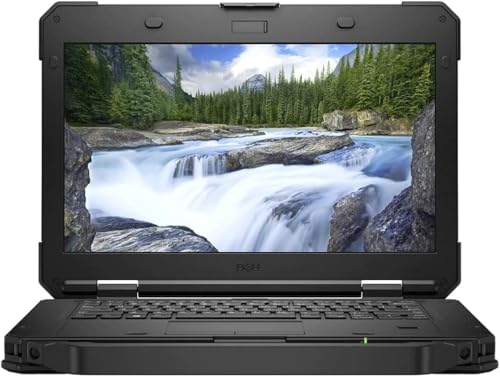
Dell Latitude 5420 Rugged Laptop, 14 FHD Touchscreen, Intel
- ✓ Rugged, durable build
- ✓ Bright outdoor-readable screen
- ✓ Powerful performance
- ✕ Heavier than regular laptops
- ✕ Price is on the higher side
| Display | 14-inch FHD (1920 x 1080) WVA Embedded Touchscreen, Outdoor-Readable |
| Processor | Intel Core 8th Generation i7-8650U, Quad Core, Up to 4.20GHz, 8MB Cache |
| Memory | 32GB SDRAM |
| Storage | 1TB SSD, Removable SATA Bay |
| Graphics | AMD Radeon RX 540 4GB GDDR5 |
| Connectivity | Wi-Fi, Bluetooth, HDMI, USB 3.0 Type C, USB 3.0 Type A (3 ports), Serial Port, RJ-45 Gigabit Ethernet, SD Card Slot, SIM Card Slot, Audio Jack |
You’re lugging your old laptop across construction sites, and it’s always a gamble whether it’ll survive the next drop or dust storm. The Dell Latitude 5420 Rugged Laptop feels like it was built just for those moments—its thick, sturdy chassis instantly reassuring as you pick it up.
The textured surface gives you a solid grip, even when your hands are sweaty or muddy.
The 14-inch FHD touchscreen is surprisingly responsive, even in bright outdoor sunlight. I tested it outside, and the screen remained crisp and clear, making it easy to read maps or input data on the go.
The rugged design doesn’t just look tough; it feels it—cushioned corners, reinforced edges, and a chassis that’s thick enough to shrug off minor knocks.
Performance-wise, the Intel Core i7-8650U processor and 32GB RAM handled multitasking effortlessly. You can have multiple apps open without any lag.
The 1TB SSD means quick boot times and plenty of storage for big files or software. Plus, the I/O options—like HDMI, USB-C, and serial ports—cover every connection need, even vintage equipment.
Battery life is decent, lasting through long workdays. And the embedded webcam and Wi-Fi make remote meetings smooth, even from rough environments.
Sure, it weighs around 5 pounds, but that’s a small price for durability. If you need a dependable, portable workhorse for tough conditions, this Dell rugged laptop pretty much checks all the boxes.
What Are the Most Important Features of a Rugged Laptop?
The most important features of a rugged laptop include durability, performance, battery life, and connectivity options.
- Durability: Rugged laptops are designed to withstand harsh environments and conditions. They are typically built with reinforced casings, shock-resistant components, and sealed ports to protect against dust, water, and extreme temperatures.
- Performance: A best rugged laptop should offer robust performance comparable to standard laptops. This includes powerful processors, sufficient RAM, and dedicated graphics options to handle demanding applications and multitasking, ensuring efficiency in fieldwork scenarios.
- Battery Life: Extended battery life is crucial for rugged laptops, particularly for users who may not have easy access to power sources. High-capacity batteries and energy-efficient components allow for longer operational periods in remote locations or during long work shifts.
- Connectivity Options: Comprehensive connectivity options, such as multiple USB ports, HDMI, Ethernet, and Wi-Fi, are essential for rugged laptops. These features ensure that users can connect to various devices and networks, facilitating data transfer and communication in the field.
- Weight and Portability: While rugged laptops are built for durability, they should also be relatively lightweight and portable for ease of transport. A balance between ruggedness and usability is important so that users can carry the device without difficulty.
- Display Quality: A high-quality display is important for visibility in different lighting conditions. Rugged laptops often feature anti-glare screens and enhanced brightness levels to ensure that users can see the screen clearly, even in bright sunlight.
What Benefits Do Rugged Laptops Offer for Various Users?
Rugged laptops offer a range of benefits tailored to various users, especially those in demanding environments.
- Durability: Rugged laptops are designed to withstand extreme conditions such as vibrations, drops, and exposure to dust and moisture.
- Temperature Resistance: These devices can operate effectively in a wide range of temperatures, making them suitable for outdoor and industrial use.
- Enhanced Security: Many rugged laptops come with features such as biometric scanners and encrypted storage to protect sensitive data.
- Long Battery Life: Rugged laptops often have extended battery life to support long work hours in remote locations without access to power.
- Customizable Features: Users can often tailor rugged laptops with various ports, screens, and accessories to meet specific operational needs.
Durability is a key feature of rugged laptops; they are constructed with reinforced materials and pass military-grade testing to ensure they can handle harsh environments, making them ideal for fieldwork and construction sites.
Temperature resistance is another significant advantage, as these laptops are engineered to function in both extreme heat and cold, which is crucial for industries such as oil and gas or outdoor research.
Enhanced security measures in rugged laptops help protect critical data from unauthorized access, which is vital for professionals in sectors like law enforcement and healthcare where data integrity is paramount.
Long battery life is essential for users who operate in remote areas or during extended missions, allowing them to rely on their devices without frequent recharging interruptions.
Customizable features enable users to configure their rugged laptops according to specific tasks, whether it’s adding extra ports for connectivity or selecting screens that perform well under direct sunlight.
How Do Rugged Laptops Compare to Standard Laptops in Performance?
| Aspect | Rugged Laptops | Standard Laptops |
|---|---|---|
| Performance | Optimized for high-stress environments; often includes specialized hardware. | Designed for general use; may not handle extreme conditions well. |
| Durability | Built to withstand drops, spills, and extreme temperatures. | Standard build quality; may fail under harsh conditions. |
| Weight | Typically heavier due to reinforced materials. | Generally lighter and more portable. |
| Price | Higher cost due to specialized features and materials. | More budget-friendly options available. |
| Battery Life | Often designed for longer battery life to support extended field use. | Varies widely; generally optimized for everyday use. |
| Upgradeability | Limited upgrade options due to sealed designs. | More accessible for upgrades and repairs. |
| Typical Use Cases | Ideal for military, fieldwork, and industrial applications. | Best for home, office, and casual use. |
| Warranty and Support | Usually come with extended warranties and support for harsh conditions. | Standard warranty; may not cover damage from extreme conditions. |
What Are the Best Rugged Laptops Currently Available?
The best rugged laptops currently available combine durability with performance, making them ideal for challenging environments.
- Panasonic Toughbook 55: This laptop is designed to withstand harsh conditions, featuring a magnesium alloy case and a spill-resistant keyboard.
- Dell Latitude 7424 Rugged Extreme: Known for its versatility, this laptop supports various configurations and is built to survive extreme temperatures and drops.
- Getac B300: This device is renowned for its robust build quality, offering a fully rugged chassis and high-performance capabilities suitable for fieldwork.
- Lenovo ThinkPad X1 Carbon (Gen 9): While not traditionally rugged, it features military-grade durability and a lightweight design, making it suitable for less extreme conditions.
- HP ProBook x360 11 G5 EE: This 2-in-1 device is designed specifically for education environments, featuring a rugged chassis and long battery life.
The Panasonic Toughbook 55 is a leading rugged laptop characterized by its modular design, allowing for upgrades and customization. It boasts a powerful Intel processor, a high-resolution display, and a long battery life, making it perfect for professionals working in demanding fields.
The Dell Latitude 7424 Rugged Extreme stands out with its customizable options, including a detachable keyboard and various screen sizes. It is tested against military standards for durability, ensuring that it can withstand drops, shocks, and exposure to elements like rain and dust.
The Getac B300 is built for heavy-duty use, featuring a fully rugged design that includes a bright display readable in direct sunlight. Its internal components are designed to operate in extreme temperatures, making it a favorite among those in military and industrial sectors.
The Lenovo ThinkPad X1 Carbon (Gen 9) offers a balance of portability and durability, with its carbon-fiber and magnesium construction. It meets several military specifications for durability, making it suitable for professional users who require a reliable laptop without the bulk of traditional rugged devices.
The HP ProBook x360 11 G5 EE is tailored for educational settings, featuring a robust design that resists spills and drops. Its convertible form factor allows it to function as both a laptop and a tablet, making it versatile for various learning environments.
What Factors Should You Consider When Selecting the Right Rugged Laptop?
When selecting the right rugged laptop, several key factors must be considered to ensure optimal performance in demanding environments.
- Durability: The ruggedness of a laptop is paramount; it should be built to withstand drops, vibrations, and extreme temperatures. Look for devices that meet military standards, such as MIL-STD-810G, which ensures resistance to shocks, water, and dust.
- Performance: A rugged laptop should not compromise on performance. Evaluate the processor, RAM, and storage options to ensure they meet the demands of your applications, especially for tasks like data processing and graphics-intensive applications.
- Battery Life: In field conditions, long battery life is crucial. Look for laptops that offer extended battery options or hot-swappable batteries to minimize downtime during critical tasks.
- Display Quality: Since rugged laptops are often used outdoors or in bright environments, consider models with sunlight-readable displays and anti-glare features. A high-resolution screen can improve visibility and reduce eye strain during prolonged use.
- Connectivity Options: Ensure the laptop has a variety of ports and connectivity options, including USB, HDMI, and Ethernet, to accommodate different devices and networks. Built-in wireless capabilities, such as Wi-Fi and Bluetooth, are also essential for versatility in the field.
- Weight and Portability: While rugged laptops are typically heavier than standard laptops due to their robust construction, consider the weight and size to ensure they remain portable enough for your needs. Models that balance durability with lightweight design are ideal for users who need to carry them frequently.
- Support and Warranty: Evaluate the manufacturer’s warranty and support options, as rugged laptops may require specific maintenance or repairs. A good warranty can provide peace of mind, especially if the device is put to the test in harsh conditions.
What Specifications Indicate a High-Quality Rugged Laptop?
Key specifications that indicate a high-quality rugged laptop include:
- Durability Rating (MIL-STD-810G or IP Ratings): A high-quality rugged laptop typically has a durability rating, such as MIL-STD-810G, which ensures it can withstand extreme temperatures, humidity, vibration, and shocks. IP ratings, like IP65, indicate dust and water resistance, ensuring that the device can operate in harsh environmental conditions without sustaining damage.
- Processor Performance: The best rugged laptops come equipped with powerful processors, such as Intel Core i5 or i7, which provide efficient multitasking and handle demanding applications. This ensures that even in tough conditions, the laptop can perform smoothly and efficiently, making it suitable for professional use in the field.
- Battery Life: Long battery life is crucial for rugged laptops, especially for users who need to operate in remote locations without access to power. A high-quality rugged laptop should offer at least 8-12 hours of battery life, allowing for extended use during work shifts or field operations.
- Display Quality: A bright and scratch-resistant display is essential for readability in various lighting conditions, particularly outdoors. Rugged laptops often feature sunlight-readable screens and anti-glare technology, ensuring that users can see the display clearly no matter the environment.
- Connectivity Options: High-quality rugged laptops should offer a wide range of connectivity options, including USB-C, HDMI, Ethernet, and Wi-Fi capabilities. This versatility enables users to connect to various devices and networks, enhancing productivity and adaptability in different scenarios.
- Storage and Memory: Adequate storage and memory are vital for performance, with rugged laptops typically featuring SSDs for faster read/write speeds and greater resistance to physical shock. A minimum of 8GB RAM is recommended for smooth operation, while storage options ranging from 256GB to 1TB ensure ample space for data and applications.
- Keyboard and Touchpad Design: A high-quality rugged laptop will often have a spill-resistant keyboard and a responsive touchpad designed for use with gloves. This feature ensures that the laptop remains functional even in messy or challenging situations, catering to the needs of professionals in various industries.
How Do Durability Standards Affect Rugged Laptop Performance?
Durability standards significantly influence the performance and reliability of rugged laptops, ensuring they can withstand harsh environments.
- IP Rating: The Ingress Protection (IP) rating indicates the laptop’s resistance to dust and water. Higher IP ratings, such as IP67, mean that the device can be submerged in water and is completely dust-tight, which is crucial for use in extreme conditions.
- Mil-Std 810G: This military standard tests devices against various environmental conditions, including temperature extremes, shock, vibration, and humidity. Laptops that meet or exceed this standard are more likely to perform reliably in rugged situations, such as construction sites or outdoor fields.
- Drop Resistance: Rugged laptops are designed to withstand falls from certain heights without sustaining damage. This feature is essential for professionals who may drop their devices in unpredictable environments, ensuring that the internal components remain intact and operational.
- Temperature Tolerance: These laptops are built to function in a wide range of temperatures, both hot and cold. A rugged laptop that can operate effectively in extreme heat or freezing conditions is vital for users in sectors like military and fieldwork, where environmental conditions can be unpredictable.
- Vibration Resistance: Many rugged laptops are engineered to endure continuous vibrations and shocks, which are common in industries such as transportation and manufacturing. This characteristic helps maintain performance and prevents hardware malfunctions due to excessive movement.
- Battery Life Under Load: Rugged laptops often feature enhanced battery systems that provide extended life even under demanding conditions. This ensures that users can rely on their devices for longer periods without needing to recharge, which is particularly important in remote locations.
What Use Cases Justify the Purchase of a Rugged Laptop?
The use cases that justify the purchase of a rugged laptop include:
- Field Work: Rugged laptops are ideal for professionals working in outdoor or harsh environments, such as construction sites or oil fields, where exposure to dust, moisture, and extreme temperatures can damage standard laptops.
- Military Operations: These devices are designed to withstand the rigors of military use, including shock, vibration, and extreme conditions, making them essential for soldiers who need reliable technology in the field.
- Emergency Services: First responders, including police and firefighters, benefit from rugged laptops that can operate under stress and in unpredictable environments, providing critical data access and communication capabilities.
- Manufacturing and Warehousing: In industrial settings, rugged laptops can handle rough handling and exposure to various substances, ensuring that workers can maintain productivity without worrying about device failure.
- Remote Locations: For professionals who work in remote areas with limited access to repair services, rugged laptops offer durability and longevity, reducing the need for frequent replacements or repairs.
- Research and Development: Engineers and scientists conducting experiments in controlled but unpredictable environments may require rugged laptops to ensure their equipment remains operational despite exposure to harsh conditions.
- Logistics and Transportation: Delivery and logistics personnel often encounter varying weather conditions and rough handling, making rugged laptops a reliable choice for tracking shipments and managing inventory on the go.
How Much Should You Expect to Pay for a Quality Rugged Laptop?
The price of a quality rugged laptop can vary significantly based on its specifications and features.
- Entry-Level Rugged Laptops: Typically priced between $600 to $1,200, these laptops offer basic rugged features such as reinforced casing and spill-resistant keyboards. They are suitable for users who need durability for light outdoor use or industrial environments without demanding high-performance capabilities.
- Mid-Range Rugged Laptops: Ranging from $1,200 to $2,500, mid-range options provide enhanced durability, better processing power, and improved graphics capabilities. These models often include additional features like sunlight-readable displays and longer battery life, making them ideal for professionals in fieldwork or demanding environments.
- High-End Rugged Laptops: Priced from $2,500 to $4,000 or more, these laptops are built to withstand extreme conditions, featuring military-grade certifications and top-tier specifications. They cater to users in industries such as military, aerospace, or heavy engineering, where reliability and performance under duress are paramount.
- Customization Options: Many rugged laptop manufacturers offer customization options that can add to the base price. These may include upgrades like increased RAM, larger SSD storage, or advanced security features, allowing users to tailor the laptop to their specific needs, which can raise the total cost significantly.
- Warranty and Support Costs: When purchasing a rugged laptop, consider the additional costs for extended warranties or support services that can range from $100 to $500. These services are often crucial for businesses relying on their devices in challenging environments, ensuring minimal downtime and ongoing maintenance support.