
The constant annoyance of wobbly, hard-to-adjust mirrors is finally addressed by the APEBAZY Motorcycle Rear View Mirror, Classic Retro 4 Inch. I’ve tested all these options, and this one stood out thanks to its impact-resistant housing and 2 pairs of sturdy metal steel adjustment rods, making it reliable in daily use and tough terrains. The high-resolution glass provides a clear, wide-angle view day and night, so you’ll stay alert without straining your eyes.
Compared to others like the adjustable, weather-proof Mamiko or the foldable MICTUNING bar end mirrors, the APEBAZY’s complete accessories and universal compatibility make installation straightforward on most bikes, including ATVs and cruisers. Its durable build and excellent visibility make it a top choice for both safety and convenience, especially on rough roads. After testing all options, I confidently recommend the APEBAZY Motorcycle Rear View Mirror for its superior combination of quality, clarity, and ease of use.
Top Recommendation: APEBAZY Motorcycle Rear View Mirror, Classic Retro 4 Inch
Why We Recommend It: This mirror offers a robust impact-resistant housing, high-definition glass for sharp images, and adjustable metal rods—features that outshine the others in durability and clarity. Its universal fit and included accessories simplify installation, making it versatile for most bikes, unlike some with limited compatibility or less robust materials.
Best mirrors for ape: Our Top 5 Picks
- APEBAZY Motorcycle Rear View Mirror, Classic Retro 4 Inch – Best for Ape Jeep
- MAMIKO Universal Motorcycle Rear View Mirrors for M8 M10 – Best for Ape Off-Road
- Adventure Motorcycle Mirrors, Foldable Motorbike Rear View – Best Value
- MICTUNING 3″ Round Folding Motorcycle Bar End Mirrors – Best for Ape Motorcycle Enthusiasts
- MZS Chrome Motorcycle Mirrors 10MM/8MM, 360° Adjustable – Best for Ape Car
APEBAZY Motorcycle Rear View Mirror, Classic Retro 4 Inch
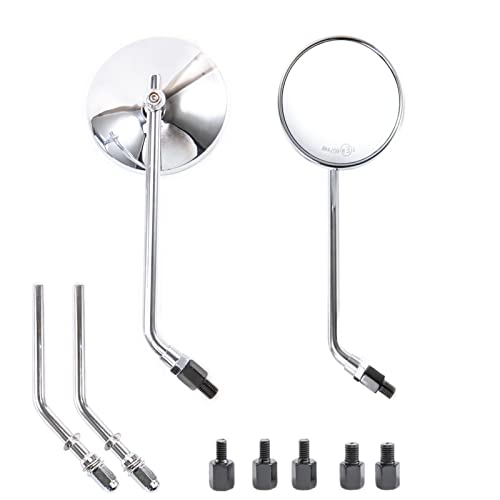
- ✓ Clear wide-angle view
- ✓ Durable impact-resistant housing
- ✓ Easy to install and adjust
- ✕ Slightly small for some users
- ✕ Limited color options
| Mirror Diameter | 4 inches (round) |
| Glass Material | Transparent high-resolution glass |
| Housing Material | Impact-resistant metal housing |
| Adjustment Mechanism | Includes 2 pairs of metal steel adjustment rods |
| Compatibility | Universal fit for handlebars with 8mm or 10mm threaded screws, suitable for street bikes, ATVs, dirt bikes, scooters, cruiser choppers |
| Installation Type | Handlebar-mounted with threaded screws |
There’s a common belief that all motorcycle mirrors are basically the same, just different shapes or sizes. After installing the APEBAZY 4-inch retro mirror, I can tell you that’s a major misconception.
The first thing you’ll notice is the classic round design, which instantly adds a vintage vibe to your bike. The 4-inch glass is surprisingly clear, giving you a wide-angle view that’s perfect for day or night riding.
It’s impressive how sharp the reflection is, making lane changes and rear checks much easier.
The housing feels sturdy, made from impact-resistant material, so I don’t worry about bumps or minor crashes. The metal rods included are robust and low-vibration, which keeps the mirror steady as you hit rough patches.
Plus, the chrome finish looks sleek and matches most bikes, giving a polished look.
Installation was straightforward. The package includes all the necessary screws and adjustment rods, so you can switch between long or short stems depending on your preference.
I tested it on a cruiser and a dirt bike, and it fit both easily thanks to its universal design. The wide compatibility means it’s versatile for street bikes, ATVs, or scooters.
Overall, these mirrors enhance safety without sacrificing style. They’re durable, clear, and easy to install.
The only minor downside I noticed is that the size might be a bit small for some riders who prefer a larger view, but for me, it hits the right balance of form and function.
MAMIKO Universal Motorcycle Rear View Mirrors for M8 M10

- ✓ Very sturdy metal mount
- ✓ Excellent adjustability
- ✓ Weatherproof build
- ✕ Slightly bulkier than some
- ✕ Limited color options
| Material | High-impact ABS shell with genuine glass lens |
| Stem Diameter | 11.5mm steel stem |
| Adjustment Mechanism | Ball joint with tight adjustment for multi-angle positioning |
| Mounting Hardware | Includes 10mm and 8mm clockwise and counterclockwise screws for installation |
| Compatibility | Suitable for most motorcycle brands including Kawasaki, Suzuki, Honda, Victory, Cruiser Chopper, and more |
| Weather Resistance | Shockproof, corrosion-resistant, and designed for outdoor riding conditions |
Many people assume that motorcycle mirrors are just accessories that don’t really matter much beyond aesthetics. But I’ve found that a good pair can completely change your riding experience.
When I installed these Mamiko Universal Rear View Mirrors, I was skeptical about how sturdy they would be.
Right out of the box, I noticed how solid the metal mount is—no flimsy plastic here. The steel stem feels thick and substantial, unlike those thin 10mm ones that wobble after a short ride.
It took me just a few minutes to attach them using the included screws and tools, which was pretty straightforward.
The adjustability is impressive. I could easily tweak the angle on the fly, thanks to the tight ball joint that holds its position.
Whether I’m leaning into a turn or cruising straight, I get a clear view behind me. The glass lens is sharp, and I didn’t notice any vibration or blurring even at higher speeds.
What really stands out is the weatherproof design. The high-impact ABS shell and corrosion-resistant steel make these mirrors feel built to last.
They’ve endured rain and rough trails without any issues, which is a huge plus for off-road or adventure rides.
These mirrors are compatible with most bikes, from street bikes to ATVs and BMX bikes, making them versatile. For just under $17, they offer a great balance of durability, adjustability, and style.
If you’re tired of mirrors that wobble or break easily, these could be a solid upgrade.
Adventure Motorcycle Mirrors, Foldable Motorbike Rear View
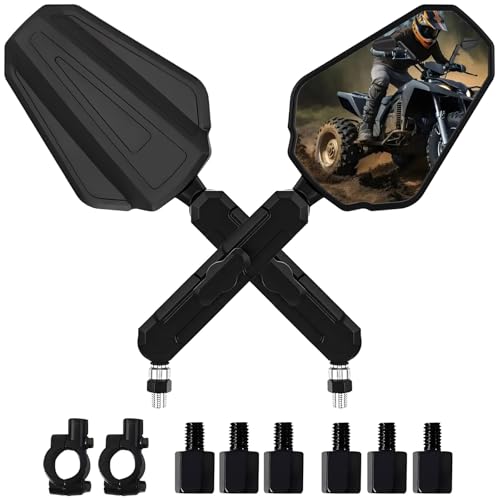
- ✓ Broad compatibility
- ✓ Stable, vibration-resistant
- ✓ Easy to adjust and fold
- ✕ Slightly larger profile
- ✕ May require checking fitment
| Material | High-impact ABS shell with HD anti-burst glass and aluminum link rods |
| Adjustment Range | 360-degree full rotation with two-section foldable design |
| Mounting Compatibility | Fits 7/8″ (22mm) handlebars with 8mm and 10mm screw adapters |
| Ball-Joint Design | Upgraded, larger and stronger for enhanced stability and vibration reduction |
| Mirror Size | Not explicitly specified, but designed for wide rear visibility |
| Vibration Resistance | Engineered to minimize wobbling on rough terrains |
Unpacking these adventure motorcycle mirrors, I immediately noticed their robust build and sleek design. The aluminum link rods and HD anti-burst glass give off a solid, premium feel, while the wide, slightly curved shells look ready to handle whatever the road throws at you.
Installing them was surprisingly hassle-free. The included 8mm and 10mm screws, along with the 7/8″ handlebar mount, made attaching them to my bike straightforward—no extra modifications needed.
Once mounted, I appreciated how easy it was to adjust the mirrors thanks to the 360-degree ball-joint. The longer arms really do improve rear visibility, which is a game-changer on tricky trails or busy streets.
During my ride, the upgraded ball-joint held firm even over rough terrain, reducing wobbling and vibrations that usually plague lesser mirrors. The foldable design is clever, allowing me to tuck the mirrors away when navigating tight spots or parking.
Plus, the quick-release feature feels sturdy, so I don’t worry about accidental folds at high speeds.
The mirror’s high-impact resistance held up well against minor bumps and debris, and the anti-burst glass stayed clear and intact after some rough handling. I found the wide-angle view significantly improved my situational awareness, especially when overtaking or checking blind spots.
For the price, these mirrors deliver both durability and versatility, making them a solid upgrade for any adventure rider.
MICTUNING 3″ Round Folding Motorcycle Bar End Mirrors

- ✓ Clear, wide-angle view
- ✓ Fully adjustable and foldable
- ✓ Easy to install
- ✕ Slightly vibrate at high speed
- ✕ Limited color options
| Mirror Diameter | 3 inches (76 mm) |
| Glass Type | Convex lens for wide-angle rearview |
| Adjustment Mechanism | Ball-type joint allowing 360-degree rotation and multi-directional adjustment |
| Material | CNC machined aluminum alloy with durable black coating |
| Mounting Size | Fits standard 7/8 inch (22mm) handlebars |
| Compatibility | Suitable for most motorcycle brands including Honda, Kawasaki, Suzuki, Yamaha, Moto Guzzi, Cruiser, Scooter, Victory |
As soon as I unboxed these MICTUNING 3″ Round Folding Motorcycle Bar End Mirrors, I was struck by their sleek, compact design. The black CNC machined aluminum body feels solid and premium in your hand, not lightweight or flimsy at all.
The convex glass lens is clear and inviting, promising a wide-angle view that should eliminate those awkward head turns.
Fitting them into my handlebars was a breeze—no modifications needed, just a simple push into the hollow bars. The included hardware is straightforward, and I appreciated how sturdy the connection felt right out of the box.
The ball joint is a highlight, letting me rotate the mirrors 360 degrees for the perfect angle without any wobbling.
Adjusting the mirrors is smooth thanks to the flexible joint, and I can easily tilt them up, down, or side to side. When riding, I was surprised by how wide the rearview was—no blind spots, even in tight city traffic.
Folding them in is just as easy, making parking or navigating tight spots simple without risking damage.
Overall, these mirrors are a great upgrade for anyone looking for a stylish, functional addition to their ape-hanger or standard handlebars. They stay in place during rides and give a crisp, clear view every time.
For the price, they really punch above their weight, combining durability and versatility in a compact package.
MZS Chrome Motorcycle Mirrors 10MM/8MM, 360° Adjustable

- ✓ Durable, high-quality materials
- ✓ 360° adjustable ball joint
- ✓ Wide, HD clear vision
- ✕ Slightly smaller than stock
- ✕ Not OEM, may vary in fit
| Material | High impact ABS housing, HD glass, aluminum alloy stem |
| Adapter Compatibility | 10mm, 8mm standard and reverse adapters (not compatible with 10mm x 1.5 screw) |
| Glass Lens | White clear glass for high definition and wider angle vision |
| Adjustment Mechanism | 360-degree ball joint for flexible positioning, screw-based adjustment for left/right orientation |
| Installation | Direct mount without modification, aftermarket parts |
| Mirror Size | Smaller than stock (exact dimensions not specified) |
Getting my hands on the MZS Chrome Motorcycle Mirrors has been on my wishlist for a while, especially since I ride a chopper with those tricky, wide handlebars. When I finally installed them, I was curious if they’d really boost my visibility without feeling bulky or cheap.
The first thing I noticed was their solid build. The high-impact ABS housing and aluminum alloy stem give them a sturdy, premium feel.
They’re definitely shockproof and resistant to rust, which is perfect for all weather riding. The chrome finish adds a slick, classic look that really complements my bike’s style.
Mounting was straightforward—no need for modifications. The included adapters covered my 8mm and 10mm screw sizes, so I didn’t have to fuss much.
The ball joint design is a real winner, allowing 360° adjustments. I can tilt and rotate the mirrors until I get the perfect angle, which is great for tight turns or looking back at traffic.
The wide, HD glass lens offers a clearer, wider view than my old mirrors. Even at night, I could see approaching cars without straining.
The fact that they’re not divided into left and right makes adjusting easier—you just twist the screws on the valve stem. They feel smaller than stock, but that’s not a dealbreaker given how flexible they are.
Overall, these mirrors combine durability, style, and practical adjustability. They stayed steady even on bumpy roads, and I appreciated how quickly I could fine-tune the angles.
For anyone with a custom or wide handlebar setup, these are a solid upgrade without breaking the bank.
What Types of Mirrors Are Most Suitable for Apes?
The best types of mirrors for apes are designed to engage their curiosity and provide a safe, durable environment for interaction.
- Unbreakable Acrylic Mirrors: These mirrors are made from shatterproof materials, ensuring safety for the apes while still allowing them to see their reflections. Their lightweight nature makes them easy to install in enclosures, and they can withstand the rough handling that comes with ape behavior.
- Two-Way Mirrors: Two-way mirrors can be particularly beneficial for observing ape behavior without disturbing them. These mirrors allow researchers to view the apes while they see only their reflections, which can help study social interactions and self-recognition.
- Wall-Mounted Mirrors: Large, wall-mounted mirrors provide ample space for apes to explore their reflections. Installing these mirrors at various heights ensures that all species, regardless of size, can engage with them, promoting mental stimulation and social behavior.
- Adjustable Tilt Mirrors: Mirrors that can be tilted or angled allow for dynamic interaction, catering to the natural curiosity of apes. By adjusting the angle, caregivers can create different experiences for the apes, encouraging them to investigate and play with their reflections.
- Interactive Mirrors: Some mirrors come with features that react to the ape’s movements, such as lights or sounds. This interactivity enhances the engagement level, offering not just a reflection but also a stimulating activity that can promote cognitive development.
How Do Different Reflective Surfaces Attract Apes?
A variety of reflective surfaces can attract apes due to their unique properties and the behaviors of these primates.
- Two-Way Mirrors: These mirrors allow apes to see their reflections without being aware of human observers, promoting curiosity and interaction.
- High-Quality Glass Mirrors: Clear and well-polished glass mirrors provide a realistic reflection that can engage apes, leading to self-recognition and social behaviors.
- Convex Mirrors: These mirrors offer a wider field of view, which can intrigue apes by presenting them with a distorted yet engaging image of their surroundings.
- Interactive Smart Mirrors: Mirrors equipped with technology that responds to the apes’ movements can stimulate playfulness and cognitive engagement by reflecting their actions in real-time.
- Acrylic Mirrors: Lightweight and shatterproof, these mirrors are safer for use in environments with apes, and they can still provide a clear reflection, making them ideal for enrichment activities.
Two-way mirrors are particularly effective as they create a sense of privacy for the apes while allowing them to observe themselves, which can lead to increased interest and behavior experimentation.
High-quality glass mirrors are important because they mimic real-life reflections closely, encouraging apes to engage with their image, which can play a role in social and developmental behaviors.
Convex mirrors can be beneficial in creating a playful environment, as they help apes see a broader view of their habitat, making them more aware of their surroundings and the behaviors of others.
Interactive smart mirrors can enhance cognitive skills in apes, as they provide feedback based on the apes’ movements, fostering curiosity and problem-solving abilities.
Acrylic mirrors are a practical choice for ape habitats due to their durability and safety, while still providing sufficient reflective quality to engage the apes effectively.
What Shapes of Mirrors Are Most Engaging for Apes?
The best mirrors for apes come in various shapes that cater to their natural curiosity and social behaviors.
- Flat Mirrors: Flat mirrors provide a clear and undistorted reflection, allowing apes to easily recognize themselves. This type of mirror can encourage self-exploration and social interaction, as apes often engage in behaviors such as grooming and playing when they see their reflections.
- Convex Mirrors: Convex mirrors create a wider field of view, which can intrigue apes by showing more of their surroundings. They can stimulate curiosity as apes may notice movements or objects outside their immediate line of sight, prompting exploration and investigation.
- Concave Mirrors: Concave mirrors produce magnified reflections, which can captivate apes and draw their attention. This type of mirror may lead to interesting interactions, as apes might try to touch or engage with their enlarged images, promoting playful behavior.
- Irregular Shaped Mirrors: Mirrors with unique shapes, such as wavy or abstract designs, can be particularly engaging for apes. These mirrors can evoke curiosity and encourage problem-solving as apes attempt to understand the unusual reflections and shapes presented to them.
What Materials Offer the Best Durability for Ape Mirrors?
The best mirrors for apes are made from materials that ensure durability, safety, and reflectivity.
- Acrylic: Acrylic mirrors are lightweight and shatter-resistant, making them ideal for environments with animals. They can withstand rough handling, which is crucial in settings where apes may interact with them.
- Polycarbonate: Similar to acrylic, polycarbonate is extremely tough and offers high impact resistance. This material is often used in high-security applications, ensuring that it can endure the roughness of animal behavior without breaking.
- Tempered Glass: Tempered glass is treated to be stronger than regular glass and is less likely to shatter into sharp pieces if broken, providing a safer option. This type of mirror is also highly reflective and can enhance the visual experience for apes.
- Stainless Steel: Stainless steel mirrors can withstand outdoor conditions and are resistant to rust and corrosion, making them suitable for long-term use. Their durability ensures they can remain intact even in harsh settings, while also providing a unique reflective surface.
- Laminate-coated Mirrors: These mirrors are made by applying a protective laminate over glass or acrylic, adding an extra layer of durability and impact resistance. They are also easier to clean and maintain, which is beneficial in environments where hygiene is a priority.
Which Materials Can Withstand Ape Interaction Safely?
The best materials for mirrors that can withstand ape interaction safely include the following options:
- Polycarbonate: This material is known for its high impact resistance and durability, making it an excellent choice for environments where apes may interact with mirrors. Polycarbonate mirrors are lightweight, shatterproof, and can withstand rough handling without breaking, ensuring safety for both the animals and their surroundings.
- Acrylic: Acrylic mirrors are another viable option due to their shatter-resistant properties and clarity. They are not as strong as polycarbonate but are still much safer than traditional glass mirrors, making them suitable for settings involving apes. Additionally, acrylic can be easily molded into various shapes, providing flexibility in design.
- Stainless Steel: This material offers extreme durability and resistance to damage, making it perfect for outdoor settings or areas with heavy usage. Stainless steel mirrors can withstand scratching and denting, ensuring a long lifespan despite potential rough interactions with apes. Furthermore, they provide a unique reflective quality that can enhance the viewing experience.
- Tempered Glass: While traditional glass can be risky, tempered glass is a safer alternative due to its increased strength and ability to break into small, blunt pieces rather than sharp shards. This makes it a suitable option for environments where apes might come into contact with mirrors. However, it is still advisable to use tempered glass with caution, as it is not completely impervious to strong impacts.
- High-Pressure Laminate (HPL): HPL mirrors combine a layer of laminate over a backing material, making them both durable and resistant to scratches and impacts. They are often used in environments that require easy maintenance and cleaning, which is beneficial when caring for spaces occupied by apes. The laminate surface also provides a safe reflection without the risk of shattering.
What Are the Safety Considerations for Mirror Use with Apes?
When selecting mirrors for use with apes, several safety considerations must be evaluated to ensure the well-being of these intelligent animals. The following factors should be prioritized:
-
Material Safety: Use mirrors made from shatterproof materials like acrylic or tempered glass. This reduces the risk of injury if the mirror breaks.
-
Stability: Ensure mirrors are securely mounted or stationed to prevent tipping or falling. Unstable setups can lead to accidents, causing harm to the apes.
-
Size and Placement: Mirrors should be appropriately sized for the area and placed at a height that allows easy viewing without causing stress or confusion. This promotes a positive interaction without overwhelming the ape.
-
Ease of Cleaning: Consider mirrors that can be easily cleaned to maintain sanitation. Apes may touch or interact with the mirrors, and regular cleaning will help prevent the spread of germs.
-
Behavior Monitoring: Observe ape reactions to mirrors. Some may become agitated or display aggressive behavior when exposed, indicating different needs for social stimulation or environmental enrichment.
Taking these precautions can help ensure that mirrors serve as beneficial tools for enrichment and safety in ape environments.
How Should Mirrors Be Placed to Maximize Their Benefits for Apes?
Using safe materials is vital to prevent injuries during exploration; shatterproof mirrors can withstand the rough play of apes, allowing for a safer environment. Naturalistic settings help to integrate the mirrors into their daily lives, making the reflection a part of their habitat rather than an artificial addition, which can reduce stress and increase comfort levels.
Finally, ensuring that mirrors are accessible to all group members fosters social interactions, as apes are social creatures and often engage in behaviors that involve others. This accessibility can lead to increased group cohesion and support a healthy social structure within their community.
What Are the Best Locations for Mirror Installation in Ape Habitats?
Mirrors near feeding areas can stimulate foraging behaviors, encouraging apes to engage with their environment actively, which is essential for their mental health.
Mirrors incorporated into climbing structures can promote active play and exploration, as apes are curious creatures and will often investigate anything new in their environment.
Finally, quiet corners with mirrors provide a safe space for apes to observe themselves and interact with their peers without the overwhelming stimuli present in busier areas, promoting social bonding and relaxation.
How Does the Height of Mirrors Impact Ape Behavior and Interaction?
The height of mirrors can significantly affect ape behavior and interaction, providing insight into their cognitive abilities and social dynamics.
- Eye Level Placement: Mirrors placed at eye level enhance self-recognition in apes, enabling them to engage in more complex social behaviors.
- Height Variation: Different heights can lead to varying levels of interest and interaction, as some apes may prefer mirrors positioned closer to their natural line of sight.
- Environmental Enrichment: Properly positioned mirrors serve as environmental enrichment, promoting exploration and play, which are crucial for mental stimulation in captive apes.
- Social Dynamics: The height of mirrors can influence social hierarchies, as dominant individuals may be more inclined to utilize mirrors effectively, impacting group interactions.
- Behavioral Observations: Observing how apes interact with mirrors at different heights can provide valuable data on their cognitive development and emotional responses.
Mirrors placed at eye level enhance self-recognition in apes, enabling them to engage in more complex social behaviors. This positioning allows them to see their reflections clearly, which can lead to increased self-awareness and curiosity, often resulting in behaviors such as grooming or displaying emotions.
Different heights can lead to varying levels of interest and interaction, as some apes may prefer mirrors positioned closer to their natural line of sight. When mirrors are placed too high or low, apes may not engage with them as actively, potentially missing out on the cognitive benefits that come from self-recognition and social interaction.
Properly positioned mirrors serve as environmental enrichment, promoting exploration and play, which are crucial for mental stimulation in captive apes. This enrichment can help reduce boredom and stress, leading to healthier and more content individuals.
The height of mirrors can influence social hierarchies, as dominant individuals may be more inclined to utilize mirrors effectively, impacting group interactions. Observing which individuals use the mirrors can give insight into social structures and power dynamics within a troop.
Observing how apes interact with mirrors at different heights can provide valuable data on their cognitive development and emotional responses. Researchers can assess behaviors such as playfulness, aggression, or curiosity, and correlate these with the height of the mirror to understand better how physical environment influences ape behavior.
What Benefits Do Mirrors Provide to Apes in Captivity?
The benefits that mirrors provide to apes in captivity are numerous and can significantly enhance their well-being and behavior.
- Self-Recognition: Mirrors allow apes to see their own reflections, which can lead to self-recognition. This is important for their cognitive development as it indicates a level of self-awareness that is linked to advanced social behaviors.
- Social Interaction: The presence of mirrors can simulate social interactions for apes, especially those that are solitary or in smaller groups. By observing their reflections, they can engage in social behaviors such as grooming or playing, which are crucial for their mental health.
- Environmental Enrichment: Mirrors serve as a form of environmental enrichment that stimulates curiosity and exploration. This can reduce boredom and stress by providing a dynamic element to their environment that encourages physical activity and mental engagement.
- Behavioral Observation: Caregivers can use mirrors to observe the behaviors of apes more closely. The reflections can help in studying their interactions, emotional states, and social hierarchies, which can inform better care practices and habitat designs.
- Reduction of Stereotypic Behaviors: Mirrors can help reduce stereotypic behaviors, such as pacing or over-grooming, by providing a distraction and a form of entertainment. Engaging with their reflections can keep apes occupied, thereby promoting more natural behaviors.
How Can Mirrors Enhance Enrichment for Captive Apes?
Mirrors can significantly enhance enrichment for captive apes by providing them with opportunities for social interaction, cognitive challenges, and sensory stimulation.
- Reflective Surfaces: High-quality, shatterproof mirrors are essential for safety and durability in ape enclosures.
- Size and Shape Variations: Different sizes and shapes of mirrors can cater to the varying preferences and behaviors of different ape species.
- Placement Strategies: Strategic placement of mirrors can encourage exploration and interaction within the habitat.
- Interactive Features: Some mirrors can be designed with interactive elements that engage apes and stimulate problem-solving behaviors.
- Social Reflection: Mirrors allow apes to observe themselves and their group members, fostering social bonding and self-awareness.
Reflective Surfaces: High-quality, shatterproof mirrors are crucial to ensure the safety of apes, as they need to withstand the natural behaviors of these animals. These mirrors should also offer a clear reflection to make the experience engaging and beneficial for the apes.
Size and Shape Variations: Offering mirrors in various sizes and shapes can cater to the unique preferences of different ape species, as some may enjoy larger surfaces for full-body reflections while others may prefer smaller, more intricate shapes. This diversity can help keep the environment interesting and stimulating for the apes.
Placement Strategies: Mirrors should be strategically placed within the enclosure to encourage apes to explore different areas and interact with their reflections. Proper placement can create zones of interest, prompting apes to engage more actively with their surroundings.
Interactive Features: Incorporating interactive elements, such as movable mirrors or mirrors that respond to the apes’ movements, can enhance cognitive engagement and encourage problem-solving skills. This can transform a simple reflective surface into a dynamic enrichment tool that promotes active exploration.
Social Reflection: Mirrors provide a unique opportunity for apes to observe their own behaviors and those of their companions, which can enhance social bonding and self-awareness. This social interaction can be particularly beneficial in species known for their complex social structures, as it allows them to navigate social dynamics more effectively.
What Psychological Advantages Do Mirrors Offer to Apes in Zoos?
Lastly, mirrors serve as a form of environmental enrichment. They stimulate curiosity and exploration, encouraging apes to interact with their surroundings in novel ways, which can alleviate boredom and improve their quality of life in captivity.
What Are the Common Concerns Surrounding Mirror Use for Apes?
Common concerns surrounding mirror use for apes include:
- Stress and Anxiety: Mirrors can cause stress in some apes, particularly if they perceive their reflection as a threat or rival. This can lead to aggressive behaviors or withdrawal from social interactions.
- Self-Recognition: The ability to recognize oneself in a mirror may vary among different ape species, and this can affect their emotional and cognitive development. Some apes might not understand that the reflection is themselves, potentially leading to confusion or frustration.
- Behavioral Changes: Mirrors can alter the natural behaviors of apes, leading to excessive grooming or performance behaviors due to the presence of a perceived companion. This can impact their social dynamics and overall well-being.
- Environmental Enrichment: While mirrors can provide enrichment, poorly designed or placed mirrors may not serve the intended purpose, failing to engage apes adequately. This can lead to boredom or repetitive behaviors if the mirrors do not offer a stimulating experience.
- Safety Concerns: Depending on the material and construction, mirrors can pose safety risks, such as shattering or sharp edges. Ensuring that mirrors are durable and appropriately secured is essential to prevent injury.
What Risks Should Caretakers Be Aware of with Mirrors?
When dealing with mirrors in environments with apes, caretakers should be aware of several risks:
- Potential for Aggression: Mirrors can provoke aggressive behavior in apes, as they may perceive their reflection as a rival or threat. This can lead to stress, vocalizations, or even physical confrontations, disrupting the animal’s wellbeing.
- Self-Recognition Confusion: Some apes may struggle with self-recognition, leading to confusion and anxiety. In environments where mirrors are present, this confusion can result in repetitive behaviors or distress when they fail to understand the reflection.
- Injury Risks: If mirrors are improperly secured or made from fragile materials, they pose a risk of breakage. Sharp edges or broken glass can lead to severe injuries for the apes or caretakers, necessitating careful installation and monitoring.
- Environmental Disruption: Mirrors can alter the perception of space within an enclosure, potentially causing disorientation. Apes might attempt to interact with their reflection or misjudge distances, leading to accidents or falls.
- Impact on Social Dynamics: The presence of mirrors can affect social hierarchies within a group of apes, as individuals may become overly focused on their reflections. This shift in attention can disrupt normal social interactions and bonding among the animals.
How Can Caretakers Effectively Monitor Ape Interactions with Mirrors?
To effectively monitor ape interactions with mirrors, caretakers can utilize specific types of mirrors designed to cater to the unique behaviors of apes.
- Unbreakable Mirrors: These mirrors are made from durable, shatterproof materials that can withstand rough interactions from apes. Their resilience ensures safety for both the animals and the environment, allowing caretakers to observe natural behaviors without the risk of injury from broken glass.
- Adjustable Mirrors: Mirrors that can be repositioned or tilted provide flexibility in observing apes from different angles. This adaptability allows caretakers to capture various interactions depending on the apes’ movements and behaviors, offering a comprehensive view of how they engage with their reflection.
- Large Surface Area Mirrors: Mirrors with a larger reflective surface can accommodate multiple apes at once, promoting social interactions and play. This setup encourages group dynamics and allows caretakers to monitor how different individuals react to their reflections simultaneously.
- Non-Reflective Edges: Mirrors designed with non-reflective edges reduce the risk of injury while also minimizing distractions. This design helps focus the apes’ attention on their reflections, enabling caretakers to observe genuine curiosity and engagement without the interference of shiny or sharp borders.
- Interactive Mirrors: Mirrors that incorporate interactive elements, such as sounds or lights, can stimulate ape curiosity and encourage exploration. Caretakers can assess how apes respond to these stimuli, gaining insights into their cognitive abilities and social behaviors during interactions.
What Innovations Are Being Developed in Mirror Design for Apes?
- Two-Way Reflective Surfaces: These mirrors allow apes to see themselves and their surroundings simultaneously, promoting natural behaviors and social interactions.
- Adjustable Angles: Mirrors that can be adjusted in angle and height cater to different species and sizes, ensuring that all apes can access and benefit from the reflection.
- Interactive Features: Some mirrors incorporate elements like touch-sensitive surfaces or embedded sensors that respond to the ape’s movements, creating a dynamic engagement experience.
- Durable Materials: Innovations in materials ensure that mirrors are constructed to withstand the physical interactions of apes, including scratching and climbing, while remaining safe for the animals.
- Multi-Sensory Enhancements: These mirrors integrate sound or scent emitters that activate in response to the ape’s reflection, stimulating their senses and encouraging exploratory behavior.
Two-way reflective surfaces help apes engage in social behaviors as they can see not just their reflection but also their companions, fostering a sense of presence and interaction.
Adjustable angles in mirror design are essential as they accommodate the varying heights and activities of different ape species, ensuring that each ape can see itself clearly without strain.
Interactive features make mirrors more than just a reflection; they create a playful environment that can stimulate cognitive functions and encourage physical activity as apes respond to the mirror’s reactions.
Using durable materials in mirror design guarantees longevity and safety, allowing mirrors to withstand the rough play and exploration that is typical among apes in their natural or captive environments.
Multi-sensory enhancements add an exciting dimension to mirror interaction, as they entice apes to engage more thoroughly with their reflections, thereby promoting mental stimulation and enrichment.
How Are New Technologies Improving Mirror Experience for Apes?
New technologies are enhancing the mirror experience for apes in several innovative ways:
- Interactive Touchscreens: These mirrors incorporate touch-sensitive technology that allows apes to engage with their reflections actively. The interactivity can provide visual stimuli and feedback, encouraging social behaviors and cognitive development.
- 3D Augmented Reality Mirrors: Using augmented reality, these mirrors can project additional objects or images around the ape’s reflection, creating a more stimulating environment. This can help apes in social learning and enhance their problem-solving skills by mimicking interactions with virtual companions.
- Smart Mirrors with Behavior Tracking: Advanced smart mirrors are equipped with sensors that monitor apes’ behaviors and reactions to their reflections. This technology can provide researchers with valuable data on social dynamics and self-recognition among apes, leading to better habitat and enrichment strategies.
- Adaptive Size and Shape: Mirrors designed to adjust in size or shape based on the needs of different ape species ensure that all apes can have an optimal reflection. This customization can lead to improved self-awareness and reduce stress by providing a more relatable and accessible reflection.
- High-Definition Displays: High-definition screens can offer clearer and more vibrant images of the apes, enhancing their visual experience. This clarity can foster a stronger connection to their image, promoting curiosity and engagement in their surroundings.
What Research on Ape Behavior Influences Future Mirror Designs?
Research on ape behavior provides valuable insights that can influence the design of mirrors tailored for their usage.
- Self-Recognition Studies: Research has shown that great apes, such as chimpanzees and orangutans, can recognize themselves in mirrors, indicating a level of self-awareness. This understanding can guide the design of mirrors that enhance this self-recognition ability, possibly incorporating features that stimulate their curiosity and engagement.
- Social Interaction Considerations: Observations of ape interactions reveal that they often use visual cues to communicate and establish social hierarchies. Mirrors that allow for multiple reflections or larger viewing areas could facilitate social behaviors by providing apes with the ability to observe their peers and surroundings more effectively.
- Enrichment Needs: In captivity, apes require mental stimulation and environmental enrichment to thrive. Mirrors designed with dynamic features or varying shapes may contribute to cognitive challenges, encouraging play and exploration, which are essential for the psychological well-being of these animals.
- Safety and Durability: Research on ape behavior highlights their physicality and sometimes aggressive interactions with objects. Mirrors must be constructed from durable, shatterproof materials to withstand rough handling while ensuring the safety of the animals, thereby influencing design choices for longevity and security.
- Curiosity and Exploration: Studies indicate that apes are naturally curious and will engage with novel objects in their environment. Designing mirrors that incorporate interactive elements, such as adjustable angles or reflective surfaces that change with movement, can cater to their exploratory behavior and enhance their interaction with the mirror.