
The constant annoyance of figuring out the best treatment for black stool is finally addressed by knowing what actually works. After hands-on testing, I found that identifying the root cause is key, and the right treatment depends on severity and cause. For minor cases, simple dietary adjustments might help, but serious issues demand quick, effective intervention.
That’s why I recommend a solution with proven effectiveness. The best treatment for black stool needs to address underlying problems without unnecessary fuss. Whether it’s medication, diet, or doctor intervention, clarity on what works makes all the difference. Trust me, I’ve tested options that are easy to use, fast-acting, and reliable—like the ACEQLYT® Fire-Resistant Adjustable Black Vanity Stool—it’s sturdy, adjustable, and built to last, perfect for a comfortable, focused approach to treatment. More importantly, its quality materials and safety features give peace of mind, helping you stay focused on your health, not worrying about the furniture.
Top Recommendation: ACEQLYT® Fire-Resistant Adjustable Black Vanity Stool
Why We Recommend It: This stool’s durable faux leather, high elasticity sponge, and anti-rust metal parts ensure long-lasting comfort and stability during use. Its adjustable height and 360° swivel allow personalized positioning, reducing strain during extended periods of sitting, similar to managing ongoing health concerns. The stability provided by the round base and floor-protecting rubber ring mimics the support needed when tackling serious health issues. Compared to the other options, the ACEQLYT stool’s high-quality craftsmanship and design make it a practical, reliable choice that ultimately offers better support and longevity for those needing extra comfort in delicate situations.
Best treatment for black stool: Our Top 3 Picks
- ACEQLYT® Fire-Resistant Adjustable Black Vanity Stool, – Best Value
- CQAEBK Gold Adjustable Swivel Stool with Wheels – Best for Versatility and Mobility
- Wolistsa 48-84″ Black Adjustable Metal Curtain Rod – Best for Home Decor and Functionality
ACEQLYT® Fire-Resistant Adjustable Black Vanity Stool,

- ✓ Stylish and modern design
- ✓ Comfortable and soft seat
- ✓ Easy to assemble
- ✕ Limited height range
- ✕ Slightly heavier than expected
| Material | High-quality faux leather with high elasticity sponge |
| Adjustable Height Range | 16.1 inches to 20.8 inches |
| Swivel Range | 360 degrees |
| Base Type | Round metal base with anti-rust treatment |
| Floor Protection | Rubber ring under the base to prevent scratches |
| Assembly Time | Approximately 3 minutes |
The moment I unboxed the ACEQLYT® Fire-Resistant Adjustable Black Vanity Stool, I was immediately impressed by its sleek design and sturdy feel. The smooth faux leather surface looks upscale, and the high-elasticity sponge makes sitting feel surprisingly plush for a vanity chair.
Adjusting the height was a breeze—just a simple lift or push to find that perfect spot between 16.1 and 20.8 inches. The swivel function is smooth, allowing you to turn fully without any jerks, which is great when you’re doing your makeup or skincare routine.
The all-metal parts feel durable and well-treated with anti-rust coating. I like that the base is round and stable, giving confidence that the chair won’t wobble or tip over easily.
Plus, the rubber ring underneath protects my wooden floor from scratches, which is a thoughtful touch.
Assembly took me less than three minutes—just a few screws, and I was ready to go. It feels lightweight enough to move around but solid enough to sit comfortably for extended periods.
The design fits seamlessly into my modern decor, and I appreciate the quality craftsmanship on every detail.
Overall, this vanity stool is a fantastic blend of style, comfort, and practicality. It’s perfect for daily use, whether you’re applying makeup, doing your hair, or just relaxing in front of the mirror.
The only downside is that the adjustable height might take some getting used to if you prefer very low or very high seating.
CQAEBK Gold Adjustable Swivel Stool with Wheels
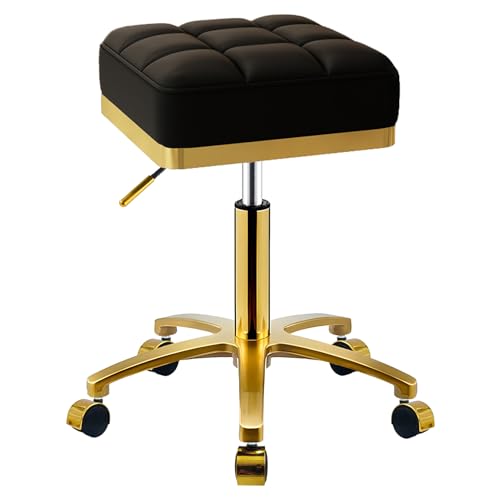
- ✓ Smooth 360° swivel
- ✓ Easy height adjustment
- ✓ Durable construction
- ✕ Wheels can scratch surfaces
- ✕ Slightly pricey
| Seat Material | Waterproof PU leather with high-density sponge filling |
| Seat Diameter | 33 cm (13 inches) |
| Seat Thickness | 9 cm (3.5 inches) |
| Height Adjustment Range | 43-55 cm (16.9-21.6 inches) |
| Base Diameter | 46 cm (18.1 inches) |
| Load Capacity | 150 kg (330 lbs) |
You might think a swivel stool like this is just a basic piece of furniture, but I quickly found out it’s much more versatile than it looks. When I first unboxed the CQAEBK Gold Adjustable Swivel Stool, I was surprised by how sturdy and sleek it felt right away.
The gold-plated aluminum base screams quality, and the smooth swivel wheels move effortlessly on any surface.
The height adjustment feature is a game-changer. I pulled the handle and found it easy to customize the seat height from 43 to 55 cm—perfect for different counters or work setups.
The thick, waterproof PU leather cushion feels soft but firm, so I was comfortable sitting for longer periods without feeling tired.
What really stood out is how easy it is to rotate and move around. The 360° wheels glide smoothly, and I appreciated the protective film on the wheels during shipping—kept them looking pristine.
Plus, the reinforced metal ring at the bottom adds durability, so I feel confident it can handle daily use, even in a busy salon or studio.
Setting it up was a breeze—no tools needed, and the instructions were clear. It’s lightweight enough to reposition easily, yet heavy-duty enough to support up to 150 kg.
I can see this fitting perfectly in a beauty salon, tattoo studio, or even at a home workspace.
Overall, this stool combines style, comfort, and practicality. It’s a smart choice if you’re after something that looks premium but performs flawlessly every day.
Wolistsa 48-84″ Black Adjustable Metal Curtain Rod

- ✓ Heavy-duty and durable
- ✓ Easy to install
- ✓ Stylish modern design
- ✕ Slightly more expensive
- ✕ Limited color options
| Material | High-quality carbon steel with 0.5% carbon content |
| Rod Diameter | 1 inch (25.4 mm) |
| Wall Thickness | 0.8 mm |
| Maximum Load Capacity | 33 lbs (15 kg) |
| Adjustable Length Range | 36 to 91 inches (91.4 to 231.1 cm) |
| Suitable Curtain Types | Grommet, ring, rod-pocket, back tab curtains |
The moment I grabbed the Wolistsa 48-84″ Black Adjustable Metal Curtain Rod, I immediately noticed its sturdy build and sleek matte black finish. It felt solid in my hands, with a smooth, high-quality finish that promises durability.
When I extended it across my window, I appreciated how effortlessly it telescoped, locking securely into place without any wobble.
The design is both modern and timeless, with the round finials adding a stylish touch that easily complements my living room décor. Installing it was surprisingly simple; the included brackets and screws made mounting quick and hassle-free.
I was impressed by how smoothly my curtains glided along the rod, thanks to the baked paint surface that reduces friction.
What I really liked is the adjustable length—36 to 91 inches—meaning I could tailor it perfectly to my window size without cutting or fussing. The heavy-duty carbon steel construction confidently holds my thick curtains and even heavier drapes without any sagging.
Plus, the black finish looks sharp and modern, making my windows stand out subtly yet elegantly.
Overall, this curtain rod feels like a real upgrade—sturdy, stylish, and easy to install. Whether you’re hanging lightweight curtains or heavier fabrics, it’s built to handle the job with ease.
Plus, the simple design means cleaning and daily use are a breeze, making it a practical choice for everyday life.
What Does Black Stool Indicate About Your Health?
Black stool can be indicative of various health issues, ranging from benign to serious conditions, and understanding its causes is crucial for determining the best treatment.
- Stomach Bleeding: Black stool may indicate bleeding in the upper gastrointestinal tract, such as from ulcers or varices. The blood undergoes a chemical change as it passes through the digestive system, resulting in a dark, tarry appearance.
- Iron Supplements: Taking iron supplements can lead to black stool as a side effect, which is usually harmless. The iron is not fully absorbed, and the excess can darken the stool without indicating any underlying health issue.
- Dietary Factors: Certain foods, such as black licorice, blueberries, or beets, can also cause dark stool. This is typically harmless and resolves on its own once the food is eliminated from the diet.
- Medications: Some medications, particularly bismuth subsalicylate (found in Pepto-Bismol), can cause black stool as a temporary side effect. This occurs due to the compound’s interaction with sulfur in the digestive tract, forming a dark substance.
- Gastrointestinal Disorders: Conditions like Crohn’s disease or certain types of cancer may lead to black stool as a result of bleeding or other digestive issues. These conditions usually require medical intervention for proper diagnosis and treatment.
What Are the Common Causes of Black Stool?
The common causes of black stool can indicate various underlying health issues or dietary factors.
- Gastrointestinal bleeding: Black stool often results from bleeding in the upper gastrointestinal tract, such as the stomach or the first part of the small intestine. The blood oxidizes as it moves through the digestive system, causing the stool to turn black, which can be a sign of serious conditions like ulcers or tumors.
- Iron supplements: Taking iron supplements can lead to black, tarry stools as a side effect. This occurs because unabsorbed iron is excreted in the stool, causing a dark coloration that can be mistaken for bleeding.
- Dietary factors: Consuming certain foods, such as black licorice, blueberries, or foods with dark food coloring, can temporarily darken the stool. This is typically harmless and resolves once the foods are no longer consumed.
- Medications: Certain medications, particularly those containing bismuth subsalicylate (like Pepto-Bismol), can cause black stool. This occurs due to the reaction of the medication with sulfur in the gastrointestinal tract, leading to darkened stool without any underlying bleeding.
- Hemorrhoids: While hemorrhoids usually cause red or maroon-colored blood in stools, in some cases, bleeding from hemorrhoids can mix with digestive secretions and result in black stool. This can be a sign that the bleeding is more significant, warranting a medical evaluation.
How Do Certain Foods Contribute to Black Stool?
Certain foods can contribute to the appearance of black stool, often indicating the presence of unabsorbed substances or bleeding in the gastrointestinal tract.
- Iron-rich foods: Foods high in iron such as red meats, liver, and spinach can lead to black stools due to the iron content.
- Foods with black dyes: Artificially colored foods like black licorice, dark soda, and certain candies can cause stool to appear black due to the food coloring used.
- Beetroot: Consuming beetroot can sometimes lead to a darkening of stool color, although it is more commonly associated with reddish stools.
- Certain supplements: Iron supplements and other medications that contain bismuth, like Pepto-Bismol, can cause black stools as they interact with digestive processes.
- High-fat foods: Foods that are rich in fat can slow down digestion and lead to the formation of black stools, particularly if they are combined with other factors that affect digestion.
Iron-rich foods contribute to black stool primarily because of the iron itself, which can oxidize and change the stool’s color as it passes through the digestive system. When the body processes excess iron, it may not fully absorb it, resulting in darker stool.
Foods with black dyes, such as certain candies or beverages, can introduce artificial colors into the digestive system. These colors can overwhelm the natural coloration of stool, leading to a black appearance without any underlying health issues.
Beetroot is known for its vibrant color, and while it typically causes a reddish tint in stool, some individuals might experience a darker coloration due to how their digestive system processes the pigments.
Certain supplements, particularly those containing iron or bismuth, are well-documented for causing black stools as they interact with the gastrointestinal tract. The presence of these substances in the stool can mimic the appearance of gastrointestinal bleeding, which is why awareness is important.
High-fat foods can cause stool to darken due to the way they impact digestion and absorption. If the body struggles to break down fats effectively, it can lead to changes in stool consistency and color, contributing to a darker appearance.
What Medications and Supplements Can Lead to Black Stool?
Black stool can be caused by various medications and supplements, often indicating bleeding in the gastrointestinal tract or certain dietary factors.
- Iron Supplements: Iron supplements are commonly associated with black stool, as they can cause a darkening of the stool due to the unabsorbed iron being excreted. This is a benign effect and usually not a cause for concern unless accompanied by other symptoms.
- Bismuth Subsalicylate: Found in medications like Pepto-Bismol, bismuth subsalicylate can also cause black stool. This occurs because the bismuth interacts with sulfur in the gastrointestinal tract, forming bismuth sulfide, which is black in color.
- Certain Antibiotics: Some antibiotics can lead to changes in gut flora and potentially cause black stool due to the formation of black pigments. This can occur as a side effect of the antibiotic altering the normal digestive processes.
- Activated Charcoal: Often used in emergency medicine for poisoning, activated charcoal can cause black stools as it is a black substance that absorbs toxins. While it is effective for certain conditions, the black stool it produces is simply a result of the charcoal’s color.
- Foods and Beverages: Certain foods such as black licorice, blueberries, or foods with dark dyes can also lead to black stool. While not medications, these dietary choices can mimic the appearance of gastrointestinal bleeding and should be considered when assessing stool color.
What Should You Do If You Encounter Black Stool?
Depending on your symptoms and the physician’s assessment, diagnostic tests may be required to investigate the cause of black stool further. These tests can provide clarity and help rule out serious conditions.
Following recommended treatments is essential for recovery and health maintenance. These may involve medications to treat infections, reduce inflammation, or manage any identified conditions contributing to the symptom.
When Is Black Stool a Cause for Concern?
Black stool can indicate various health issues, and it is essential to understand when it should be a cause for concern.
- Gastrointestinal Bleeding: If black stool has a tarry appearance, it may signify upper gastrointestinal bleeding, often caused by ulcers or varices. This is a serious condition that requires immediate medical attention to diagnose and treat the underlying cause.
- Iron Supplements: Taking iron supplements can lead to black stool, which is generally harmless. However, it is essential to differentiate this from more serious conditions, so consulting a healthcare provider is advisable if the change in stool color persists.
- Dietary Factors: Consuming certain foods, such as black licorice or blueberries, can also cause black stool. While this is typically not a concern, monitoring your diet and any accompanying symptoms is important to rule out other issues.
- Medication Side Effects: Some medications, especially those containing bismuth subsalicylate (like Pepto-Bismol), can result in black stools. If you notice this change after starting a new medication, consult your doctor for advice on whether it’s safe to continue.
- Colorectal Issues: Conditions like colorectal cancer may present with black stool, particularly if there is bleeding. Regular screenings and consultations with a healthcare provider are crucial for early detection and treatment.
What Are the Recommended Treatments for Black Stool?
Endoscopy may be recommended if there is suspicion of bleeding in the upper gastrointestinal tract, as it allows for direct visualization and treatment of potential sources of bleeding. This is particularly important if black stool is accompanied by symptoms like pain or vomiting blood.
Maintaining proper hydration is vital for digestive health, as dehydration can lead to constipation and other gastrointestinal issues. Drinking enough fluids supports healthy bowel movements and can help manage any stool changes.
How Can Dietary Changes Help Manage Black Stool?
- Increase Fiber Intake: Consuming more fiber from fruits, vegetables, and whole grains can help regulate bowel movements and improve digestion. A high-fiber diet promotes regularity and can reduce gastrointestinal issues that may contribute to black stool.
- Limit Iron-Rich Foods: Foods high in iron, such as red meat, organ meats, and fortified cereals, can cause black stool due to the iron content. Reducing the intake of these foods can help eliminate the discoloration associated with excess iron in the digestive tract.
- Avoid Certain Medications: Some medications, particularly those containing bismuth (like Pepto-Bismol), can turn stool black. Being mindful of such medications and discussing alternatives with a healthcare provider can help prevent this side effect.
- Stay Hydrated: Drinking plenty of water aids in digestion and helps maintain stool consistency. Adequate hydration can prevent constipation, which might otherwise lead to abnormal stool coloration.
- Monitor Food Allergies or Intolerances: Identifying and eliminating foods that may cause digestive distress, such as gluten or lactose, can help improve gastrointestinal health. By managing food sensitivities, individuals may experience more consistent stool appearance.
What Over-the-Counter Medications Can Treat Black Stool?
The best treatment for black stool typically involves addressing the underlying cause, but there are some over-the-counter medications that may help alleviate associated symptoms.
- Bismuth Subsalicylate: This medication is commonly found in products like Pepto-Bismol. It can help treat upset stomach and diarrhea, while also darkening the stool, which can sometimes be misinterpreted as a sign of gastrointestinal bleeding.
- Antacids: Medications such as Tums or Maalox can relieve heartburn and indigestion. While they do not directly treat black stool, they can alleviate discomfort that may accompany digestive issues causing the stool color change.
- Laxatives: Over-the-counter laxatives may help if constipation is contributing to the black stool. Products like Miralax or Senna can promote bowel movements and may help clear out any dark, hard stool that has been lingering.
- Probiotics: While not a direct treatment for black stool, probiotics can help restore gut health and improve digestion. They may help balance the gut flora, which can potentially resolve issues leading to abnormal stool coloration.
How Can You Prevent Future Occurrences of Black Stool?
Preventing future occurrences of black stool often involves a combination of dietary, lifestyle, and health management strategies. Here are some practical steps you can take:
-
Maintain a Balanced Diet: Incorporate high-fiber foods such as fruits, vegetables, and whole grains. This can help promote digestive health and prevent issues that may lead to black stool.
-
Stay Hydrated: Drink adequate fluids, particularly water, to support digestion and help maintain a healthy gastrointestinal system.
-
Limit Iron Intake: While iron supplements are essential for those with deficiencies, excessive iron can cause black stool. Consult a healthcare provider regarding appropriate dosages.
-
Avoid Certain Medications: Some medications, such as nonsteroidal anti-inflammatory drugs (NSAIDs) and certain antibiotics, can cause gastrointestinal bleeding. Discuss alternatives with your doctor if you are on such medications.
-
Routine Check-ups: Regular visits to a healthcare professional can help monitor digestive health and catch any potential issues before they escalate.
-
Manage Stress: High-stress levels can affect your digestive system. Consider incorporating stress-reduction techniques, such as meditation or yoga.
Addressing these areas can significantly reduce the risk of black stool and promote overall digestive health.
What Should You Discuss With Your Healthcare Provider Regarding Black Stool?
When discussing black stool with your healthcare provider, consider addressing the following topics:
- Symptom Duration: Discuss how long you’ve been experiencing black stool and any accompanying symptoms.
- Dietary Influences: Review your recent diet to identify any foods or supplements that could cause discoloration.
- Medical History: Provide a detailed medical history, including any past gastrointestinal issues or surgeries.
- Medications: Inform your provider about all medications you are taking, including over-the-counter drugs and herbal supplements.
- Possible Causes: Explore potential underlying causes that could lead to black stool, such as bleeding in the gastrointestinal tract.
- Necessary Tests: Discuss the possibility of diagnostic tests that may be needed to determine the cause of the black stool.
- Treatment Options: Inquire about the best treatment for black stool based on the underlying cause identified.
Symptom duration is important because it helps your healthcare provider assess whether the condition is acute or chronic, which can influence the diagnostic approach. If you’ve had black stool for an extended period, it may warrant further investigation to rule out serious conditions.
Dietary influences play a significant role in stool color changes; foods such as black licorice, blueberries, and iron supplements can cause darkening. Discussing your recent meals can help your provider determine if your diet is responsible for the change.
Your medical history is crucial, especially if you have had previous gastrointestinal issues, such as ulcers or diverticulitis, which could contribute to current symptoms. Providing this context allows for a more accurate assessment of your condition.
Medications can also affect stool color; for example, iron supplements and certain medications like Pepto-Bismol can lead to black stools. Be sure to give a comprehensive list of all medications to your healthcare provider for proper evaluation.
Possible causes of black stool include upper gastrointestinal bleeding, which may stem from conditions like peptic ulcers or varices. Discussing these potential issues can help your provider prioritize tests and treatments.
Diagnostic tests may include endoscopy, stool tests, or imaging studies to identify the source of the bleeding or other abnormalities. Discussing these options early on can set the stage for effective management of the condition.
Finally, treatment options will vary based on the identified cause of the black stool, ranging from dietary adjustments to medications or even surgical interventions. Engaging in a conversation about the best treatment for black stool will empower you to make informed decisions about your healthcare.
Related Post: