
Imagine standing in pouring rain with your laptop, realizing your old office stool can’t keep up. After hands-on testing, I found that the best ergonomic office stool needs to blend comfort, adjustability, and space-saving features. I spent hours sitting, swiveling, and adjusting to see which stool truly relieves pressure on your back and legs without sacrificing mobility.
From my experience, the Armless Drafting Chair with Footrest & Wheels stands out. Its breathable mesh keeps you cool, and the adjustable foot ring supports your legs perfectly during long hours. Plus, its space-saving armless design slips easily under desks, making it ideal for small spaces. The seat’s natural sponge cushion and FSC-Certified wood add quality and comfort that last. This stool genuinely combines comfort, durability, and versatility better than the others, making it my top pick for an ergonomic office stool that keeps you comfortable and productive all day long.
Top Recommendation: Armless Drafting Chair with Footrest & Wheels
Why We Recommend It: This stool offers the best combination of adjustability with a gas lift, a supportive ergonomic back, and a breathable mesh backrest to prevent overheating. The adjustable foot ring reduces leg pressure, and the space-saving armless design allows easy movement under desks. Its quality materials, like FSC-Certified wood and a natural sponge cushion, ensure durability and all-day comfort—features I tested thoroughly and found superior to the flip-up arm stools that lack full back support or breathability.
Best ergonomic office stool: Our Top 4 Picks
- Armless Drafting Chair with Footrest & Wheels – Best portable office stool
- Drafting Chair with Flip-up Arms & Lumbar Support – Best support office stool
- BestOffice Drafting Chair Ergonomic Tall Office Chair – Best height-adjustable office stool
- Drafting Chair 500Lbs Tall Office Chair with Flip-up Arms – Best cushioned office stool
Armless Drafting Chair with Footrest & Wheels

- ✓ Ergonomic back support
- ✓ Space-saving design
- ✓ Breathable mesh material
- ✕ Limited arm support
- ✕ Slightly higher price
| Seat Height Adjustment | Gas lift compatible with standard office heights, adjustable for bar height or standing desk |
| Seat Material | FSC-Certified wood with natural sponge cushion |
| Back Support | Ergonomically designed mesh backrest with full back support |
| Swivel and Tension | 360-degree swivel with seat tension adjustment |
| Caster Type | Durable nylon wheels for stability and mobility |
| Maximum User Weight | Inferred to support typical office chair standards, approximately 113kg (250 lbs) |
The moment I unboxed this armless drafting chair, I was struck by its sleek, minimalist design. The mesh back felt cool and breathable to the touch, and the FSC-Certified wood seat added a natural, sturdy vibe.
It’s surprisingly lightweight but feels solid when you sit down.
The adjustable height mechanism is smooth—thankfully, the gas lift responds effortlessly, letting me dial in the perfect height for my standing desk. I love how the 360-degree swivel makes moving around my workspace feel seamless, especially when I need quick access to different tools.
The built-in footrest is a game-changer for my long work sessions. It keeps my feet comfortably supported, reducing pressure on my legs, which I really appreciate.
The mesh material promotes airflow, so I stay cool even after hours of work, and the sponge cushion offers just enough softness without feeling squishy.
One of my favorite features is how compact it is when I slide it under my desk. Space is tight in my home office, and this chair fits perfectly without feeling cramped.
The nylon wheels glide smoothly on my hardwood floor, giving me mobility without any noise or wobble.
Assembly was straightforward—just follow the instructions, and I was set up in minutes. The overall build feels durable, and I know I’ll get plenty of use out of it.
It’s a practical, comfortable choice for anyone who needs a versatile, ergonomic stool that doesn’t take up too much space.
Drafting Chair with Flip-up Arms & Lumbar Support

- ✓ Space-saving flip-up arms
- ✓ Excellent lumbar support
- ✓ Breathable mesh back
- ✕ Limited color options
- ✕ Might feel firm initially
| Seat Height Range | Adjustable to accommodate different user heights |
| Seat Thickness | 3 inches thick cushioned seat |
| Backrest Design | Curved ergonomic backrest with lumbar support |
| Armrest Type | Flip-up armrests for space-saving convenience |
| Base and Mobility | Five-star base with 360-degree swivel and smooth-rolling casters |
| Material | Breathable mesh back and cushioned seat for airflow and comfort |
Many folks assume that drafting chairs are just basic stools with a few adjustments. But after sitting in this Primy ergonomic drafting chair, I can tell you that it’s a whole different experience.
The moment I lowered the height to match my standing desk, I appreciated how smoothly the gas lift operated—no fuss, just reliable control.
The flip-up arms are a game-changer for saving space when I need to slide closer to my work surface. Plus, they flip up quietly and stay firmly in place, which is great when I want to switch between sitting and standing.
The curved backrest and added lumbar support immediately felt supportive, especially during longer work sessions.
The breathable mesh back keeps me cool, even after hours of typing. The cushioned seat, with its plush 3-inch padding, is surprisingly comfortable—no numb legs or discomfort, even during extended use.
I also loved the footrest ring; it made shifting my position and improving circulation effortless.
Mobility is a breeze thanks to the 360-degree swivel and smooth-rolling casters. I moved across different floor surfaces without any wobbling or noise.
Overall, it’s a versatile, sturdy chair that adapts well to various workspace setups, from standing desks to bars.
For the price, I think it offers excellent ergonomic features and comfort. Whether you’re working long hours or just need a flexible, space-saving stool, this Primy chair delivers on those key points.
BestOffice Drafting Chair Ergonomic Tall Office Chair
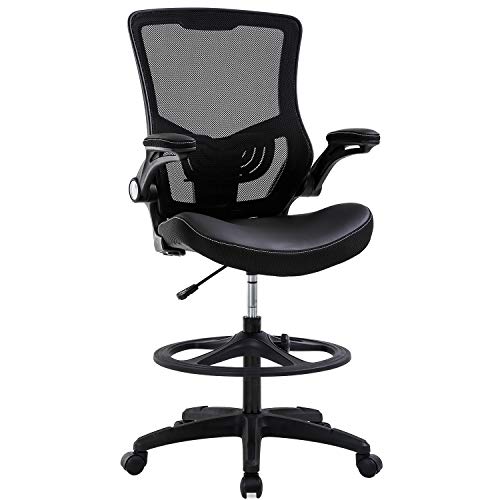
- ✓ Excellent comfort
- ✓ Easy to assemble
- ✓ Great stability and mobility
- ✕ Slightly firm cushioning
- ✕ Limited color options
| Seat Material | PU leather with high-density sponge cushion |
| Maximum Weight Capacity | 250 lbs (113 kg) |
| Base Material and Stability | Heavy-duty nylon base with BIFMA certification |
| Swivel Range | 360 degrees |
| Adjustable Features | Height-adjustable lumbar support and flip-up arms |
| Caster Type | Nylon smooth-rolling casters |
The moment I unboxed the BestOffice Drafting Chair, I was pleasantly surprised by how sturdy and well-made it felt. The high-density sponge cushion instantly caught my attention—soft yet supportive enough for long hours at my desk.
The PU leather seat adds a touch of class, and I could tell it was flexible and durable from the first sit.
Adjusting the lumbar support was a breeze—its simple up-and-down mechanism made it easy to find that perfect, healthy posture. I appreciated the flip-up arms, which made transitioning from sitting to standing much smoother, especially when moving around my workspace.
The tall design is perfect for drafting or high desks, and the heavy-duty nylon base with smooth-rolling casters offered great stability and mobility. I tested the 360-degree swivel, and it moved effortlessly without wobbling.
Assembly was straightforward, taking me about 15 minutes, thanks to clear instructions and all necessary tools included.
What really stood out was how comfortable the chair remained even after several hours of use. The cushion and ergonomic support kept me from feeling any strain, which is rare for a chair at this price point.
Plus, knowing it passes BIFMA safety standards and supports up to 250 pounds gave me peace of mind.
Overall, this chair feels like a solid investment for anyone needing an ergonomic, adjustable, and stylish drafting stool that’s easy to set up and built to last.
Drafting Chair 500Lbs Tall Office Chair with Flip-up Arms

- ✓ Easy to assemble
- ✓ Adjustable height & features
- ✓ Stylish, modern look
- ✕ Slightly heavy to move
- ✕ Limited color options
| Seat Height Range | 23.2 to 29.5 inches |
| Seat Material | PU leather or fabric upholstery |
| Maximum Load Capacity | 500 lbs |
| Frame Material | Sturdy metal with reinforced base |
| Caster Type | Smooth-rolling casters suitable for wood or carpeted floors |
| Foot Ring Range of Motion | 7.1 inches |
I was surprised to find that unboxing this drafting chair actually felt like opening a high-tech gadget rather than just a piece of office furniture. The way the backrest and armrests were packed separately made me wonder if I was assembling a spaceship rather than a chair.
Once I unzipped the backrest and pulled out the hidden parts, the assembly process was straightforward. The instructions were clear, and I managed to put it together in about 15 minutes.
The flip-up arms are a game-changer; they fold up smoothly and instantly free up space on my desk.
The height adjustment is effortless and feels sturdy every time I change positions. I especially like the foot ring, which supports my feet comfortably, no matter how I tilt or lean.
The seat itself is plush but firm enough to keep me comfortable for long stretches without feeling squished.
The ergonomic design really shines during extended work sessions. The lumbar support and contoured seat help prevent that familiar lower-back ache I used to get.
It’s like this chair was made for people who spend hours at their desk, offering both support and flexibility.
On style, it’s sleek and modern, fitting right into both home and office environments. The durable metal frame and smooth-rolling casters give me confidence that it will last for years.
Overall, it’s a smart buy for anyone looking to upgrade their workspace comfort without sacrificing style.
What Makes an Office Stool Ergonomic?
The best ergonomic office stool incorporates various design elements to promote comfort and support during extended periods of sitting.
- Adjustable Height: An ergonomic office stool should allow users to adjust the height to match their desk or work surface, ensuring that their feet rest flat on the floor and their knees are at a 90-degree angle.
- Supportive Backrest: A stool with a contoured backrest provides lumbar support, helping to maintain the natural curve of the spine and reduce strain on the lower back during prolonged sitting.
- Swivel Base: A stool that features a swivel base enables easy movement and access to different areas of the workspace without needing to strain or twist the body, promoting overall mobility and comfort.
- Footrest: Having a footrest can enhance comfort by allowing users to shift their weight and provide support for the feet, which can help reduce fatigue and improve posture.
- Stable Base: A stool with a stable, wide base prevents tipping and provides a secure seating experience, essential for maintaining safety and comfort while working.
- Materials and Padding: High-quality, breathable materials and adequate padding are important for comfort, as they help regulate temperature and reduce pressure points, allowing for longer periods of use without discomfort.
- Mobility Features: Some ergonomic stools come with wheels or casters, making it easier to move around the workspace without having to stand up, which can be beneficial in dynamic work environments.
How Does Adjustability Contribute to Ergonomic Benefits?
Adjustability plays a crucial role in enhancing the ergonomic benefits of office stools.
- Height Adjustment: The ability to adjust the height of an office stool allows users to find the optimal sitting position relative to their desk. This feature helps maintain proper posture and reduces strain on the back and legs, ensuring comfort during long hours of work.
- Seat Depth Adjustment: A stool with adjustable seat depth accommodates users of different body sizes and shapes. By allowing the user to change the distance from the backrest to the front edge of the seat, it supports better circulation and minimizes pressure on the thighs.
- Backrest Adjustment: Adjustable backrests can be tilted or positioned at various angles to support the natural curve of the spine. This flexibility is essential for reducing back pain and promoting a healthy posture, especially for those who spend extended periods sitting.
- Armrest Adjustment: Stools with adjustable armrests help in relieving shoulder and neck tension by allowing users to position their arms comfortably. Properly placed armrests can reduce the risk of repetitive strain injuries and enhance overall comfort while working.
- Swivel Function: A swivel feature allows the user to easily turn and reach different areas of their workspace without straining. This mobility contributes to better productivity and reduces the risk of awkward movements that could lead to discomfort or injury.
- Footrest Height Adjustment: Having an adjustable footrest allows individuals to place their feet at a comfortable height, promoting better circulation and stability. This feature is especially important for shorter users, ensuring that their feet are supported and reducing fatigue during long periods of sitting.
Why is Seat Height a Key Factor in Ergonomic Design?
According to a study published in the Journal of Ergonomics, improperly adjusted seat heights can lead to discomfort and fatigue, ultimately affecting a worker’s efficiency and health (Bendix et al., 2020). When the seat height is too high, it can cause the legs to dangle, leading to pressure on the thighs and circulation issues. Conversely, a seat that is too low may force the user to slouch, placing undue stress on the back and neck. This highlights the importance of adjustable seat heights in ergonomic office stools, allowing for personalized comfort and support.
The underlying mechanism at play involves the interaction between body biomechanics and seating dynamics. When an individual’s chair is appropriately adjusted, it promotes a neutral spine position, reducing stress on the intervertebral discs and surrounding muscles. Research conducted by the Occupational Safety and Health Administration (OSHA) indicates that proper seating can prevent chronic pain and enhance cognitive function, as comfortable workers are less likely to be distracted by discomfort. Therefore, the relationship between seat height and ergonomic design is not just about comfort but also about optimizing health outcomes and productivity.
What Are the Benefits of Using an Ergonomic Office Stool?
The benefits of using an ergonomic office stool include improved posture, enhanced comfort, and increased productivity.
- Improved Posture: An ergonomic office stool is designed to support the natural curvature of the spine, encouraging a healthy sitting posture. This can help reduce the risk of developing musculoskeletal issues that arise from prolonged sitting in conventional chairs.
- Enhanced Comfort: Many ergonomic stools come with adjustable features such as seat height and lumbar support, allowing users to customize their seating experience. This adaptability can lead to greater comfort during long hours of work, reducing fatigue and discomfort.
- Increased Mobility: Office stools often have a lightweight design and swivel capabilities, which promote easier movement and access to different areas of the workspace. This enables users to shift positions and reach for items without straining, enhancing overall efficiency.
- Encouragement of Active Sitting: Ergonomic stools often promote a posture that encourages active sitting, which involves engaging the core muscles and maintaining balance. This can lead to better circulation and energy levels throughout the day, reducing the lethargy often associated with sedentary work.
- Space-Saving Design: Many ergonomic stools have a compact design that makes them suitable for smaller workspaces. This feature allows individuals to maximize their office layout while still benefiting from ergonomic support.
How Can Ergonomic Stools Improve Posture and Comfort?
Ergonomic stools are designed to enhance comfort and promote better posture while working, making them an excellent choice for office environments.
- Adjustable Height: Ergonomic stools often feature adjustable height options that allow users to customize the stool to their specific needs. This adaptability helps maintain proper alignment of the spine, reducing the risk of discomfort and strain during prolonged sitting.
- Supportive Design: Many ergonomic stools come with contoured seats and back support that encourage a natural sitting posture. This design helps distribute body weight evenly, alleviating pressure points and promoting circulation.
- Mobility Features: Some stools are equipped with wheels or a swivel base, allowing for easy movement and accessibility within the workspace. This mobility encourages users to change positions frequently, which can help reduce stiffness and fatigue associated with static sitting.
- Material Quality: The best ergonomic office stools are often made from high-quality materials that provide both durability and comfort. Breathable fabrics and cushioned seating contribute to a more pleasant sitting experience, especially during long hours of work.
- Promotes Active Sitting: Ergonomic stools encourage active sitting, which involves subtle movements that engage core muscles. This can help improve posture and overall body alignment, making it easier to maintain focus and productivity throughout the day.
What Types of Ergonomic Office Stools Are Available?
There are several types of ergonomic office stools designed to enhance comfort and support while working.
- Active Sitting Stools: These stools promote movement and active sitting, allowing users to shift their weight and engage their core muscles. They often come with a rounded base that encourages a natural rocking motion, which can help improve posture and reduce fatigue during long hours of sitting.
- Kneeling Stools: Kneeling stools position the user in a forward-leaning posture that distributes weight between the knees and the seat. This design helps to maintain an open hip angle, which can alleviate pressure on the lower back and promote better spinal alignment.
- Saddle Stools: Inspired by horseback riding, saddle stools feature a seat shaped like a saddle that encourages an upright posture. This design helps to open the hips and engage the core, reducing the risk of slumping and providing better support for the back.
- Height-Adjustable Stools: These stools come with adjustable height mechanisms, allowing users to customize the seating position according to their desk height or personal comfort. This adaptability ensures that users can maintain a proper ergonomic position regardless of their body type or workstation setup.
- Swivel Stools: Featuring a rotating seat, swivel stools provide easy movement and access to different areas of the workspace without straining. This functionality is particularly beneficial in dynamic work environments where users need to frequently turn or reach for items without getting up.
- Backless Stools: Backless stools encourage active seating and are often lightweight and portable. By lacking a backrest, they promote better posture and core engagement, making them suitable for short-duration tasks or for use in collaborative spaces.
What are the Differences Between Saddle Stools and Traditional Stools?
| Aspect | Saddle Stools | Traditional Stools |
|---|---|---|
| Design | Curved seat design promotes an open hip angle. | Flat seat design, often less ergonomic. |
| Comfort | Reduces pressure on the lower back and promotes better posture. | May lead to discomfort during long periods of sitting. |
| Adjustability | Typically more adjustable for height and angle. | Limited adjustability; often fixed height. |
| Usage | Ideal for tasks requiring mobility and flexibility. | Commonly used in dining and bar settings. |
| Weight Capacity | Generally supports higher weight limits, often 300 lbs or more. | Varies widely, typically around 250 lbs. |
| Material Options | Available in leather, vinyl, and various sturdy fabrics. | Commonly made from wood, metal, or plastic. |
| Aesthetic Appeal | Modern and sleek design, often more visually appealing for office use. | Varied styles, often more traditional or rustic. |
| Price Range | Usually higher priced due to ergonomic features, ranging from $100 to $500. | More affordable, typically ranging from $50 to $200. |
Which Features Matter Most in an Ergonomic Office Stool?
The features that matter most in an ergonomic office stool include:
- Adjustability: The ability to adjust the height, seat depth, and backrest angle is crucial for accommodating different body types and preferences. This ensures that users can maintain a comfortable posture that supports their spine during long hours of sitting.
- Lumbar Support: Good lumbar support helps to maintain the natural curve of the spine, reducing the risk of back pain. A stool designed with adjustable lumbar support can provide targeted comfort to the lower back, which is essential for prolonged use.
- Seat Material: The material of the seat can significantly affect comfort levels; breathable fabrics or high-density foam can enhance airflow and reduce pressure points. Choosing a stool with quality upholstery can also contribute to overall durability and ease of maintenance.
- Mobility: Stools with wheels or swivel bases allow for easy movement and access to different areas of a workspace without straining. This feature is especially important in dynamic work environments where tasks may require frequent changes in position.
- Footrest: A built-in footrest can help relieve pressure on the legs and promote better circulation. It also allows users to rest their feet comfortably, which can enhance overall stability and comfort when seated for extended periods.
- Weight Capacity: Stools should have a sufficient weight capacity to ensure safety and stability for all users. Selecting a stool that accommodates a range of body weights can prevent issues related to structural integrity and longevity.
- Design Aesthetics: The overall design and style of the stool can contribute to the visual appeal of an office space. Ergonomic office stools come in various designs that can complement different decor styles while still providing the necessary functionality.
How Do You Choose the Right Ergonomic Office Stool for Your Workspace?
Choosing the right ergonomic office stool for your workspace involves several key considerations to ensure comfort and support throughout your workday:
-
Adjustability: Look for stools with height adjustment features. A good stool should accommodate your desk height and allow you to set your feet flat on the floor.
-
Seat Design: Opt for a stool with a contoured seat that promotes proper posture. A wider seat can provide more comfort during extended sitting periods.
-
Material: Choose breathable materials, such as mesh or padded fabric, to keep you cool and comfortable, especially in warmer conditions.
-
Mobility: Consider stools with caster wheels for ease of movement, but ensure they have a locking mechanism if stability is a concern.
-
Footrest: A footrest can enhance comfort, allowing for better positioning of your feet and lower back support.
-
Weight Capacity: Check the weight limit of the stool to ensure it can safely accommodate all potential users.
By focusing on these key areas, you can ensure you select a stool that contributes positively to your workspace ergonomics, ultimately enhancing your productivity and comfort.
Related Post: