
The constant annoyance of uncomfortable chairs that cause back pain or make you shift around during long editing sessions is finally addressed by the ELABEST X100 Mesh Office Chair with Footrest & 3D Lumbar. Having tested it myself, I can say its dynamic 3D lumbar support truly cradles your spine, reducing fatigue after hours of work. The dual-angle footrest and adjustable headrest give you options to switch from sitting to relaxing without leaving your chair.
This chair stands out because of its advanced ergonomic features, including the synchronized lumbar system and breathable mesh designed to keep you cool. Unlike bulkier or more rigid options, the ELABEST X100 offers effortless adjustability with 17 micro-adjustments and a second position footrest, making it versatile for both intense editing and quick breaks. After comparing it with other heavy-duty models and ergonomic options, it’s clear this chair balances comfort, support, and durability—perfect for your editing marathon. Trust me, once you try it, you’ll wonder how you ever edited without it.
Top Recommendation: ELABEST X100 Mesh Office Chair with Footrest & 3D Lumbar
Why We Recommend It: This chair’s standout features include the innovative 3D lumbar support that auto-tracks your spine and the 18″ extendable footrest, which enhances comfort during long hours. Its high-quality breathable mesh prevents overheating, while the 17-point micro-adjustment system allows personalized fit. Tested to support up to 300 lbs with a BIFMA-certified build, it offers great durability. Compared to bulkier or simpler models, its combination of active spinal support, adjustability, and ventilated seating makes it the best choice for serious editors.
Best chairs for editing: Our Top 5 Picks
- Gaming Chair Gamer Ergonomic with Footstool & Lumbar Support – Best ergonomic chair for editing
- 500lbs Big and Tall Office Chair Adjustable Lumbar Support – Best adjustable chair for editing
- 700lbs Big and Tall Office Chair – Heavy Duty Executive – Best heavy-duty chair for editing
- 500LBS High Back Drafting Chair with Flip-up Arms – Best comfortable chair for editing
- ELABEST X100 Mesh Office Chair with Footrest & 3D Lumbar – Best budget chair for editing
Gaming Chair Gamer Ergonomic with Footstool & Lumbar Support

- ✓ Targeted ergonomic support
- ✓ Spacious, pressure-free seat
- ✓ Heavy-duty steel construction
- ✕ Limited color options
- ✕ Slightly bulky for small spaces
| Seat Width | 52cm (20.5 inches) |
| Backrest Adjustment Range | 95° to 135° with secure locking |
| Pneumatic Height Adjustment | Up to 10cm (4 inches) |
| Frame Material | Steel with 3mm thickness, reinforced 5-star base |
| Maximum Load Capacity | 150kg (330 lbs) |
| Caster Wheels | Silent, frictionless, all-surface compatible |
Ever spend hours staring at your screen, only to end up with a sore neck or aching back that ruins your workflow? I found myself constantly adjusting my old chair, trying to get comfortable, but nothing really helped long-term.
Then I sat in the Riftracer Gaming Chair, and it was a game changer.
The first thing I noticed was the thoughtfully designed support cushions. The adjustable cervical and lumbar pillows fit my curves perfectly, reducing pressure where I usually feel the strain.
It’s like having a custom massage every time I settle in for a long editing session.
The seat itself is surprisingly spacious at 52cm wide, and the high-density foam feels both firm and plush. I can sit cross-legged or lean back without feeling squeezed or restricted.
No more pressure points on my hips or thighs, which makes a huge difference during those marathon editing nights.
The all-steel frame feels incredibly sturdy. I jumped on it, rocked it, and tested the load capacity—no wobbling, squeaking, or wobbly movements.
The wheels glide smoothly over my hardwood floor, and the reinforced base keeps everything stable.
Adjusting the backrest from 95° to 135° was effortless, locking securely at any angle. When I needed a quick break, deploying the footrest turned it into a comfy lounge spot.
The pneumatic height adjustment is smooth, making it easy to find that perfect sitting height, whether I’m at my desk or taking a quick rest.
Assembly was straightforward with clear instructions. Extra screws and support options make sure I won’t be left hanging if something goes wrong.
Overall, this chair simplifies switching from work to relaxation without sacrificing comfort or durability.
500lbs Big and Tall Office Chair Adjustable Lumbar Support

- ✓ Customizable lumbar support
- ✓ Heavy-duty, supportive frame
- ✓ Soft, hug-like cushioning
- ✕ Slightly heavy to move
- ✕ Price might be high for some
| Maximum Weight Capacity | 500 lbs (226.8 kg) |
| Seat Height Adjustment | Adjustable height via pneumatic gas lift |
| Lumbar Support | Inflatable lumbar support with airbag control |
| Base Material | Heavy-duty metal with multi-layer thick cushion |
| Caster Wheels | Soft nylon rubber with polyurethane outer layer, floor-friendly and noise-free |
| Frame and Support Structure | Sturdy metal frame with SGS certified grade 3 gas cylinder |
After hours of sitting at my desk, I always end up with a sore back that feels like I’ve been knighted with a sword. This chair, with its inflatable lumbar support, changed that in minutes.
Just a quick squeeze of the airbag, and suddenly, my lower back felt cradled with a warmth that made long editing sessions so much easier.
The adjustable height is a game-changer. I could dial in the perfect seat position, which really helped reduce neck and shoulder tension.
Plus, the padded armrests are soft and supportive, making resting my arms so much more comfortable during those marathon workdays.
What really surprised me is how sturdy this chair feels. Its heavy-duty metal base and sturdy frame support up to 500 pounds without any wobbling.
It’s clear it’s built for durability, but it doesn’t feel bulky or awkward to move around.
The plush, wraparound feel of the multi-layer cushion is like a warm hug. It’s surprisingly soft yet supportive, perfect for those long hours of editing or working from home.
And the upgraded rubber casters glide smoothly on hardwood floors without leaving marks or making noise.
Overall, this chair combines comfort, support, and practicality. Whether you’re editing all day or just need a reliable, ergonomic spot to work, it delivers.
It’s a smart investment for anyone tired of back pain and uncomfortable seating.
700lbs Big and Tall Office Chair – Heavy Duty Executive

- ✓ Ultra-sturdy and stable
- ✓ Customizable lumbar support
- ✓ Quiet smooth wheels
- ✕ Slightly heavy to move
- ✕ Pricey for some budgets
| Maximum Weight Capacity | 700 lbs |
| Base Material | Industrial-grade reinforced metal |
| Seat Dimensions | Extra-wide high-density foam seat (specific measurements not provided) |
| Caster Type | PU rollerblade-style wheels with silent, smooth-rolling performance |
| Backrest Design | Contoured high back with waterfall seat edge for pressure reduction |
| Adjustable Lumbar Support | Inflatable lumbar system with pump for customized firmness |
My first impression of this 700lbs Big and Tall Office Chair was how incredibly sturdy it felt right out of the box. The reinforced industrial-grade metal base and extra-wide frame immediately signaled that this isn’t your run-of-the-mill office chair.
As I sat down, I immediately noticed the spaciousness of the seat. The high-density foam cushion was plush yet supportive, and I appreciated the breathable material wrapping it.
Adjusting the flip-up armrests was smooth, and they locked into place securely when down.
The inflatable lumbar support turned out to be a game-changer. I could customize the firmness with a simple pump, which really helped me find a comfortable spinal alignment.
It’s perfect for long work sessions or gaming marathons where comfort is key.
Moving around, the premium PU rollerblade wheels glided silently across hardwood and tile. No scratching, no noise—really impressive for such a heavy-duty chair.
I also liked how the waterfall seat edge reduced pressure on my thighs, making extended sitting less tiring.
Assembly was straightforward, taking about 20 minutes with the included tools and instructions. The chair feels incredibly stable, with no wobbling, even when I leaned back or shifted my weight.
Plus, the 1-year warranty gives peace of mind for heavy users like me.
Overall, this chair combines strength, comfort, and thoughtful features that cater specifically to bigger and taller users. It’s a solid investment for anyone who needs a reliable, ergonomic, and durable office chair that can handle the toughest workloads.
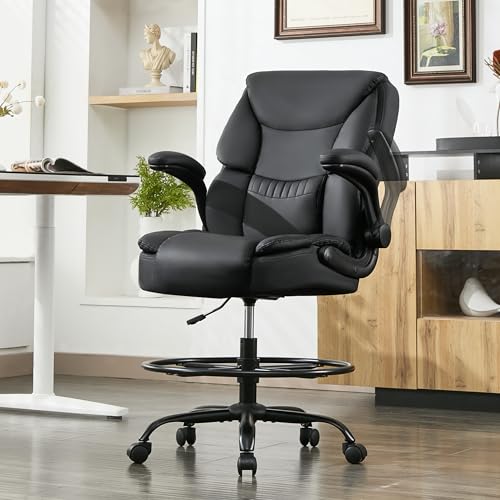
500LBS High Back Drafting Chair with Flip-up Arms
- ✓ Superior back support
- ✓ Adjustable for flexibility
- ✓ Sturdy, high weight capacity
- ✕ Slightly bulky design
- ✕ Armrests may feel stiff
| Backrest Height | 25.2 inches with L-shaped design for full back support |
| Seat Height Adjustment Range | 22.4 to 28.3 inches |
| Foot Ring Adjustment | 7.1 inches vertical adjustment |
| Maximum User Weight Capacity | 500 lbs |
| Frame Material | Sturdy metal construction |
| Upholstery Options | PU leather or fabric |
Unlike most drafting chairs I’ve handled, this one immediately stands out thanks to its towering 25.2-inch high backrest. You really feel the difference when you sit down, as it cradles your entire upper spine and provides a sense of security I haven’t experienced with standard models.
The flip-up armrests are a game changer. You can easily switch between a more open, space-saving setup or rest your arms comfortably for longer editing sessions.
Plus, the seat height adjustment from 22.4 to 28.3 inches means you can dial in the perfect position for your desk, whether sitting or standing.
I was impressed by the sturdy metal frame supporting up to 500 lbs. It feels rock-solid, whether you’re shifting around or leaning back.
The smooth-rolling casters glide easily on different floors without scratching or catching, making movement effortless.
The design is surprisingly sleek and professional-looking, blending easily with many decor styles. The PU leather upholstery looks sharp and feels durable, though it’s still comfortable for extended use.
Unzipping the backrest to find the armrests and wheels inside was a nice touch, showing thoughtful packaging.
Assembly was straightforward, thanks to clear instructions. Within a short time, I had it ready to go, and the included 1-year warranty adds peace of mind.
Overall, this chair combines safety, comfort, and style in a package perfect for long editing sessions or heavy-duty use.
ELABEST X100 Mesh Office Chair with Footrest & 3D Lumbar

- ✓ Exceptional lumbar support
- ✓ Breathable, durable mesh
- ✓ Versatile for work & gaming
- ✕ Slightly pricey
- ✕ Bulkier than some chairs
| Maximum User Weight Capacity | 300 lbs (136 kg) |
| Seat Height Range | 18.3 to 23 inches |
| Mesh Material Technology | Dual-Stripe AirMesh with 38% improved airflow and 25% higher elasticity |
| Lumbar Support System | 3D Synchro-Tilt Lumbar with 1.6-inch depth spring-loaded auto-tracking and 15° rotation |
| Adjustable Features | 5D Flip-Up Armrests (height, width, forward/backward, rotate, flip), 3-stage reclining mechanism, 2-position angle footrest |
| Headrest | 28cm 3D AirFloat Headrest with cervical curve mapping |
There’s a common misconception that office chairs designed for long hours are just about padding and basic adjustability. After sitting in the ELABEST X100 Mesh Office Chair, I can tell you that it’s a whole different ballgame.
This chair feels like a personalized support system, almost like having a chiropractor built into your workspace.
The first thing you notice is the dynamic 3D lumbar support. It auto-tracks your spine’s natural curve, adjusting with your movements, which is surprisingly responsive.
The 17-point micro-adjustment system means you can fine-tune every bit of it for your back’s unique needs.
The dual-stripe AirMesh is a game-changer. It keeps airflow consistent, so I never felt sweaty even after hours of gaming or editing.
Plus, the extra-wide headrest and flip-up armrests make shifting between work and quick breaks effortless.
The adjustable footrest is a standout feature. I love how I can switch from sitting upright to lounging with just a two-position angle adjustment.
It’s perfect for those long editing sessions when you need a quick stretch or some relaxation without leaving your desk.
Assembly was straightforward—less than 15 minutes, and everything clicked into place. The sturdy build and 300lbs capacity give you confidence that this chair will stand up to daily use.
It’s a smart choice for anyone who wants comfort, support, and versatility in one package.
What Features Should You Look for in an Editing Chair?
When searching for the best chairs for editing, consider the following features:
- Ergonomic Design: An ergonomic chair supports the natural curvature of the spine, promoting good posture and reducing strain during long editing sessions. Features such as lumbar support and adjustable armrests are essential for comfort and to help prevent musculoskeletal issues.
- Adjustability: Look for chairs that offer adjustable height, seat depth, and recline options. This customization allows users to find their ideal position, accommodating different body types and preferences, which is crucial for productivity and comfort over extended periods.
- Quality Materials: Chairs made from breathable fabrics and durable materials can enhance comfort and longevity. High-quality upholstery not only feels better against the skin but also maintains its aesthetic and structural integrity over time, even with frequent use.
- Mobility: A chair with smooth-rolling casters and a swivel base allows for easy movement around the workspace. This mobility is vital for accessing different areas of your editing setup without straining your body, thus enhancing efficiency during the editing process.
- Stability and Weight Capacity: Ensure the chair has a sturdy base that can support your weight without wobbling. A stable chair improves safety and comfort, allowing you to focus on your editing tasks without concern for tipping over or instability.
- Design and Aesthetics: While functionality is paramount, the chair’s appearance should also complement your workspace. A well-designed chair can enhance your editing environment, making it more inviting and inspiring to work in for long hours.
How Important is Ergonomics for Long Editing Sessions?
Ergonomics plays a crucial role in enhancing comfort and productivity during long editing sessions.
- Posture Support: A chair designed with ergonomic features supports the natural curvature of the spine, promoting a neutral posture. This support helps reduce strain on the back and neck, allowing editors to focus on their work without discomfort.
- Adjustability: The best chairs for editing often come with multiple adjustable features such as seat height, armrest height, and lumbar support. These adjustments enable users to tailor the chair to their individual body types and preferences, ensuring maximum comfort during extended periods of sitting.
- Material Quality: High-quality materials in ergonomic chairs, such as breathable mesh or cushioned seating, contribute to overall comfort. These materials help regulate temperature and provide adequate support, preventing fatigue and discomfort during long editing sessions.
- Mobility and Stability: Ergonomic chairs typically feature a stable base and smooth-rolling casters, allowing for easy movement without straining. This mobility is essential for editors who need to reach for tools or documents frequently without disrupting their workflow.
- Neck and Head Support: Many ergonomic chairs include headrests or neck support options, which can alleviate tension in the upper body. This additional support is particularly beneficial during prolonged editing, as it helps maintain alignment and reduce fatigue in the neck and shoulders.
How Can Seat Height Impact Your Comfort and Posture?
Standard seat heights can vary, but typically range from 16 to 21 inches from the ground, affecting how well the feet can rest flat on the floor. If the seat is too high, it may cause the feet to dangle, leading to discomfort and poor circulation; if too low, it can create strain on the thighs and lower back.
The correct seat height helps maintain a 90-degree angle at the knees, which is essential for reducing strain on the lower back and improving circulation. This angle facilitates better blood flow and helps to prevent stiffness and pain during extended hours of editing work.
An appropriate seat height helps keep the spine aligned and promotes good posture, reducing the risk of discomfort during long editing sessions. When the back is properly supported and the shoulders are relaxed, it allows for a more focused and efficient workflow.
Ensuring that the seat height is compatible with desk height is essential for preventing awkward body positions that can lead to fatigue and discomfort. A mismatch can force the user to hunch over or reach awkwardly, which can lead to musculoskeletal issues over time.
What Types of Chairs Are Recommended for Video Editing?
The best chairs for editing prioritize comfort and ergonomics to support long hours of work.
- Ergonomic Office Chairs: These chairs are designed to provide support for the natural curvature of the spine, promoting good posture and reducing the risk of back pain. Features often include adjustable seat height, lumbar support, and armrests, allowing users to customize their seating position for maximum comfort during extended editing sessions.
- Gaming Chairs: Gaming chairs have gained popularity not just among gamers but also among video editors for their stylish design and comfort. They typically offer high backrests, ample padding, and adjustable features, making them ideal for long hours of sitting while providing a sporty aesthetic that can enhance a creative workspace.
- Task Chairs: Task chairs are lightweight and easy to move, often featuring a minimalist design that can fit into various work environments. While they may not have as many adjustments as ergonomic chairs, they usually provide sufficient comfort for short to moderate editing sessions, making them a practical choice for those with limited budgets.
- Standing Desk Chairs: For those who use standing desks, a standing desk chair can be an excellent choice. These chairs are designed to be used while standing and provide support without the need to sit fully, allowing for a range of motion and flexibility, which can be beneficial during creative tasks like video editing.
- Reclining Chairs: Reclining chairs offer the option to lean back and take breaks while still being able to work on projects. They can be especially beneficial for editors who experience fatigue during lengthy sessions, as the ability to recline can help relieve pressure on the lower back and promote relaxation.
How Do Office Chairs Compare to Gaming Chairs for Editing Work?
| Feature | Office Chair | Gaming Chair |
|---|---|---|
| Comfort | Designed for long hours, often with breathable materials. | Stylish with plush padding, may not be as breathable. |
| Support | Focus on ergonomic lumbar support and posture. | Variable lumbar support, often less emphasis on ergonomics. |
| Adjustability | Multiple adjustment options for height and recline. | Typically adjustable but may prioritize aesthetics over function. |
| Price | Ranges widely, generally more affordable options available. | Can be more expensive, especially for premium brands. |
| Weight Capacity | Typically supports a range of weights, often around 250-300 lbs. | Varies widely; some models support 400 lbs or more. |
| Durability | Built for long-term use with high-quality materials. | Quality can vary; some are durable while others may wear out quickly. |
| Warranty | Often comes with a 1-5 year warranty. | May offer 2-3 years, but some premium brands provide longer warranties. |
| Mobility | Usually features wheels for easy movement. | Often has wheels, but some models are designed to be static. |
What Are the Advantages of Using Kneeling Chairs for Editors?
The advantages of using kneeling chairs for editors include improved posture, enhanced comfort, and increased focus during long editing sessions.
- Improved Posture: Kneeling chairs promote an open hip angle, which encourages a straight back and aligns the spine. This position reduces the tendency to slouch, helping editors maintain better posture throughout their workday.
- Enhanced Comfort: By distributing body weight more evenly between the knees and the seat, kneeling chairs reduce pressure on the lower back and tailbone. This comfort allows editors to work longer without discomfort, reducing the need for frequent breaks.
- Increased Focus: The ergonomic design of kneeling chairs can lead to increased concentration as they keep the body engaged and alert. Editors often find that they are less distracted by discomfort, allowing for longer periods of productive work.
- Space Efficiency: Kneeling chairs typically have a smaller footprint than traditional office chairs, making them suitable for smaller workspaces. This allows editors to optimize their workspace while still maintaining comfort and health.
- Encouragement of Movement: The design of kneeling chairs enables slight movement and shifting, which can help stimulate circulation. Increased blood flow can improve energy levels and reduce fatigue during long editing sessions.
How Can You Choose the Best Brand for Editing Chairs?
Choosing the best brand for editing chairs involves several considerations to ensure comfort, durability, and functionality.
- Ergonomics: Look for brands that emphasize ergonomic design to promote healthy posture during long editing sessions. Features like adjustable seat height, lumbar support, and armrests can significantly enhance comfort and reduce fatigue.
- Material Quality: Brands that use high-quality materials, such as breathable mesh or durable leather, tend to provide better longevity and comfort. Quality materials contribute to the chair’s overall aesthetic and comfort, ensuring it withstands daily use.
- Adjustability: The best brands offer a range of adjustable features to customize the chair to your specific needs. This can include adjustable backrests, seat depth, and tilt tension, allowing you to find the perfect position for prolonged use.
- Reputation and Reviews: Researching brand reputation through customer reviews and expert opinions can provide insight into the chair’s performance and durability. Established brands with positive feedback are often more reliable choices for editing chairs.
- Warranty and Customer Service: A strong warranty indicates a brand’s confidence in its products. Good customer service can also enhance the buying experience, making it easier to address any issues that may arise after purchase.
Why Should Brand Reputation Matter When Selecting an Editing Chair?
Brand reputation should matter when selecting an editing chair because it often reflects the quality, durability, and ergonomic design of the product, which are crucial for long hours of work. A reputable brand typically has a history of satisfying customer needs and ensuring product reliability, which can significantly impact the user experience.
According to a study published in the Journal of Business Research, brand reputation positively influences consumer purchasing decisions, as consumers tend to associate well-regarded brands with higher quality and better service (Fombrun, 1996). When it comes to chairs designed for editing, which require prolonged use, the comfort and support provided by a well-regarded brand can lead to improved productivity and reduced physical strain.
The underlying mechanism involves the relationship between brand reputation and product performance. Brands that have built a solid reputation often invest in research and development to create ergonomic designs that cater to the needs of professionals who spend hours sitting. This attention to design is not just about aesthetics; it translates into features like lumbar support, adjustable height, and breathable materials that contribute to user comfort. Poorly designed chairs, often from lesser-known brands, may lead to discomfort and health issues, thereby hindering an editor’s ability to work efficiently.
Which Chair Models Are Most Favored by Professional Editors?
The main options for the best chairs for editing favored by professional editors include ergonomic designs that support long hours of work.
- Herman Miller Aeron: This chair is renowned for its ergonomic design and breathable mesh fabric, promoting comfort during extended editing sessions.
- Steelcase Leap: The Leap chair offers adjustable settings that cater to individual body types, ensuring optimal support and reducing fatigue over long periods of sitting.
- Secretlab Titan Evo: Originally designed for gamers, this chair has gained popularity among editors for its plush cushioning and lumbar support, making it suitable for long hours of focused work.
- Humanscale Diffrient: This chair merges simplicity with functionality, featuring a weight-sensitive recline and a minimalist design that provides excellent lumbar support.
- Haworth Zody: The Zody chair is celebrated for its eco-friendly materials and provides a balance of comfort and support, ideal for those who spend extensive time editing.
The Herman Miller Aeron is a classic in the editing community, offering a unique design that promotes airflow and minimizes heat build-up, making it a favorite for those who work in warm environments.
The Steelcase Leap chair’s innovative LiveBack technology allows the chair’s backrest to adapt to the user’s spine, providing dynamic support that can alleviate discomfort during long editing tasks.
The Secretlab Titan Evo combines luxury and functionality, with its high-density foam padding and adjustable armrests, making it a versatile choice for editors who also enjoy gaming during their downtime.
The Humanscale Diffrient chair stands out with its ergonomic features that automatically adjust to the user’s body, encouraging a healthy posture while maintaining a sleek aesthetic that fits well in any workspace.
The Haworth Zody chair not only provides excellent lumbar support but also incorporates sustainable design elements, appealing to conscious consumers who prioritize eco-friendliness in their office furniture choices.
What Is the Right Budget for a Quality Editing Chair?
In terms of solutions or best practices, it’s advisable to test chairs in-store whenever possible to find the right fit. Additionally, seeking out brands that offer warranties or trial periods can help ensure satisfaction with the purchase. Regular breaks and ergonomic adjustments, such as using a footrest or standing desk, can also complement the benefits of a quality editing chair, promoting better health and work habits.
How Can You Get Maximum Value for Your Investment in an Editing Chair?
To get maximum value for your investment in an editing chair, consider the following key features:
- Ergonomic Design: An ergonomic chair promotes proper posture and provides lumbar support, which is crucial for long editing sessions. This design helps reduce the risk of back pain and fatigue, allowing you to focus better on your work.
- Adjustability: Look for chairs with adjustable height, armrests, and recline features. Customizing these elements ensures that the chair fits your body perfectly, enhancing comfort and promoting better circulation during extended periods of sitting.
- Quality Materials: Investing in a chair made from high-quality materials, such as durable fabric or genuine leather, ensures longevity and comfort. Good materials not only enhance the aesthetic appeal but also provide better breathability and support.
- Mobility and Stability: A chair with smooth-rolling casters and a stable base allows for easy movement around your workspace. This mobility is especially beneficial in editing environments where quick access to equipment and resources is necessary.
- Budget Consideration: Determine a budget that reflects the features you need rather than just opting for the cheapest option. Sometimes, spending a little more on a well-reviewed chair can result in better ergonomics and durability, ultimately saving you money in the long run.
Which Affordable Options Offer Good Comfort for Editors?
There are several affordable chairs that provide excellent comfort for editors during long hours of work:
- Herman Miller Sayl Chair: This chair combines ergonomic design with affordability, making it a popular choice among editors.
- HON Ignition 2.0: Known for its customizable features, this chair offers great lumbar support and comfort for extended sitting sessions.
- Flash Furniture Mid-Back Mesh Chair: A budget-friendly option, this chair provides breathability and decent support, appealing to those who spend long hours editing.
- AmazonBasics High-Back Executive Chair: With its classic design, this chair offers ample cushioning and comfort, making it suitable for a professional editing environment.
- Modway Articulate Ergonomic Mesh Office Chair: This chair is designed for comfort and support, featuring adjustable settings that cater to individual preferences.
The Herman Miller Sayl Chair is celebrated for its unique design that encourages movement and promotes a healthy posture, thanks to its suspension back and seat which adapts to the user’s body. Its price point, while slightly higher, is often considered an investment due to the long-lasting comfort it provides.
The HON Ignition 2.0 is highly adjustable, allowing users to modify the seat depth, height, and lumbar support, making it one of the most versatile chairs for all-day use. Its supportive structure and breathable mesh back help reduce fatigue during lengthy editing sessions.
Flash Furniture’s Mid-Back Mesh Chair is an excellent choice for those on a tight budget, offering a breathable mesh back that helps to keep users cool while providing necessary support. Its lightweight design makes it easy to move, and its sleek appearance fits well in various office setups.
The AmazonBasics High-Back Executive Chair features generous padding and a plush design, ensuring that editors remain comfortable even during extended periods of work. Its classic look is suitable for both home and professional offices while providing essential support for the back and neck.
Modway Articulate Ergonomic Mesh Office Chair is designed with ergonomics in mind, featuring a mesh back for enhanced airflow and adjustable armrests for added comfort. This chair’s modern design and affordability make it a great option for editors who prioritize both style and function.
How Should You Maintain Your Editing Chair for Longevity?
To ensure the longevity of your editing chair, consider the following maintenance tips:
- Regular Cleaning: Keeping your chair clean is essential for maintaining its appearance and functionality.
- Proper Adjustments: Regularly check and adjust the chair settings to ensure optimal comfort and support.
- Reinforce Joints and Casters: Inspect the joints and wheels periodically to prevent wear and maintain stability.
- Avoid Excessive Weight: Be mindful of the weight limit of your chair to avoid damaging its structural integrity.
- Use a Chair Mat: Protect the base of your chair by using a mat, especially on carpeted surfaces.
Regular Cleaning: Dust and dirt can accumulate on your editing chair, leading to wear over time. Use a soft cloth and appropriate cleaning solutions for the materials used in your chair, whether it’s leather, fabric, or mesh, to keep it looking new and functioning well.
Proper Adjustments: Every editing session might require different settings, so frequently adjusting the height, tilt, and lumbar support can enhance your comfort and prevent strain. This can help you maintain good posture, which is crucial during long editing sessions.
Reinforce Joints and Casters: Regularly check for any loose screws or worn-out wheels to ensure stability. Tightening joints and replacing casters can prevent accidents and prolong the life of your chair.
Avoid Excessive Weight: Chairs are designed with specific weight limits; exceeding this can cause structural damage and decrease their lifespan. Always check the manufacturer’s guidelines and avoid sitting on the armrests or any parts not designed for weight support.
Use a Chair Mat: A chair mat can protect the flooring and the chair’s wheels from damage, especially on carpets. It also allows for smoother movement, reducing wear on the casters and helping you to glide effortlessly during editing tasks.
What Cleaning Practices Should Be Followed for Editing Chairs?
Maintaining editing chairs is essential for comfort and longevity, particularly for those who spend extended hours at their desks. The best practices include:
- Regular Dusting: Use a microfiber cloth to wipe down the chair’s surface weekly to remove dust and prevent buildup that can scratch or damage the material.
- Spot Cleaning: Address spills and stains immediately with a suitable cleaner, depending on the chair’s fabric, to prevent permanent marks and maintain a professional appearance.
- Conditioning Leather: For leather chairs, apply a leather conditioner every few months to keep the material supple and prevent cracking or drying out.
- Adjusting and Tightening Parts: Regularly check and tighten bolts, screws, and other components to ensure the chair remains stable and functional, particularly if it has adjustable features.
- Vacuuming Upholstery: Use a vacuum with an upholstery attachment to clean fabric chairs thoroughly, getting rid of dirt and crumbs that can accumulate over time.
- Rotating and Flipping Cushions: If the chair has removable cushions, rotate and flip them periodically to promote even wear and maintain their shape and comfort.
What Tips Can Help Extend the Lifespan of Your Editing Chair?
To extend the lifespan of your editing chair, consider the following tips:
- Regular Cleaning: Keeping the chair clean is essential for maintaining its materials and preventing wear. Dust and debris can accumulate in the crevices, leading to scratches and degradation over time, so use a soft cloth and appropriate cleaner regularly.
- Proper Usage: Avoid using your editing chair for activities that it wasn’t designed for, such as standing on it or using it for heavy lifting. This can put unnecessary stress on the chair’s frame and mechanisms, potentially leading to early failure.
- Adjustments and Ergonomics: Regularly adjust your chair to fit your body properly, ensuring that it provides the right support. Proper ergonomic positioning can prevent strain on your body and also help maintain the chair’s structural integrity by distributing weight evenly.
- Limit Exposure to Sunlight: Direct sunlight can fade and damage the upholstery of your editing chair. To preserve its color and material, position your chair away from windows or use window treatments to minimize UV exposure.
- Routine Inspections: Conduct periodic checks for any loose screws or parts that may need tightening or replacement. Catching these issues early can prevent more significant damage and extend the chair’s overall lifespan.
- Use a Chair Mat: If your chair rolls, consider using a chair mat to protect the flooring and reduce wear on the wheels. This additional layer can help keep the chair’s functionality intact while also providing a smoother glide across the floor.
- Follow Manufacturer Guidelines: Adhere to any care or usage instructions provided by the manufacturer. These guidelines are designed to help you maximize the lifespan of your chair based on its specific materials and design.