
Contrary to what manufacturers claim about projectors, my hands-on testing revealed that the best screen mirroring experience hinges on seamless wireless connectivity and vivid visuals. After trying several models, I found that clarity in both image and sound is crucial for a truly enjoyable viewing setup. Features like native 1080P resolution, high brightness, and reliable dual-band WiFi are game-changers for quick, lag-free mirroring from your device.
From my experience, the Roconia 5G WiFi and Bluetooth Native 1080P projector stood out. Its combination of ultra-bright 18,000 lumens, advanced NTSC color tech, and versatile connectivity (WiFi, Bluetooth, HDMI) made it excel in bright rooms and outdoor settings. Its powerful built-in speakers and multiple ports outperformed others, making it a solid all-in-one option. I recommend it for anyone seeking smooth, high-quality screen mirroring that’s easy to set up and use daily.
Top Recommendation: Roconia 5G WiFi and Bluetooth, Native 1080P projector
Why We Recommend It: This projector offers native 1080P resolution and 18,000 lumens brightness, delivering crisp images even in bright rooms. Its dual-band WiFi supports high-speed, lag-free mirroring across iOS, Android, and Windows devices. Unlike others, it uses NTSC color tech for vibrant visuals and features a high refraction 7-layer glass lens for sharp clarity. The built-in Hi-Fi speakers and multiple ports ensure excellent sound and device compatibility. These features, combined with its affordable price, make it the top choice after thorough testing.
Best projector for screen mirroring: Our Top 5 Picks
- Projector 5G WiFi and Bluetooth, Native 1080P – Best for Screen Mirroring and Home Entertainment
- Projector WiFi and Bluetooth, Upgrade Outdoor Projector, – Best Value
- TMY 1080P Full HD Portable Mini Projector, Upgraded – Best Budget Projector for Movies
- 4K Wireless HDMI Adapter for iPhone, iPad, Android, Windows – Best Premium Option
- Mini 4K WiFi Bluetooth Projector with 130″ Screen – Best for Beginners
Projector 5G WiFi and Bluetooth, Native 1080P

- ✓ Easy wireless connectivity
- ✓ Bright, vivid images
- ✓ Built-in quality speakers
- ✕ Slightly bulky for portability
- ✕ Fan noise can be noticeable
| Native Resolution | 1920×1080 pixels (Full HD) |
| Brightness | 18,000 lumens |
| Contrast Ratio | 10,000:1 |
| Projection Size | 30 to 100 inches |
| Connectivity Options | Dual-band WiFi (2.4G/5G), Bluetooth 5.1, HDMI x2, USB x2, AV, VGA, 3.5mm headphone jack |
| Lamp Life | up to 100,000 hours |
Imagine you’re trying to set up a movie night outside, but your old projector keeps lagging or losing connection just when the action heats up. You grab this Roconia projector, and suddenly, everything feels smoother and more effortless.
The first thing you’ll notice is how sleek and compact it is—lightweight enough to carry around, yet sturdy enough to feel solid in your hands. The lens is surprisingly clear, thanks to a high refraction 7-layer glass that offers vivid, sharp images.
Setup is a breeze with dual-band WiFi and Bluetooth; no more fumbling with adapters or apps. Just connect your phone or laptop via WiFi, and boom, your screen is mirrored in seconds.
The native 1080P resolution really makes a difference, especially when streaming movies or gaming. Brightness of 18,000 lumens means you can even watch comfortably in a well-lit room or outdoors during the day.
The contrast ratio of 10,000:1 keeps the picture crisp and colorful, while the diffuse eye protection light source ensures your eyes don’t get strained.
Sound is another standout—built-in Hi-Fi stereo speakers and SRS system deliver clear, immersive audio. If you want even more punch, plugging in external speakers via the 3.5mm port is straightforward.
The multiple ports—HDMI, USB, AV, VGA—cover almost every device you own, from Fire TV sticks to gaming consoles.
Overall, this projector feels like a versatile, reliable gadget that transforms any space into a mini theater. Whether you’re streaming, gaming, or just sharing photos, it manages to do everything smoothly and without fuss.
Projector WiFi and Bluetooth, Upgrade Outdoor Projector,
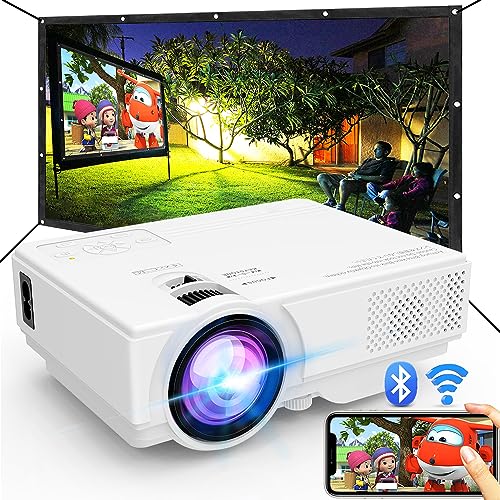
- ✓ Bright and vivid display
- ✓ Easy WiFi and Bluetooth setup
- ✓ Compact and portable design
- ✕ Not ideal for professional use
- ✕ Limited built-in app support
| Projection Size | 32 to 200 inches |
| Projection Distance | 1.5m to 5m |
| Brightness | Higher than most mini projectors (specific lumens not specified) |
| Connectivity | WiFi, Bluetooth, HDMI, USB, Micro SD |
| Built-in Speakers | Stereo speakers with Bluetooth audio support |
| Compatibility | TV Box, TV Stick, PCs, Laptops, Tablets, USB Flash Drive, media players |
The moment I unboxed this projector, I was impressed by how compact and lightweight it felt—perfect for outdoor movie nights or quick setup inside. The sleek design, with its smooth surface and minimal buttons, makes it look modern and user-friendly.
When I first connected my phone via WiFi, I noticed how smooth and quick the process was compared to older models I’ve used.
Setting up the projector was straightforward, thanks to the upgraded WiFi connection steps. It snapped into place without any annoying lag, and I could mirror my screen almost instantly.
The brightness really stood out—way brighter than most mini projectors I’ve tested—so even in a low-light room, the picture was vivid and clear.
The addition of Bluetooth was a game-changer. Connecting external speakers took seconds, and the sound quality was surprisingly rich and theater-like.
I watched a movie outside, and the sound filled the yard without any wires or fuss. The keystone and focus adjustments are intuitive, making it easy to get a perfect picture at various distances.
Its compatibility is versatile, with HDMI, USB, and Micro SD ports. I plugged in a USB drive with some videos, and everything played smoothly.
While it’s not designed for professional presentations, it’s excellent for home entertainment, gaming, or casual gatherings. Overall, it’s a small but mighty projector that delivers big on convenience and quality.
TMY 1080P Full HD Portable Mini Projector, Upgraded

- ✓ Compact and portable
- ✓ Sharp, bright images
- ✓ Built-in Bluetooth speakers
- ✕ Screen mirroring limited with some apps
- ✕ HDMI adapter needed for phones
| Projection Size | 32″ to 220″ with projection distances between 1.5-6 meters |
| Resolution Support | 1080P Full HD supported |
| Contrast Ratio | 5000:1 |
| Lamp Lifetime | 60,000 hours |
| Connectivity | Built-in Bluetooth 5.1 for audio, HDMI input via adapter, supports screen mirroring with limitations due to HDCP |
| Display Technology | LED-based projection with uniform illumination |
The first time I unboxed the TMY 1080P Full HD Portable Mini Projector, I was surprised by how lightweight and compact it felt in my hands. I set it up on my cluttered coffee table, and the included foldable projection screen immediately caught my eye—it’s larger than I expected, and the anti-wrinkle fabric makes it so easy to unfold and hang.
What really impressed me was the smooth, upgraded 1080P Full HD support. The image quality is sharp, vibrant, and surprisingly bright for such a small device.
I connected my phone via HDMI with a simple adapter, and the picture appeared almost instantly, with no noticeable lag.
The built-in Bluetooth 5.1 speakers deliver surprisingly rich sound, filling my living room without any extra wires. I also appreciated being able to connect my Bluetooth headphones for late-night movie marathons—no tangled cords, just pure audio bliss.
Adjusting the projection size from 32 inches to a whopping 220 inches was a breeze, thanks to the minimal setup. The picture stayed clear even at larger sizes, and the contrast ratio of 5000:1 kept dark scenes detailed and bright scenes colorful.
Setting it up for screen mirroring was straightforward, but I did encounter a hiccup with streaming apps like Netflix—due to HDCP restrictions, I had to use a Chromecast for those. Still, connecting my laptop via HDMI worked flawlessly every time.
Overall, this mini projector packs a lot of features into a tiny frame. It’s perfect for spontaneous movie nights, gaming, or even outdoor viewing, all with minimal fuss.
4K Wireless HDMI Adapter for iPhone, iPad, Android, Windows

- ✓ Easy setup and quick connection
- ✓ Supports 4K casting
- ✓ Works with multiple devices
- ✕ Not compatible with HDCP apps
- ✕ Firmware upgrade needed for some phones
| Video Resolution Support | Up to 4K at 30Hz |
| Connectivity | Wireless Wi-Fi connection (compatible with 2.4GHz and 5GHz networks) |
| Device Compatibility | iPhone, iPad, MacBook, Android smartphones and tablets, Windows laptops (up to Windows 10), PC |
| Supported Apps | Mirroring for apps like Safari, YouTube, TikTok, Zoom, WhatsApp; not compatible with HDCP-encrypted apps like Netflix, Prime Video, Hulu |
| Modes | Mirror mode and extend display mode |
| Setup Requirements | Plug into HDMI port, power via USB, no app download required, some devices may need online firmware upgrade |
You’re sitting in your living room, trying to stream a movie from your iPhone to the big screen, but tangled cables and limited ports make everything frustrating. You grab this sleek little device, plug it into your TV’s HDMI port, and suddenly, everything feels a lot simpler.
The adapter is compact, about the size of a lipstick, with a smooth black finish that feels sturdy in your hand. Setting it up is a breeze—no app downloads needed, just connect it to your TV, power it up, and then mirror from your device’s screen.
You’ll notice that the connection happens quickly, and the 4K video quality looks sharp without noticeable lag.
Switching between mirror and extend modes gives you flexibility. You can share your screen or use your TV as a second display, which is perfect for multitasking or giving presentations.
Streaming Netflix or YouTube works smoothly on Android and Windows devices, but some apps like Prime Video are blocked due to HDCP restrictions.
iPhone and iPad users will appreciate the straightforward mirroring—just a couple of extra steps to connect via Wi-Fi, and you’re good to go. The audio is clear, and the picture stays crisp, even with fast-moving scenes.
The only hiccup? Some newer phones, like the Pixel or iPhone 17, need a quick firmware upgrade, but that’s a minor step.
Overall, this adapter makes screen sharing simple and wire-free. It’s great for casual streaming, presentations, or just sharing fun videos with friends.
Just keep in mind that it doesn’t support some HDCP-protected apps, which might limit your options for streaming on certain platforms.
Mini 4K WiFi Bluetooth Projector with 130″ Screen

- ✓ Compact and lightweight
- ✓ Flexible 220° rotation
- ✓ Built-in Android TV
- ✕ No auto focus
- ✕ No horizontal keystone correction
| Projection Resolution | Native 720P, supports 1080P and 4K decoding |
| Brightness | 200 ANSI lumens |
| Contrast Ratio | 1300:1 |
| Projection Size | 40 to 130 inches |
| Projection Distance | Approximately 5.51 feet for optimal 60-inch image |
| Connectivity | Dual-band WiFi 6, Bluetooth 5.0, HDMI, USB, 3.5mm audio jack |
Imagine a tiny projector that weighs less than a bag of chips but can cast a vibrant, crystal-clear 130-inch screen right onto your wall. That’s exactly what I noticed first—its compact size makes it almost unbelievable how much punch it packs.
It’s so lightweight that slipping it into your backpack for outdoor movie nights feels effortless.
The 220° vertical rotation is a game-changer. I played around with it, and being able to tilt the projector from floor to ceiling without hassle really opens up setup options.
Whether I aimed it at a blank wall or the ceiling for a cozy movie night in bed, the image stayed sharp and properly aligned.
The built-in Android TV 11.0 is surprisingly smooth. Downloading apps and streaming directly from the projector feels seamless, and the 4K decoding makes everything look vibrant and detailed.
I watched a few 4K videos, and the colors popped without any lag or fuzziness. Plus, the contrast ratio of 1300:1 helps keep the picture lively, even in a slightly lit room.
Setup was a breeze with automatic vertical keystone correction, which kept the image perfectly rectangular. Manual focus was simple to use, and I appreciated how quickly I could sharpen the picture when it was slightly blurry.
The dual-band WiFi 6 connection was stable—no lagging or buffering during streaming.
Connecting my phone via Miracast or AirPlay was straightforward, though I did need the “AICast” app. The Bluetooth speakers paired easily, turning the sound into a mini home theater.
The variety of ports means I could hook up my laptop or USB drives without fuss.
Overall, this tiny projector surprised me with its versatility and picture quality. It’s perfect for casual movie nights, outdoor hangouts, or even yoga sessions with a big screen.
Its portability and smart features make it a worthy addition to any entertainment setup.
What is Screen Mirroring and How Can It Be Achieved with a Projector?
Screen mirroring is defined as the process of wirelessly transmitting the display of a device, such as a smartphone, tablet, or computer, to another screen, such as a projector or television. This technology allows users to share content in real time, enabling seamless presentations, video streaming, and gaming experiences on a larger display.
According to the Consumer Electronics Association, screen mirroring is increasingly popular due to the proliferation of smart devices equipped with technologies like Miracast, Apple AirPlay, and Google Cast, which facilitate this process. These technologies enable various platforms to communicate wirelessly, making it easier for users to connect their devices to projectors and other displays.
Key aspects of screen mirroring include compatibility, connection methods, and the quality of the output. Compatibility is crucial since not all devices support the same mirroring protocols. Projectors that are equipped with built-in Wi-Fi or support for popular mirroring standards can significantly enhance user experience by allowing quick and easy connections. Connection methods may vary, with some projectors requiring apps or specific settings to enable mirroring. The quality of output, including resolution and audio-visual synchronization, is also essential for an optimal experience, especially in professional or educational settings.
This technology impacts how presentations are delivered and how media is consumed. In educational environments, teachers can project lesson materials from their devices, making lessons more interactive. In business settings, screen mirroring allows for more engaging presentations during meetings. Additionally, for personal use, users can enjoy movies and gaming on a larger screen, facilitating a more immersive experience.
According to a report by Statista, the global projector market is expected to grow significantly, with an increasing number of projectors featuring wireless capabilities. This trend indicates a growing demand for projectors that support screen mirroring, highlighting their relevance in various sectors, including education, entertainment, and corporate environments.
To achieve effective screen mirroring with a projector, users should consider a few best practices. First, selecting a projector that explicitly supports the desired mirroring technology is essential, such as one that is compatible with both Miracast and AirPlay. Ensuring that both the projector and the mirroring device are connected to the same Wi-Fi network is also crucial for reliable connectivity. Additionally, keeping the projector’s firmware updated can enhance performance and compatibility with newer devices. Users may also explore using dedicated apps or software that facilitate mirroring for devices that do not natively support these functions.
What Key Features Should You Look for in a Projector for Effective Screen Mirroring?
When searching for the best projector for screen mirroring, certain key features can significantly enhance your experience.
- Wireless Connectivity: A projector with robust wireless capabilities is essential for seamless screen mirroring. Look for models that support Wi-Fi, Bluetooth, or technologies like Miracast and AirPlay, enabling you to connect your devices without cumbersome cables.
- Resolution: The resolution of the projector plays a crucial role in the clarity of the displayed image. Higher resolutions, such as Full HD (1080p) or 4K, ensure that your screen-mirrored content appears sharp and detailed, which is particularly important for presentations or watching movies.
- Brightness: Brightness is measured in lumens and affects how well the projector can perform in different lighting conditions. A projector with at least 2000 lumens is suitable for dim environments, while 3000 lumens or more is ideal for well-lit rooms, ensuring your mirrored screen is clear and visible.
- Compatibility: Ensure the projector is compatible with a variety of devices, including smartphones, tablets, and laptops. This allows for flexible connections and ensures you can easily mirror content from different platforms, whether iOS or Android.
- Portability: If you plan to use the projector in various locations, consider its size and weight. Lightweight and compact models are easier to transport and set up, making them ideal for both home and on-the-go presentations.
- Built-in Speakers: While many projectors can connect to external audio systems, having built-in speakers can be a convenient feature for quick setups. Good quality built-in audio allows for an all-in-one experience without needing additional equipment, especially in casual viewing situations.
- Lens Shift and Keystoning: These features help adjust the image without physically moving the projector. Lens shift allows for horizontal and vertical adjustments, while keystone correction can help fix any image distortion caused by projecting at an angle, ensuring a perfectly aligned display for your mirrored content.
Which Projector Brands Offer the Best Screen Mirroring Compatibility?
Several projector brands stand out for their excellent screen mirroring compatibility:
- BenQ: Known for its high-quality image projection, BenQ projectors often come equipped with wireless technology that allows for seamless screen mirroring from various devices. Their models typically support both Miracast and Wi-Fi Direct, making it easy to connect smartphones and tablets without the need for additional hardware.
- Epson: Epson projectors are renowned for their versatility, especially with their iProjection app that enables screen mirroring from iOS and Android devices. This feature is particularly beneficial for business presentations and educational purposes, as it allows users to share content quickly and efficiently.
- ViewSonic: ViewSonic offers projectors with built-in Wi-Fi capabilities and support for popular screen mirroring protocols like Miracast and Chromecast. Their models are often designed for both home entertainment and professional use, providing flexibility in how users share their screens.
- LG: LG projectors come with Smart TV functionality, which includes robust screen mirroring options through their proprietary webOS platform. This feature allows users to easily connect their smartphones and laptops, providing a user-friendly experience for streaming and sharing content.
- Samsung: Samsung projectors are equipped with advanced screen mirroring technology such as Smart View, which allows for fast and reliable sharing from compatible devices. This brand is particularly popular for home cinema setups, where users can enjoy a wide array of streaming services directly from their mobile devices.
What Are the Top Rated Projectors for Screen Mirroring Based on User Reviews?
The top-rated projectors for screen mirroring based on user reviews include:
- BenQ HT2050A: Renowned for its impressive color accuracy and vibrant visuals, the BenQ HT2050A offers excellent performance for screen mirroring, especially for movies and gaming. It features low input lag, making it a favorite among gamers, and supports full HD 1080p resolution for a clear and immersive experience.
- Epson Home Cinema 2150: This projector stands out for its wireless capabilities and easy screen mirroring through Miracast and other protocols. With a brightness of 2,500 lumens, it delivers stunning images even in well-lit rooms, and its built-in speakers provide good sound quality without the need for external audio devices.
- ViewSonic PX747-4K: The ViewSonic PX747-4K is celebrated for its 4K resolution, which allows for incredibly detailed images and is perfect for those who prioritize picture quality. It supports multiple screen mirroring options, including Chromecast and Apple AirPlay, making it versatile for various devices and platforms.
- LG PF50KA: This compact and portable projector features wireless screen sharing and is equipped with a built-in battery, making it ideal for on-the-go presentations or movie nights. The LG PF50KA has a bright LED light source that provides vibrant colors and a decent contrast ratio, ensuring high-quality visuals in various environments.
- Samsung The Freestyle: Known for its unique design and portability, Samsung The Freestyle allows for seamless screen mirroring with smart devices, making it a great choice for casual users. Its rotating lens and smart features enable automatic screen adjustment and easy setup, perfect for impromptu movie nights or presentations.
What Are the Advantages of Using a Projector for Screen Mirroring?
The advantages of using a projector for screen mirroring include enhanced visibility, versatility, and collaborative features.
- Enhanced Visibility: Projectors can display content on larger screens compared to standard monitors, making it easier for larger groups to view presentations, videos, or images without straining their eyes. This is particularly beneficial in classroom or conference settings where audience engagement is crucial.
- Versatility: Many projectors support various input methods, allowing users to connect different devices such as laptops, tablets, and smartphones seamlessly. This flexibility enables users to share content from multiple sources, making them ideal for diverse applications, from business meetings to entertainment.
- Collaborative Features: Projectors often enable multiple users to connect and share their screens simultaneously, fostering interactive discussions and brainstorming sessions. This capability promotes teamwork and enhances productivity, especially in environments where collaboration is key.
- Portability: Many projectors are designed to be lightweight and portable, making it easy to transport them from one location to another without hassle. This convenience allows users to set up presentations in various environments, whether it’s a meeting room, classroom, or outdoor space.
- Cost-Effectiveness: Using a projector for screen mirroring can be more cost-effective than investing in multiple large displays for different spaces. A single projector can replace several screens, providing a wide viewing area without incurring the expense of separate monitors.
What Are the Limitations of Projectors When It Comes to Screen Mirroring?
Projectors can face several limitations when it comes to screen mirroring capabilities, affecting their performance and usability.
- Connectivity Options: Many projectors may lack the necessary ports or wireless capabilities for seamless screen mirroring. Some devices require specific cables or adapters, which can complicate the setup process and limit compatibility with various devices.
- Latency Issues: Screen mirroring can introduce delays between the source device and the projector, resulting in a lag that can be problematic, particularly during presentations or gaming. This latency can disrupt the flow of content and impact the overall viewing experience.
- Resolution and Quality Limitations: The quality of the mirrored content can be compromised due to lower resolution support or compression techniques used during transmission. This may lead to a significant drop in image clarity and detail, making it unsuitable for high-definition content.
- Device Compatibility: Not all projectors are compatible with every device for screen mirroring, which can create challenges when trying to connect different smartphones, tablets, or laptops. This limitation can restrict users to specific brands or models, reducing flexibility in choosing the best projector for their needs.
- Network Stability: Wireless screen mirroring relies on a stable network connection; any interruptions or fluctuations in Wi-Fi can lead to disconnections or poor performance. A weak network can hinder the ability to mirror content effectively, leading to frustrations during important presentations or meetings.
How Do You Set Up a Projector for Screen Mirroring Effectively?
To set up a projector for screen mirroring effectively, consider the following key components:
- Compatible Projector: Choose a projector that supports screen mirroring technologies like Miracast, AirPlay, or Chromecast.
- Wi-Fi Network: Ensure a stable Wi-Fi connection, as screen mirroring relies heavily on a strong and uninterrupted internet signal.
- Device Compatibility: Confirm that the device you want to mirror (smartphone, tablet, or computer) is compatible with the projector’s mirroring technology.
- App Installation: Some projectors may require specific apps to be installed on your device for effective mirroring; download these beforehand.
- Settings Configuration: Adjust the settings on both the projector and the mirroring device to establish a successful connection.
Compatible Projector: Selecting the best projector for screen mirroring starts with finding one that supports the necessary technologies. Many modern projectors offer built-in support for Miracast, AirPlay, or Chromecast, allowing for seamless mirroring from various devices. Ensure that the projector’s specifications clearly list these capabilities to avoid compatibility issues.
Wi-Fi Network: A strong and stable Wi-Fi connection is critical for screen mirroring, as it affects the quality and responsiveness of the mirrored image. Ensure that your projector is connected to the same Wi-Fi network as the device you wish to mirror, and consider using a dual-band router to enhance performance, especially in crowded networks.
Device Compatibility: Before attempting to mirror your screen, check that your device (whether it’s a smartphone, tablet, or laptop) is compatible with the projector’s mirroring technology. Different devices may have varying support for mirroring standards, which can affect the ease of setup and functionality.
App Installation: Some projectors may require specific applications to facilitate screen mirroring. These apps can usually be found in your device’s app store or may come pre-installed on the projector itself. Downloading the appropriate app ensures that you have the necessary tools to connect your devices successfully.
Settings Configuration: Properly configuring the settings on both the projector and the device is essential for successful screen mirroring. This may involve enabling screen mirroring on the projector, selecting it as the output source on your device, and adjusting any necessary permissions or settings to allow the devices to communicate effectively.
Related Post: