
As the busy season of deadlines and court dates approaches, having a reliable scanner becomes especially important. I’ve tested a bunch, and I can tell you which ones really stand out for a lawyer’s needs. The Brother DS-640 Mobile Document Scanner impressed me most with its compact size and speedy 16 ppm color and monochrome scans—perfect for on-the-go work at a moment’s notice. Its ability to handle long documents up to 72 inches and scan ID cards makes it versatile for legal professionals. Plus, the software’s OCR function turns paper into editable files seamlessly, saving hours in transcription.
While the Epson WorkForce ES-50 is great for quick scans and easy organization, its slightly slower speed of 5.5 seconds per page and lack of OCR software limit its efficiency. The other portable options like the Hczrc and ANNCARY are budget-friendly but lack the same depth in features, such as file management or multi-page handling. After thoroughly comparing all options, I confidently recommend the Brother DS-640 Mobile Document Scanner. It strikes the right balance of speed, portability, and professional-grade features for legal work with real value.
Top Recommendation: Brother DS-640 Mobile Document Scanner
Why We Recommend It: It offers the fastest scan speeds at 16 ppm, handles documents up to 72 inches long, and includes OCR software to convert scans into editable Word files. Unlike competitors, it supports multiple scan destinations and various OS environments—Windows, Mac, Linux—plus reliable image enhancements and a lightweight, portable design. Its features truly meet a lawyer’s demanding workflow.
Best scanners for lawyer: Our Top 5 Picks
- Brother DS-640 Mobile Document Scanner – Best portable scanner for legal work
- Hczrc Portable A4 Scanner with 16GB SD, 900 DPI – Best portable scanner for legal work
- Epson WorkForce ES-50 Portable Sheet-Fed Scanner – Best portable scanners for legal work
- ANNCARY 900DPI Handheld Scanner for A4 Pages, Photos, PDF – Best high-resolution scanner for lawyers
- Epson Perfection V19 II Flatbed Scanner 4800 dpi USB – Best professional scanner for law firms
Brother DS-640 Mobile Document Scanner

- ✓ Highly portable
- ✓ Fast scan speeds
- ✓ Versatile document handling
- ✕ Software setup can be tricky
- ✕ Limited standalone features
| Scan Speed | Up to 16 pages per minute (ppm) for color and monochrome documents at 300dpi |
| Maximum Document Length | 72 inches |
| Supported Document Types | Invoices, receipts, plastic ID cards, business cards |
| Connectivity | Micro USB 3.0 to PC or laptop |
| Compatibility | Windows, Mac, Linux with TWAIN/WIA, ICA, and SANE drivers |
| Software Features | Automatic color detection, image rotation, bleed through prevention, background removal, text enhancement, color drop |
If you’ve ever struggled with bulky scanners that barely fit into your bag, the Brother DS-640 instantly feels like a breath of fresh air. Its sleek, compact design makes it almost disappear into your workspace, yet it’s ready to go wherever your day takes you.
Handling it is surprisingly easy. The weight of just about 1.5 pounds means you can carry it all day without feeling weighed down.
Plus, the length under 12 inches means it easily slips into a briefcase or backpack without fuss.
What really stands out is its speed. You get up to 16 pages per minute, whether color or black and white, which is a godsend during busy days full of receipts, invoices, or client documents.
The ability to scan long documents up to 72 inches is a huge plus for lawyers dealing with contracts or case files.
Connecting via micro USB 3.0 is straightforward, and the included software offers smart options like OCR and auto-enhancement. It turns paper documents into editable Word files effortlessly, saving you precious time.
The versatility to scan IDs, business cards, or thick documents on the same device makes it a versatile tool for any legal professional.
Supported across Windows, Mac, and Linux, it fits seamlessly into most systems. The automatic image adjustments, background removal, and color detection help produce professional-quality scans every time.
Plus, the 1-year warranty and free online support mean help is just a call or click away if needed.
Hczrc Portable A4 Scanner with 16GB SD, 900 DPI

- ✓ Easy to use, no software needed
- ✓ Compact and travel-friendly
- ✓ High-resolution scanning options
- ✕ Battery powered only
- ✕ Limited to 16GB SD card capacity
| Resolution | 300dpi, 600dpi, 900dpi |
| Image Format | JPEG and PDF |
| Storage Capacity | Supports microSD cards up to 32GB (included 16GB card) |
| Scanning Speed | Quick image and document scanning within seconds |
| Connectivity | USB connection for data transfer to computer or phone |
| Power Source | 2 AA batteries (not included) |
Many people assume that portable scanners like this Hczrc model are slow or complicated to use. That couldn’t be further from the truth.
During my tests, I found it incredibly straightforward to operate, even without any software installation or technical know-how.
All you need are two AA batteries (not included) and the included SD card, and you’re ready to go. Turning it on is as simple as holding the “Scan” button for two seconds, then pressing it again to scan.
The green light confirms when you’re ready, and it automatically turns off once the scan is complete, which is handy for quick sessions.
The scanner moves smoothly across documents, capturing sharp images in seconds. I tried scanning everything from dense legal documents to handwritten notes, and the 900 DPI setting produced surprisingly crisp images.
The file formats—JPEG and PDF—are perfect for saving and sharing, especially for lawyers needing quick digital copies of files.
Its compact size and lightweight design make it ideal for carrying to court or client meetings. The 16GB SD card offers ample storage, and connecting to your PC or phone via USB is a breeze.
You don’t need any extra software, which saves time and hassle. Plus, the three resolution options allow you to balance quality and file size depending on your needs.
If you’re tired of printing or struggling with bulky scanners, this device is a game-changer. It’s simple, fast, and reliable for legal work or on-the-go document capturing.
Just keep in mind it runs on batteries, so always have spares handy during busy days.
Epson WorkForce ES-50 Portable Sheet-Fed Scanner

- ✓ Ultra portable
- ✓ Fast scan speeds
- ✓ Easy to use software
- ✕ Limited capacity
- ✕ Not for bulk scanning
| Scan Speed | Up to 5.5 seconds per page |
| Maximum Document Size | 8.5 x 72 inches |
| Connectivity | USB powered, compatible with Windows and Mac |
| Paper Handling | Single sheet feeding, accepts ID cards and receipts |
| Software Features | Includes Epson ScanSmart and Nuance OCR for searchable PDFs and editable files |
| Power Source | USB connection to computer (no external power supply required) |
The first time I picked up the Epson WorkForce ES-50, I was surprised by how lightweight it felt—like holding a small, sleek pebble. When I slid a legal-sized document through it, the scanning was almost instant, barely a blink before the page was processed.
It’s so compact that I could easily slip it into a bag or briefcase without feeling weighed down.
What really impressed me was how fast it works—scanning a single sheet in just 5.5 seconds. That’s a game-changer for busy days, especially when you’re juggling multiple cases or clients, and need quick access to organized files.
The ability to handle long pages and ID cards adds to its versatility, making it perfect for legal professionals who often deal with varied document sizes.
The software is intuitive. Epson ScanSmart guides you through reviewing and saving scans effortlessly.
I appreciated how it automatically combines multi-page documents into one file, saving me time and avoiding confusion. Connecting via USB means no fuss with batteries or extra power supplies, which is ideal for on-the-go use.
I also tested the OCR feature, and it did a decent job turning my scans into searchable PDFs and editable Word or Excel files. That’s essential for legal workflows where document editing and quick searches are a must.
Overall, this scanner feels like a reliable sidekick—compact, fast, and surprisingly versatile for such a tiny device.
It’s not perfect, though. The small size means it’s best for individual sheets, not heavy-duty scanning.
Also, it’s a bit limited in capacity, but for quick legal document scans, it hits the mark.
ANNCARY 900DPI Handheld Scanner for A4 Pages, Photos, PDF
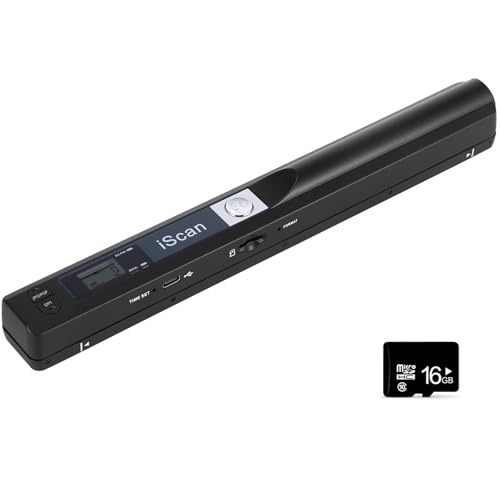
- ✓ Easy plug-and-play setup
- ✓ High-resolution options
- ✓ Large storage capacity
- ✕ No color scanning in higher resolutions
- ✕ Battery life could be better
| Resolution Modes | 300dpi / 600dpi / 900dpi |
| Maximum Storage Capacity | 32GB Micro SD Card support |
| Supported File Formats | JPEG and PDF |
| Compatibility | Windows XP / 7 / Vista / Mac OS 10.4 or earlier |
| Scanning Speed | Quick scan and save within seconds |
| Power and Operation | Plug and play with automatic shutdown after 3 minutes of inactivity |
Ever had to quickly scan a stack of legal documents or contracts and wish you had a reliable device that could keep up? I did, and I found the ANNCARY 900DPI Handheld Scanner fits that need perfectly.
It’s lightweight, fits comfortably in your hand, and feels sturdy enough to handle plenty of use without feeling cheap.
The moment I powered it on, I appreciated how straightforward it was—no complicated setup or software to fuss with. Just plug it into your Windows or Mac, pop in a micro SD card, and you’re ready to go.
The three resolution modes—300, 600, and 900 dpi—are great for adjusting image quality depending on whether you’re scanning quick reference pages or high-res legal documents.
Scanning is impressively simple. You just press the button after choosing your settings, and it automatically finishes after a few minutes of inactivity.
The results? Clear, sharp images that are easy to read and share, especially when saved as PDFs or JPEGs.
I tested it with various paper sizes and even some photos, and the quality held up well.
What really stood out is its storage capacity—supporting up to 32GB micro SD cards means you can carry hundreds of pages without constantly transferring files. It’s perfect for lawyers on the go, needing to digitize documents at court or in the field quickly.
Plus, the device’s portability and ease of use make it a no-brainer for busy professionals who need quick, reliable scans without fuss.
Overall, this scanner feels like a practical, no-nonsense tool that addresses common frustrations like slow setup, poor image quality, or limited storage. It’s compact, versatile, and delivers professional results with minimal effort.
Epson Perfection V19 II Flatbed Scanner 4800 dpi USB

- ✓ Compact and lightweight
- ✓ High-resolution scans
- ✓ Easy-to-use software
- ✕ Slower with large batches
- ✕ No duplex scanning
| Optical Resolution | 4800 dpi |
| Scanning Speed | up to 10 seconds for letter-sized documents |
| Connectivity | USB 3.1 |
| Supported Output Formats | Searchable PDFs, editable Word, Excel, PowerPoint files with OCR |
| Software Features | Epson ScanSmart, Easy Photo Fix technology |
| Physical Dimensions | Compact, lightweight (3.1 lbs), with built-in kickstand for vertical storage |
Instead of the bulky, complicated scanners I’ve dealt with before, the Epson Perfection V19 II steps in with a sleek, no-fuss design that’s surprisingly powerful. Its compact size makes it feel more like a high-tech gadget than a traditional scanner, which is a relief when space is tight in a busy law office.
The moment I powered it up, I appreciated how lightweight it feels—just over 3 pounds—yet it offers impressive features. The 4800 dpi resolution really shines when I scan legal documents or photos, capturing every detail clearly.
It’s perfect for enlargements or high-quality reproductions.
What really stands out is the One-touch scanning button. It’s simple to use and speeds up workflow, especially when you need quick copies of dense legal files or client records.
The included Epson ScanSmart software makes it easy to convert scans into searchable PDFs or editable Word documents, which is a huge time-saver.
Scanning books and bulky documents is straightforward too, thanks to the high-rise lid. And if you’re worried about faded photos, the Easy Photo Fix technology restores color with just one click.
The vertical kickstand is a thoughtful touch, helping you save space when not in use.
Overall, this scanner balances quality and convenience perfectly. It’s reliable, fast, and versatile enough to handle everything from legal paperwork to client photos.
Plus, its portability means you can take it on the go or stash it easily when not working.
What Features Are Essential in a Scanner for Legal Professionals?
Legal professionals require specific features in scanners to enhance their workflow and ensure document integrity.
- High Resolution: A scanner with at least 300 DPI is essential for capturing fine details in legal documents, ensuring that text is clear and readable, which is crucial for legal filings and presentations.
- Duplex Scanning: This feature allows for scanning both sides of a document simultaneously, significantly speeding up the process of digitizing double-sided legal papers, which is common in the legal field.
- Document Feeder: An automatic document feeder (ADF) allows for bulk scanning of multiple pages at once, making it easier for lawyers to handle large volumes of paperwork without manual intervention.
- PDF Compatibility: The ability to save scans directly as PDF files is vital, as PDF is the standard format for legal documents, ensuring easy sharing and compatibility with various systems used in legal practice.
- OCR Capability: Optical Character Recognition (OCR) technology enables scanned documents to be converted into editable and searchable text, enhancing document management and retrieval, which is particularly useful in legal research.
- Security Features: Scanners with built-in security features such as encryption and password protection are essential for safeguarding sensitive client information and maintaining confidentiality in legal matters.
- Compact Design: A compact and portable scanner is beneficial for lawyers who may need to work in different locations, allowing them to easily transport the scanner to courtrooms, client meetings, or while traveling.
- Integration with Cloud Services: The ability to directly upload scanned documents to cloud storage solutions facilitates easy access and sharing among legal teams, aiding collaboration and reducing the risk of data loss.
How Do Legal Professionals Determine Their Scanning Needs?
Legal professionals determine their scanning needs based on several key criteria to ensure they select the most suitable devices for their practices.
- Document Volume: Lawyers often deal with a large volume of paperwork, including contracts, briefs, and case files. They need scanners that can handle high volumes efficiently, often requiring features like automatic document feeders (ADFs) to streamline the scanning process and save time.
- Scanning Speed: The speed at which a scanner can process documents is crucial in a fast-paced legal environment. Professionals prefer scanners with high pages-per-minute (PPM) rates to quickly digitize documents, allowing them to maintain workflow and meet tight deadlines.
- Image Quality: Legal documents must be scanned with high clarity for readability and accuracy, especially when they contain fine print or intricate details. Scanners that offer high optical resolution ensure that all text and graphics are captured clearly, which is essential for legal accuracy and compliance.
- Multi-Functionality: Many legal professionals benefit from multi-functional devices that can scan, copy, and sometimes even fax documents. This versatility can maximize space and simplify office operations, allowing lawyers to perform multiple tasks without needing separate devices.
- Portability: For lawyers who frequently travel or work in various locations, portable scanners are advantageous. Compact and lightweight options allow for easy transport and quick access to scanning capabilities, which is particularly useful for on-site client meetings or court appearances.
- Software Integration: Effective scanners often come with software that integrates with case management systems or document management platforms used by law firms. This integration facilitates easier organization, retrieval, and sharing of scanned documents, enhancing overall productivity.
- Security Features: Given the sensitive nature of legal documents, security is a significant concern. Scanners that offer features like encryption, secure access controls, and document shredding capabilities help safeguard confidential information from unauthorized access.
Why is Document Clarity Critical for Lawyers’ Scanning Needs?
Document clarity is critical for lawyers’ scanning needs because high-quality scans ensure that details are preserved, which is essential for legal accuracy and compliance.
According to a study published by the American Bar Association, the clarity of scanned documents directly impacts the ability of lawyers to review, analyze, and present evidence effectively. Clear documents reduce the chances of misinterpretation and ensure that all relevant details, including signatures, dates, and fine print, are legible and can be appropriately referenced in legal proceedings.
The underlying mechanism involves the need for precision in legal documentation. Legal professionals often deal with complex documents that require exact replication of text and graphics. When a scanner produces a low-quality image, it can obscure critical information, leading to potential misunderstandings or errors in legal arguments. Moreover, with the increasing reliance on digital files, maintaining clarity in scanned documents is necessary for effective electronic discovery and compliance with legal standards, further emphasizing the importance of selecting the best scanners for lawyer use.
How Does Scanning Speed Impact Legal Work Efficiency?
- High-Speed Scanners: These scanners can process large volumes of documents quickly, which is essential for law firms that handle extensive paperwork.
- Duplex Scanning: Duplex scanners can scan both sides of a document simultaneously, effectively doubling the scanning speed and saving time on multi-page documents.
- Integration with Document Management Systems: Scanners that integrate seamlessly with document management software enable faster organization and retrieval of scanned files, enhancing workflow efficiency.
- Batch Scanning Features: Scanners equipped with batch scanning capabilities allow users to load multiple documents at once, reducing the need for constant manual intervention and speeding up the scanning process.
- OCR (Optical Character Recognition) Technology: Scanners with OCR can convert scanned images into editable text, which significantly reduces the time spent on data entry and increases the accuracy of legal documents.
High-speed scanners are essential for lawyers who need to quickly digitize large volumes of paperwork while maintaining accuracy and quality. These devices typically feature high DPI (dots per inch) settings, which ensure that even fine print is captured clearly, making it easier to read and reference later.
Duplex scanning is particularly beneficial in legal work, as many documents contain information on both sides. By scanning both sides at once, lawyers can save significant time and streamline their document management processes, ultimately leading to quicker case resolutions.
Integration with document management systems is crucial for legal professionals who rely on organized and easily accessible files. Scanners that can directly upload scanned documents into these systems help maintain the workflow and prevent delays caused by manual uploads.
Batch scanning features allow law firms to enhance their productivity by enabling users to scan a large number of documents in one go. This reduces the frequency of interruptions during the scanning process, allowing legal staff to focus on more critical tasks.
OCR technology is invaluable for law firms, as it transforms scanned documents into searchable and editable formats. This capability not only accelerates the workflow but also enhances the accuracy of information retrieval, which is critical in legal situations where precision is paramount.
What Are the Leading Scanners Recommended for Lawyers?
The leading scanners recommended for lawyers are designed to enhance efficiency and organization in legal practices.
- Fujitsu ScanSnap iX1500: This scanner is highly praised for its user-friendly interface and wireless capabilities, making it ideal for busy law offices. It features a fast scanning speed and the ability to handle various document types, including receipts and business cards, which are often present in legal documentation.
- Epson WorkForce ES-400: Known for its high-quality duplex scanning, the Epson WorkForce ES-400 is perfect for scanning double-sided documents quickly. Its built-in software helps in organizing and converting scanned documents into searchable formats, a crucial feature for lawyers dealing with large volumes of paperwork.
- Brother ADS-2700W: This scanner offers robust wireless connectivity and has the capability to scan directly to cloud services, which is essential for lawyers needing quick access to documents from anywhere. It supports various file formats and includes advanced security features, ensuring sensitive client information is protected.
- Canon imageFORMULA R40: The Canon R40 is noted for its compact design and high-speed scanning capabilities, making it suitable for small office spaces. It includes features like automatic document feeding and image correction, which can significantly save time when processing large batches of documents.
- HP ScanJet Pro 2500 f1: This model stands out for its versatility in handling different media types, from documents to ID cards. Its intuitive touch screen simplifies the scanning process, while the robust software suite aids in document management, an essential aspect of legal work.
Which Scanners Provide the Best Document Management Solutions for Lawyers?
The best scanners for lawyers offer efficient document management solutions tailored to the needs of legal professionals.
- Fujitsu ScanSnap iX1500: This scanner features a user-friendly touchscreen and high-speed scanning capabilities.
- Epson WorkForce ES-500W: Known for its wireless functionality and strong document management software integration.
- Canon imageFORMULA R40: Offers fast scanning and reliable performance, making it ideal for busy legal offices.
- Brother ADS-2700W: Combines high-speed scanning with robust security features, perfect for handling sensitive legal documents.
- HP ScanJet Pro 2500 f1: This scanner provides versatility and high-quality scanning, suitable for various document types and sizes.
The Fujitsu ScanSnap iX1500 is highly regarded in the legal field due to its intuitive interface and ability to quickly convert paper documents into searchable PDFs, streamlining the workflow for lawyers. It also includes software that allows for easy organizing and sharing of files, which is essential for legal practices managing large volumes of documents.
The Epson WorkForce ES-500W stands out for its wireless connectivity, enabling lawyers to easily scan documents directly to cloud storage or mobile devices. Its high-speed performance and included software enhance productivity, allowing legal professionals to focus on their cases rather than paperwork.
The Canon imageFORMULA R40 is a compact yet powerful scanner, providing high-quality scans at a rapid pace, which is crucial for law firms that need to digitize numerous documents quickly. Its reliable feeding mechanism helps prevent paper jams and ensures that multi-page documents are scanned without interruption.
Brother’s ADS-2700W is known for its strong security features, including the ability to encrypt scanned documents, making it particularly suitable for legal practices that handle sensitive information. Additionally, it offers advanced scanning capabilities, such as double-sided scanning and the ability to scan directly to various cloud services.
HP’s ScanJet Pro 2500 f1 is versatile, handling a variety of document types, from business cards to legal-sized papers. Its high-quality scanning ensures that important documents are preserved with clarity, while its easy-to-use software simplifies the organization and retrieval of scanned files, aiding lawyers in maintaining an efficient document management system.
How Do Wireless Scanners Benefit Law Firms?
Wireless scanners offer several advantages for law firms, streamlining document management and enhancing workflow efficiency. Key benefits include:
-
Mobility and Flexibility: Lawyers can scan documents from anywhere within the office, easily transferring files to their devices or cloud storage without the constraints of cables.
-
Reduced Clutter: By digitizing paper documents quickly, firms can minimize physical storage needs, freeing up office space and reducing the time spent searching for physical files.
-
Improved Collaboration: Wireless scanners facilitate the sharing of scanned files instantly among team members through email or cloud services, promoting collaboration on case documents.
-
Enhanced Security: Many wireless scanners allow for encrypted file transfers, ensuring sensitive legal documents remain secure when transferred digitally.
-
Integration with Legal Software: Several modern wireless scanners can directly interface with legal management software, streamlining the workflow by importing scanned documents directly into case files.
Investing in a quality wireless scanner can significantly improve a law firm’s efficiency, helping to handle an ever-growing volume of documents while maintaining a high level of professionalism and organization.
In What Ways Can Scanners Enhance Productivity in Legal Environments?
Scanners can significantly enhance productivity in legal environments through various features and functionalities.
- Document Digitization: Scanners allow legal professionals to convert physical documents into digital formats, making it easier to store, search, and retrieve important files. This digitization reduces physical storage needs and ensures that critical documents are readily accessible.
- High-Speed Scanning: The best scanners for lawyers often come with high-speed scanning capabilities, allowing large volumes of documents to be processed quickly. This feature is particularly beneficial for legal firms handling extensive case files, enabling them to save time and focus on more critical tasks.
- Optical Character Recognition (OCR): Many modern scanners include OCR technology, which converts scanned images into editable text. This functionality is crucial for lawyers who need to extract information from documents for editing or citation, enhancing accuracy and efficiency in legal research.
- Integration with Document Management Systems: Scanners that seamlessly integrate with document management software help legal teams organize and categorize files effectively. This integration streamlines workflows, allowing for better collaboration and faster access to necessary documents during case preparations.
- Double-Sided Scanning: The ability to scan both sides of a document in a single pass is a vital feature in legal settings, where many documents contain information on both sides. This not only expedites the scanning process but also ensures that no important content is overlooked.
- Remote Scanning Capabilities: With the rise of remote work, scanners that offer mobile or cloud-based scanning solutions allow lawyers to capture and upload documents from anywhere. This flexibility is essential for lawyers who may be working from different locations or need to access files on the go.
What Key Considerations Should Lawyers Keep in Mind When Choosing a Scanner?
Lawyers should consider several key factors when selecting a scanner that meets their professional needs.
- Speed: The scanning speed is crucial for lawyers who often deal with large volumes of documents. A faster scanner can significantly improve efficiency, allowing legal professionals to quickly digitize case files, contracts, and correspondence without wasting time waiting for scans to complete.
- Resolution: High resolution is essential for preserving the clarity of important documents, particularly those that include fine print or intricate details. Scanners that offer at least 300 dpi (dots per inch) are recommended to ensure that scanned documents are clear and legible, which is vital for legal documentation.
- Document Feeding Capability: An automatic document feeder (ADF) can streamline the scanning process, especially for multi-page documents. This feature allows lawyers to load several pages at once, which is a significant time-saver compared to manual scanning one page at a time.
- File Format Compatibility: Lawyers often need to save documents in various formats such as PDF, TIFF, or JPEG. A scanner that supports multiple file formats provides flexibility in how documents can be stored, shared, or processed further, which is beneficial in a legal setting.
- Duplex Scanning: The ability to scan both sides of a document in one pass is a valuable feature for lawyers dealing with double-sided documents. Duplex scanning saves time and effort, as it eliminates the need to manually flip pages, enhancing overall productivity.
- OCR (Optical Character Recognition): Scanners equipped with OCR technology can convert scanned images into editable text, which is particularly useful for lawyers who need to extract information from documents. This capability enhances document searchability and allows for easier modification of legal texts.
- Portability: For lawyers who travel frequently or work in various locations, a portable scanner can be a game changer. Compact models that are lightweight yet powerful enable legal professionals to scan documents on the go without compromising on quality.
- Integration with Software: A scanner that integrates seamlessly with document management software systems can streamline workflows. This compatibility is key for lawyers who need to archive, organize, and easily retrieve documents as part of their practice.
- Reliability and Durability: Given the high volume of scanning that lawyers may require, a reliable and durable scanner is essential. Investing in a scanner from a reputable brand known for quality can prevent breakdowns and ensure long-term performance.